

China Outlines Auto Standardization Blueprint
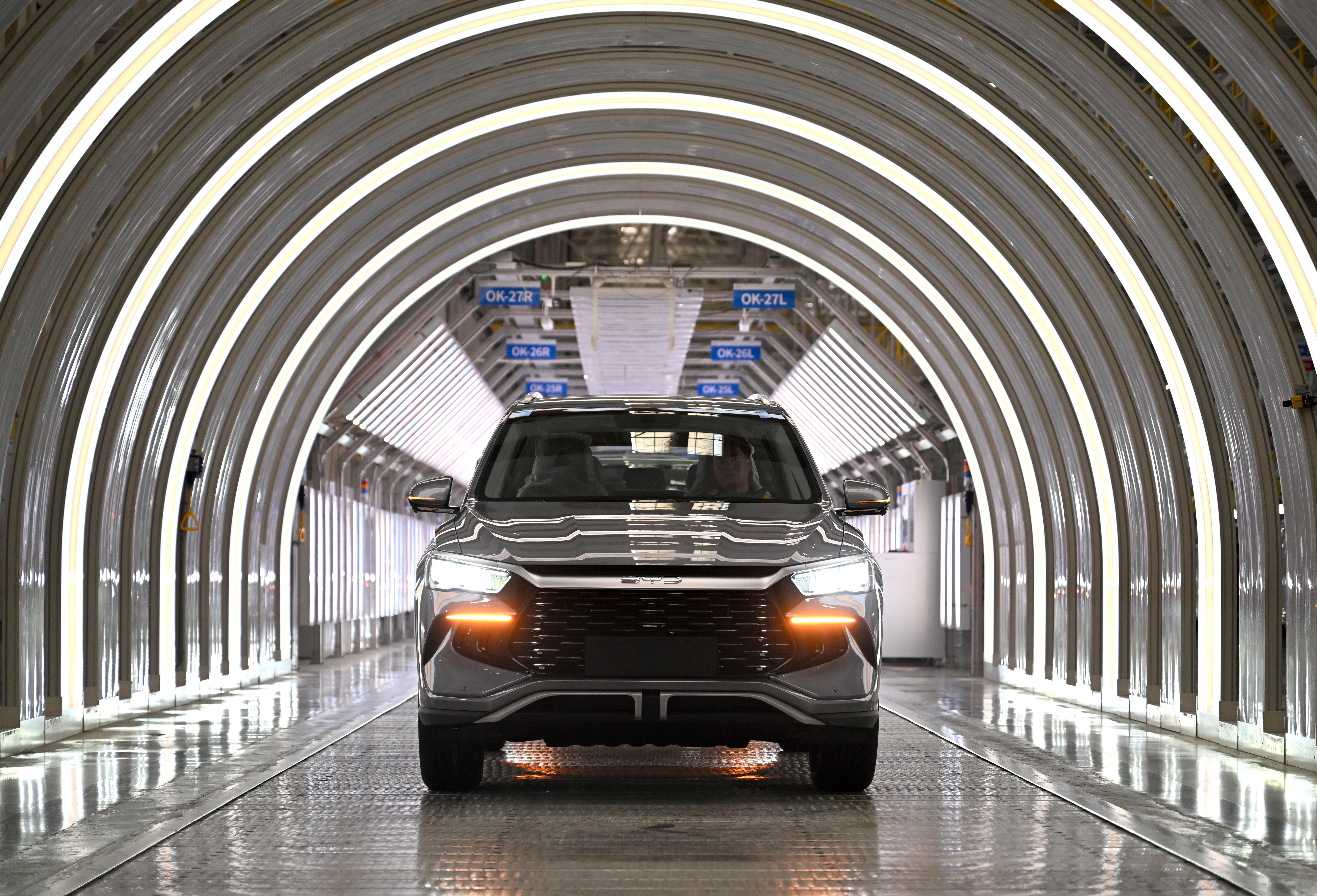
China has unveiled the key tasks for 2026 to improve the automotive standards system, enhance the quality of standards and deepen international cooperation on them, as well as guide the high-quality development of the auto industry with high-standard regulations.
The work plan, released by the Ministry of Industry and Information Technology, calls for completing the formulation of the technical standards system construction plan for the automotive industry during the 15th Five-Year Plan period (2026-2030).
It sets out annual tasks across four major dimensions: system design, industrial empowerment, international cooperation and mechanism optimization, while maintaining a sustained focus on areas like emerging sectors, future industries, and green and low-carbon development.
This year, the authorities will prioritize improving four core standard systems covering intelligent connected vehicles, automotive chips, new energy vehicles and low-carbon development. Efforts will also be made to advance research on the standard systems of automotive solid-state batteries, and sub-systems such as in-vehicle artificial intelligence and data governance, and conduct research on standards for cutting-edge technologies.
In the new energy sector, standards for the safety and performance of electric vehicles and power batteries will be upgraded.
To advance green and low-carbon transition, a set of special standards will be rolled out a faster to support carbon reduction across the entire automotive industrial chain. Priority will be given to carbon footprint accounting of automotive products, carbon accounting for vehicle manufacturers, and developing standards for low-carbon product evaluation and zero-carbon factory development.
Emerging sectors are a major focus of this year’s standardization work. For intelligent connected vehicles, standard systems for vehicle-road-cloud integration, data security, information exchange and software management will be improved.
In the field of automotive chips, a complete standard system will be established to enhance their environmental reliability, electromagnetic compatibility, functional safety, and cybersecurity. Review and approval of standards for control, computing, power, safety and sensor chips will be advanced.
The plan outlines forward-looking arrangements for standards of future industries. Efforts will be made to advance the review and approval of national standardization guidance documents on the application of automotive AI technology, platform architecture, and the evaluation of large-scale models for automotive use.
In light of current industry trends and focusing on key issues, priority will be given to addressing the need for standards related to technical requirements and testing methods in critical areas such as safety, batteries and electric motors for new types of automotive products.
In terms of international cooperation, China will further open up its standard systems and foster a new landscape of inclusive and win-win global collaboration. Apart from in-depth participation in international regulatory development and the development of international standards, China aims to adopt advanced and applicable international standards and enhance the level of alignment between domestic and international standards.
Leveraging the China–ASEAN and China–Africa automotive standardization cooperation mechanisms, the country will promote the translation of joint research findings into technical alignment. Intergovernmental cooperation frameworks with Germany, the European Union, the United Kingdom and Malaysia, among others, will be deepened. Multilateral dialogue and cooperation on automotive standards with Asia-Pacific Economic Cooperation economies, Shanghai Cooperation Organization member states and BRICS countries will be simultaneously extended.