
EU's 'Three-Supplier Rule' Doesn't Add Up
The Financial Times (FT) recently reported that the European Union (EU) is drafting a "three-supplier rule." Under the new rule, companies would be limited to buying about 30 percent to 40 percent of components from a single supplier and source the rest from at least three different countries.
As the rule could be tabled at the EU leaders' summit as early as June, this is clearly another in a long list of EU's "de-risking" moves from its go-to playbook.
Previously, the EU's Critical Raw Materials Act set a 65 percent cap on sourcing from any single non-EU country. The Carbon Border Adjustment Mechanism, ostensibly a climate tool, effectively serves as a trade barrier, with a Chinese subcontractor excluded from the Lisbon Metro project. Now, the "three-supplier rule" therefore seeks to extend this administrative intervention from raw materials and infrastructure to the entire manufacturing sector.
In essence, this is blatant protectionism cloaked in "supply chain security" and yet another example of the politicization and securitization of economic and trade issues.
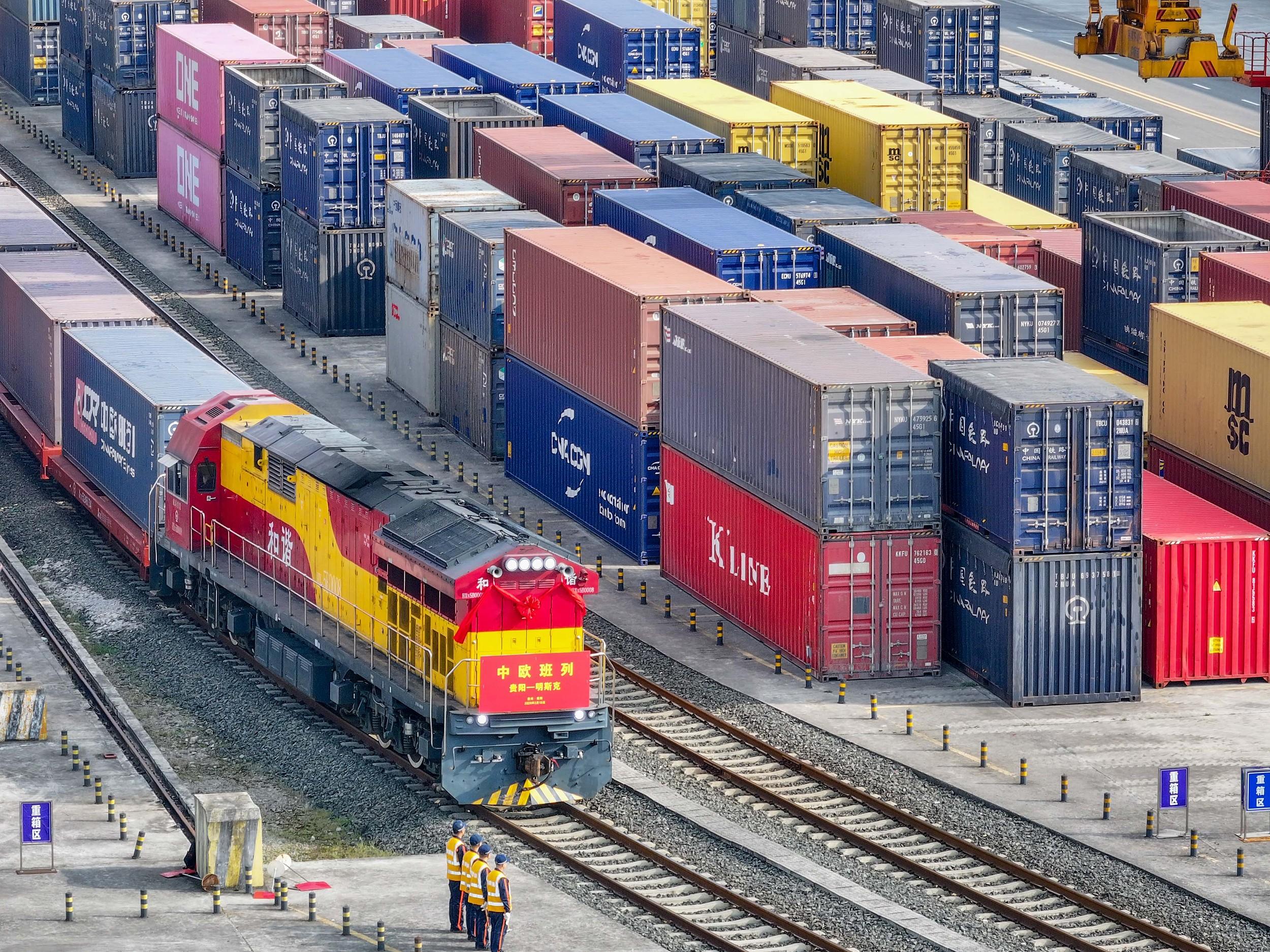
Europe's reliance on Chinese supply is the result of market competition. A report by EuroToday on May 18 explained that, "Many supply chains have been built around China not only because of cost, but because Chinese suppliers often combine scale, technical capacity, logistics networks and processing infrastructure that alternative suppliers cannot immediately match." According to a 2026 report by the European Court of Auditors, China provides 97 percent and 71 percent of the EU's magnesium and gallium, respectively.
These figures reflect China's decades of industrial accumulation and technological iteration. The EU's attempt to use administrative mandates to sever market division is like cutting the feet to fit the shoes, a solution that doesn't fit it.
Supplier selection should ideally strike a comprehensive balance between cost, quality and efficiency. However, political motives are distorting market choices. This undermines the Most-Favored-Nation and national treatment principles that China legally enjoys under the WTO. China has repeatedly expressed its firm stance on various occasions, pointing out that such practices violate fundamental WTO principles.
The demonstration effect is alarming: if all countries impose discriminatory barriers under the banner of "security," the multilateral trading system risks collapse. While claiming to champion multilateralism, the EU is dismantling the very platform it helped build.
When all is said and done, Europe will bear the consequences. Forcing companies to diversify procurement will directly elevate costs. While multinational giants might absorb the burden of managing multiple supply chains, small and medium-sized enterprises — which constitute the vast majority of European businesses — lack substantial financial reserves and bargaining power. For them, the "three-supplier rule" could be a matter of survival.
As reported in the financial analysis platform InvestingLive on May 19, "Companies currently running concentrated supply arrangements will face meaningful compliance costs and margin pressure, as they build out diversified supplier networks, potentially pushing up input costs across European manufacturing at an already difficult moment."
Ironically, while many companies appear to source from India or Vietnam, the raw materials still largely come from China. This simply lengthens and increases the cost of their supply chain, without reducing their dependence on China. The European Commission has acknowledged that efforts to diversify critical raw materials are progressing slowly, and imports from some strategic partners have actually declined.
Spending more money and taking longer routes only to maintain the same dependence — this is the true cost of the EU's "de-risking" strategy. Yet, EU Trade Commissioner Maros Sefcovic is planning to impose punitive tariffs on Chinese chemical products and machinery. Caught between a rock and a hard place, European manufacturing is left with very little breathing room.
The "three-supplier rule" is a slippery slope. China possesses the world's most comprehensive manufacturing system, while Europe boasts advanced technologies, renowned brands and abundant capital. The two sides are naturally complementary and mutually dependent.
The real threat to Europe's security has never been high-quality, affordable Chinese products, but rather artificially manufactured antagonism and estrangement. Last month, Sefcovic signed a memorandum of understanding on critical minerals with U.S. Secretary of State Marco Rubio. In this rush to form alliances, is Europe truly enhancing its resilience, or merely riding on the back of someone else's success?
Cooperation brings mutual benefit, while confrontation leads to mutual harm — a timeless truism. Supply chain security can never be achieved through administrative decoupling; true security lies solely in open cooperation.