

Industries of the Future to Be Boosted
Xi Jinping, general secretary of the Communist Party of China (CPC) Central Committee, has urged efforts to leverage the country's comparative advantages, pursue progress while maintaining stability, and promote continuous breakthroughs in the development of industries of the future.
Xi made the remarks while presiding over a group study session of the Political Bureau of the CPC Central Committee on January 30.
Experts responded to his remarks with various insights and suggestions.
Yu Haibin, an academician of the Chinese Academy of Engineering and director of the Institute of AI for Industries, Chinese Academy of Sciences (CAS), said efforts will be made to tackle the barriers in general AI frontier technology in major application scenarios in the manufacturing industry. At the same time, the "AI Plus" initiative will be advanced and strategic support for the development of industries of the future strengthened.
Wan Jinbo, a researcher at the Institutes of Science and Development, CAS, suggested guiding enterprises to closely cooperate with universities and research institutions, identify sci-tech challenges aligned with industrial needs, and undertake joint research on key core technologies.
They should also coordinatedly advance efficient commercialization and application of sci-tech achievements.
This was echoed by Yu Xiaohui, president of China Academy of Information and Communications Technology, who said it is key to incubating and cultivating original innovative industries of the future.
In regions where scientific, educational, talent and financial resources are abundant, the focus should be on developing cutting-edge technologies, integrating full-cycle resources of basic research, applied research and industrialization.
Yu also said industries of the future should be developed according to local conditions.
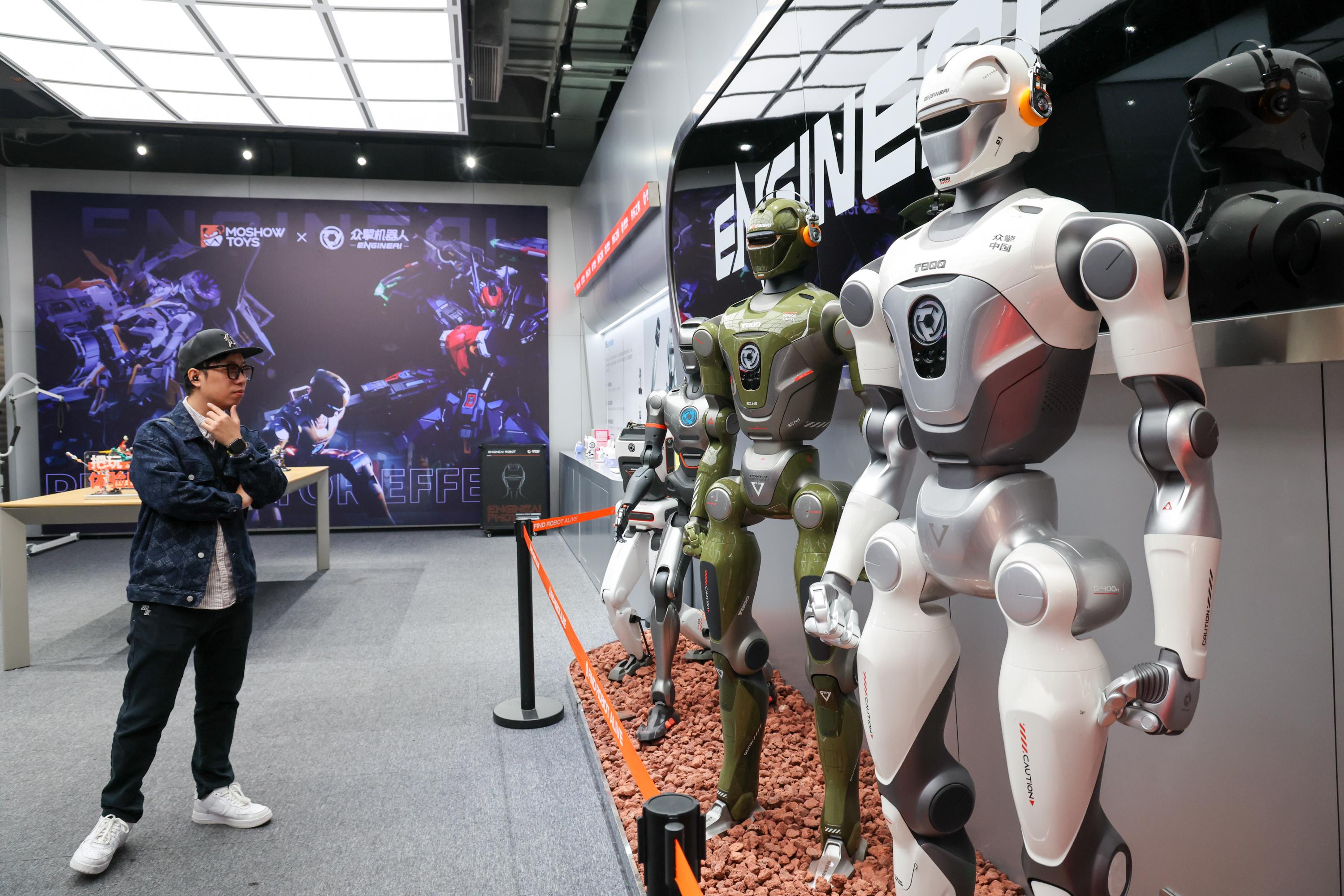
Hangzhou in east China is establishing innovation projects in disruptive technology in the low-altitude economy and humanoid robots sectors, systematically establishing its competitive advantages in industries of the future.
Guided by the city's goal to become the premier city for AI innovation and development, Hangzhou will accelerate the construction of a higher-level dynamic innovation hub, Lou Xiuhua, head of Hangzhou's municipal bureau of science and technology, said.
Zhang Yong, deputy director of Industry and Information Technology Department of Shaanxi, said the northwestern province will focus on establishing a support system of "platform+policy+fund," and a batch of innovation centers and pilot-scale platforms for industries of the future in nine industrial chains.
The province will also advance industrial big data platforms to provide key data support for industries of the future like aerospace information and unmanned aerial vehicles.
Enterprises need to fully play their principal role in the development of industries of the future. According to Cao Zhongxiong, assistant president of China Development Institute in Shenzhen in south China, this means market forces and entrepreneurship will be more fully harnessed in the direction of R&D, resource allocation and commercialization and application of sci-tech achievements.
In Shanghai, the brain-computer interface industry faces unprecedented opportunities.
An official from the city's municipal commission of science and technology said Shanghai will guide enterprises to continuously advance core technologies and refine product quality with a focus on clinical needs, making sure that cutting-edge science and technology truly benefits people's lives.