

Basic Science Funding Ignites Sci-tech Innovation
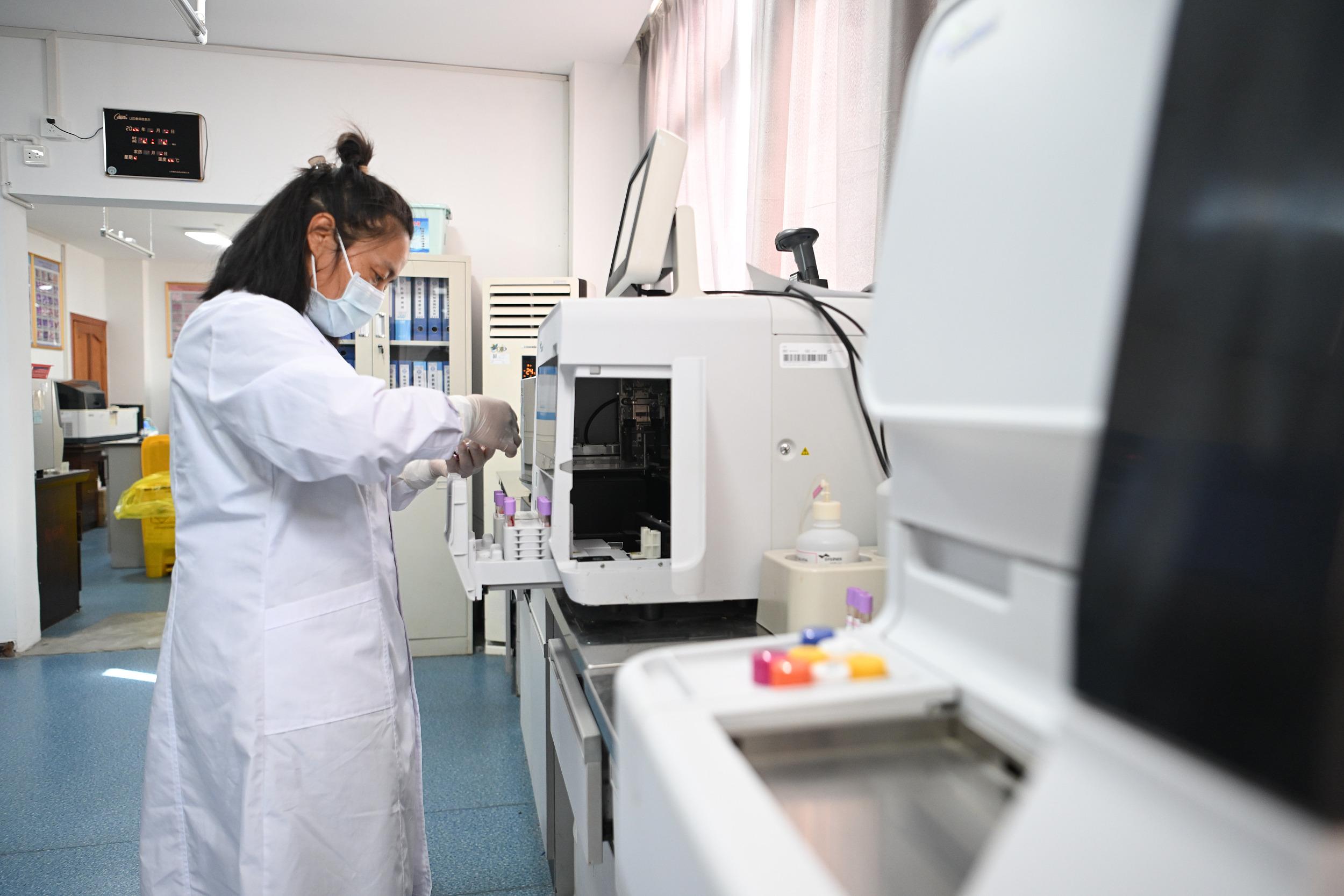
Funding for China's Young Scientists Fund (Category C) is set to increase by over 50 percent year on year, with an expected addition of 12,000 projects. This move, announced by the National Natural Science Foundation of China on May 13, will provide a continuous pipeline of reserve skilled personnel for basic research.
According to Patrick Cramer, president of Germany's Max Planck Society, a leading research body in Europe, rapid changes in geopolitics have brought "massive changes in the global flow of talent," something which he devotes a lot of thought to, he said during an interview in Shenzhen in April.
"One trigger is the new administration in the United States [which has] changed visa regulations, science funding and, for example, attacked Earth system science — [meaning] certain fields of research have become difficult," he said.
"But there is another trigger — the rise of China. There is more money in China, so China is building more institutions and there are more academic jobs available, " Cramer said.
According to Science magazine, in May the U.S. National Science Board (NSB) was putting the finishing touches to a two-page report on China already having raced ahead of the U.S. in key scientific fields.
According to the NSB report, in 2000 China ranked fourth in global research spending, accounting for five percent of the world total. The U.S. outpaced the European Union (EU)'s 27 countries by a margin of 39 percent to 24 percent, and Japan was third at 15 percent. In 2010, the U.S. still had a comfortable lead, but China had overtaken Japan for third place. By 2024, China had nosed ahead of the U.S.— spending 1.03 trillion USD to 1.01 trillion USD for the U.S. — with each claiming roughly 30 percent of the world total and the EU a distant third.
As Caroline Wagner, professor of Public Affairs, the Ohio State University, wrote in an article for the U.S. news outlet The Conversation, China's rapid rise in science has hit a milestone. According to a March 2026 report from the Organization for Economic Co-operation and Development, China's investment in research and development has matched and even surpassed that of the United States by purchasing power.
Wagner said that she has tracked China's rise across every major database for more than a decade, and China has achieved sci-tech milestones in many aspects. "These are not isolated data points. They mark a structural shift in where the world's scientific frontier is being built," she added. China's ascent is good news. More knowledge, generated by more researchers across more institutions, expands the global pool of discovery from which everyone can draw. The world benefits when science thrives.
Cramer added that Europe had lessons to learn from China. "China is showing you how to organize people to cooperate to do big building projects, big bridges and big engineering projects." The philosophy of the Max Planck Society was more important than ever — for science to be "the voice of reason in a rapidly changing world," he said.