

Wearable Robot Helps SMA Kids to Stand
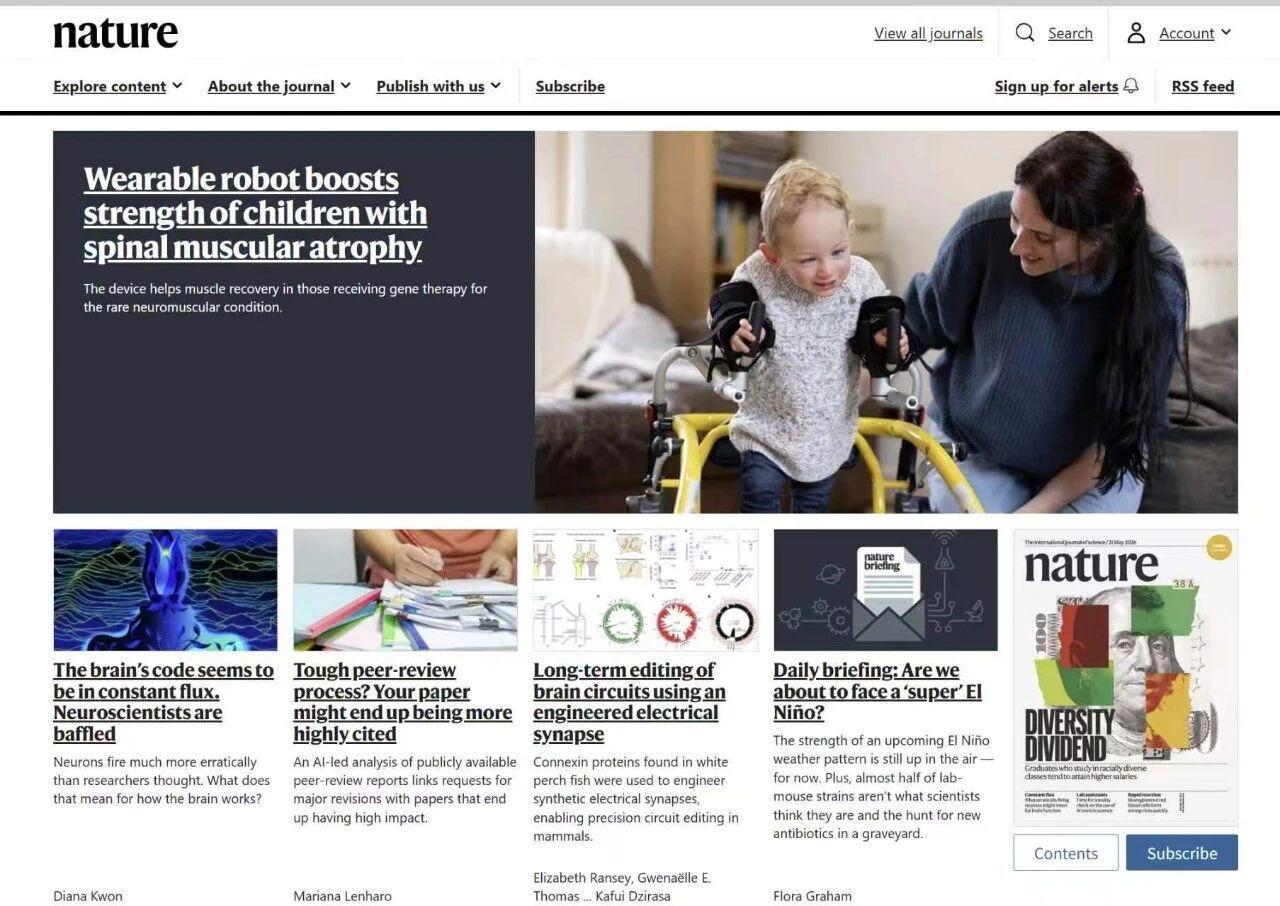
Children with spinal muscular atrophy (SMA) type II can now stand on their own, thanks to the assistance of a wearable robot weighing just 0.96kg.
Chinese researchers have achieved a breakthrough in spinal neuromotor rehabilitation, offering a novel therapeutic approach for SMA, a complex and rare disease. The findings were recently published in Nature.
Clinical trials showed that after six weeks of robot-assisted training, six children with SMA type II, aged six to 10 years, gained the ability to perform sit-to-stand movements and demonstrated significantly improved quadriceps muscle strength, alongside enhanced femoral nerve conduction.
Children with SMA generally experience progressive muscle degeneration and weakness, with many struggling to independently perform the sit-to-stand movement throughout their lives.
Currently, available medications can only slow disease progression but cannot reverse it. Conventional lower-extremity assistive robots are designed to actively assist gait. However, for children with SMA type II, who need enhanced muscle activation to sustain neural function, such support may further weaken already frail muscles and hinder long-term neuromuscular adaptations.
Meanwhile, conventional isokinetic resistance training devices are bulky and costly, with their minimum resistance still too high for children to tolerate.
To address this challenge, a team led by Associate Professor Feng Yanggang from Beihang University, in collaboration with the Massachusetts Institute of Technology and Peking University Third Hospital, designed this portable wearable isokinetic resistance training robot.
It ensures that muscles generate maximum tension throughout the entire range of joint motion under safe conditions, thereby achieving optimal training outcomes.
Integrated with a gamified human-computer interface, children complete high-intensity training through interactive level-based games.
This represents a completely new training paradigm distinct from conventional wearable robots, Feng said. Instead of relying on external assistance for short‑term recovery, it stimulates physical potential by actively increasing movement difficulty.