

'Next New Three' Industries Thrive
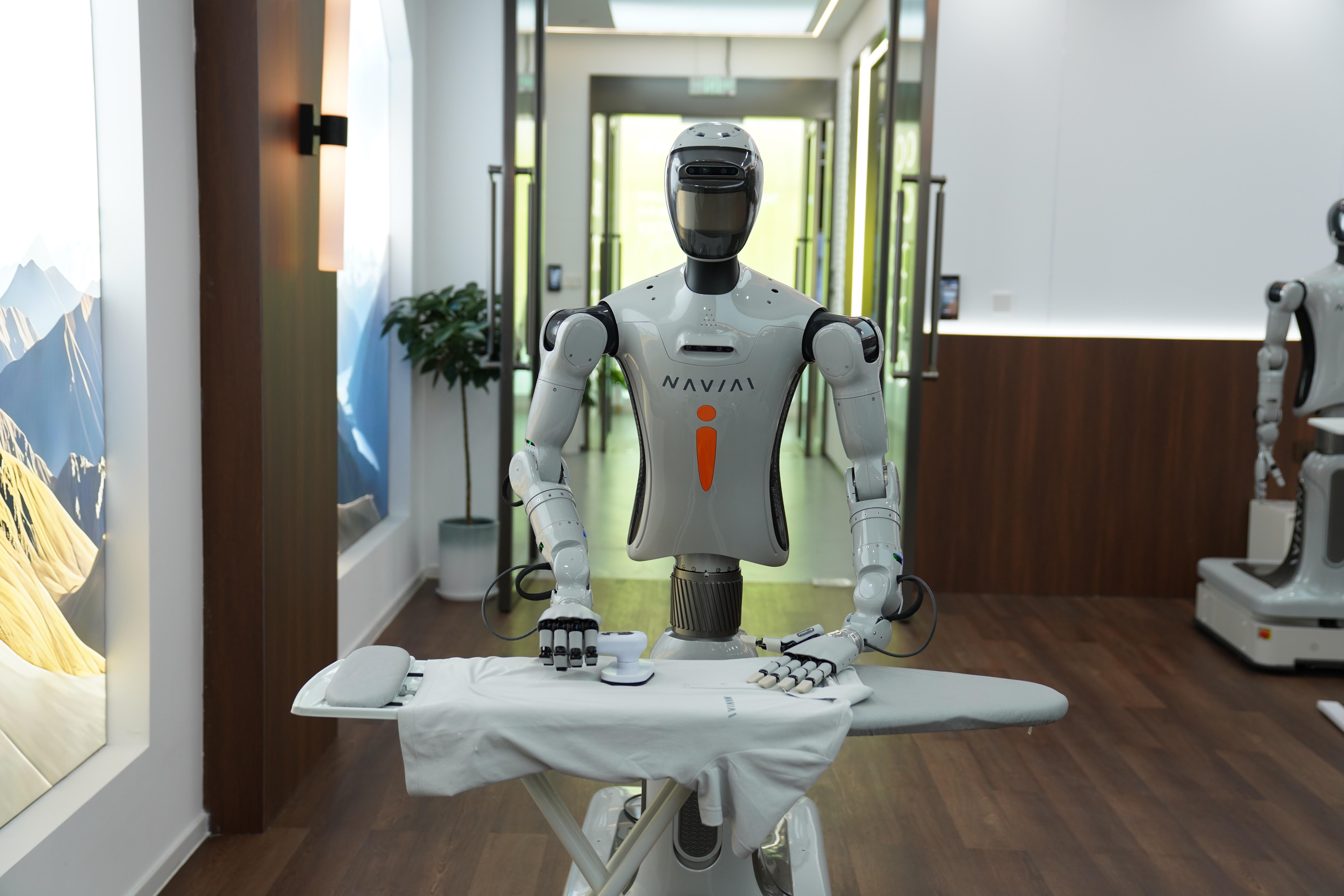
Dubbed the "next new three," China's AI, robotics and innovative pharmaceuticals industries are gaining momentum rapidly.
AI: No longer isolated tech breakthroughs
In March, Milkyway, an agent system independently developed by China's Zhongguancun Academy and Zhongguancun Institute of Artificial Intelligence (ZGCI), topped FutureX, a dynamic and live evaluation benchmark specifically designed for large language model agents performing future prediction tasks.
Xu Xueyin, deputy director of ZGCI, said domestic research teams have developed the capability not only to train high-level general-purpose foundation models from scratch, but also to respond rapidly to emerging fronts in AI competition.
From large models to AI agents, and from end-to-end models to world models, China has progressed from catching up to competing on equal footing with global leaders — and, in some areas, taking the lead. Chinese AI is moving beyond isolated technological breakthroughs toward the development of integrated, system-level capabilities.
Apart from the software, China's AI new infrastructure also shows strong competitiveness. Yang Jinzhe, CEO of Tecorigin, a high-performance computing and AI chip company, said the high performance and stable operation of Chinese AI chips and supercomputer systems is attracting clients from the Middle East. "They want to switch from traditional energy center to digital infrastructure hub," Yang said.
Yang's company is working with partners to deploy compute-power and power coordination solutions at large local computing centers, enabling the autonomous and intelligent scheduling of both computing resources and the power grid. China's hard-tech innovations are tailored to local energy resources and use cases, helping Chinese AI gain a stronger global foothold.
Robots deliver around the globe
Once, at the 246-room Oasis Avenue Hotel in Hong Kong, it used to take more than half an hour to get a bottle of water. But now a robot delivers the water in two to three minutes.
Xie Yunpeng, chief development officer of Beijing Yunji Technology Co., Ltd., said the company has equipped the hotel with a team of robots coordinated by its self-developed AI agent application system. The company's robots made 750 million deliveries in hotels around the globe last year.
Customs statistics show that in the first five months of this year, China exported over 10 million robots with a total value of nearly 20 billion RMB to more than 150 countries and regions.
Selling the robot bodies is not enough. Yunji Technology and the School of Hotel and Tourism Management of The Hong Kong Polytechnic University have established the Hong Kong Polytechnic University and Yunji Technology Hotel Digital Intelligence Joint Innovation Lab, which explores the pain points of robot application and their solutions to guide robot iteration and development.
Powered by an agent "brain" capable of understanding the physical world and optimized algorithms, some of Yunji Technology's robotic services today operate in a stable, closed-loop manner without the involvement of human operators.
Rise of Innovative pharmaceuticals
Phase II trial results for a three-drug regimen based on disitamab vedotin, China's first homegrown antibody-drug conjugate, were published in the Journal of Clinical Oncology in June, setting a new benchmark for median overall survival among patients with advanced gastric cancer.
Disitamab vedotin, independently developed by Chinese innovative biopharmaceutical company RemeGen Co., Ltd. (Yantai), was licensed overseas in 2021 in a deal valued at up to 2.6 billion USD.
Wen Qingkai, executive director of RemeGen, said the company has established three R&D centers in Yantai, Shanghai and California in the U.S., creating an integrated and end-to-end systematic drug development framework. "From the very beginning, we have focused our R&D efforts on 'filling gaps,' and over the years, our annual R&D investment has exceeded one billion RMB on average."
Computing plays an important role in drug development. During the 2026 Zhongguancun Forum Annual Conference, a computing system named "MegaDFT" was released, which calculates the interaction between atoms via quantum mechanics equations, rather than existing structural databases.
Traditional density functional theory (DFT) methods, limited by computational complexity, can only handle systems consisting of thousands of atoms, and often struggle with the extremely large biomolecules found in living organisms, said Xia Huanhuan, deputy director of ZGCI. "Through the coordinated optimization of underlying algorithms and system engineering, we have achieved hybrid functional calculations at the scale of 100,000 atoms."
This means that more than 99 percent of known protein systems can now be brought within the reach of quantum chemistry-level analysis. "In the future, we will open-source the system to promote the broad application of MegaDFT in fields such as life sciences and pharmaceutical innovation," Xia said.