

Turboshaft Engine Demonstrates Airworthiness
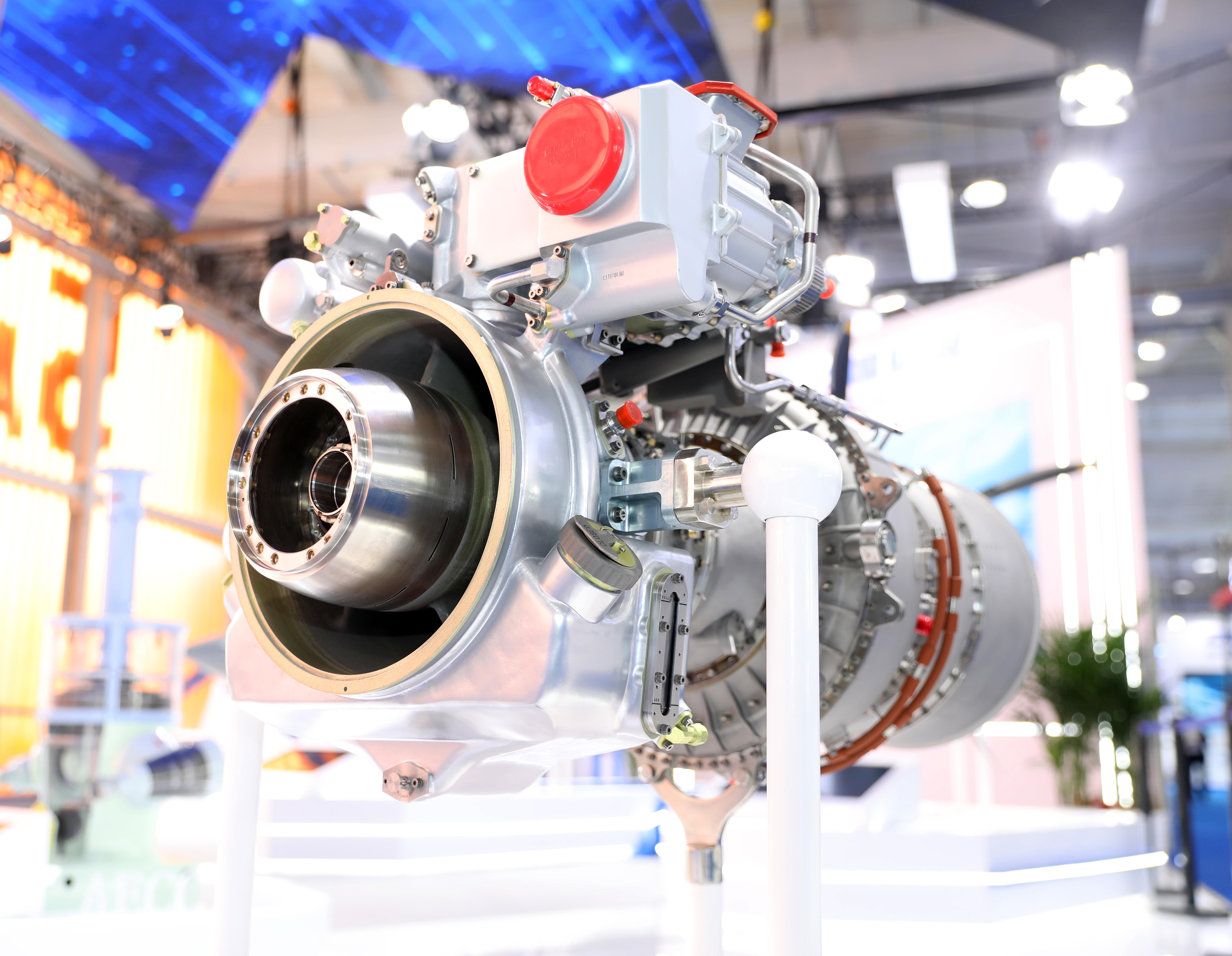
A new tiltrotor aircraft, fitted with the latest power-enhanced engine variant of the AES100 series of engines, has successfully completed a flight test phase in Qiqihar, northeast China's Heilongjiang province.
The AES100 is China's first domestically developed advanced 1,000-kilowatt-class civil aviation turboshaft engine model. To verify its airworthiness, the research team conducted multiple highly difficult and risky airworthiness tests.
Endurance under extreme conditions
The first was a 150-hour endurance test, comprising 25 groups of six-hour cycle operation and simulating the most severe working conditions in the entire life cycle of an engine.
The most difficult part was the "three-redline" test, which required the thrust, rotor speed and gas temperature of the engine to reach their respective design limits at the same time, and each cycle had to operate stably for six hours, Yang Yan, deputy chief designer of the AES100, said.
The temperature distribution within an engine's combustion chamber is inherently non-uniform, and tests exacerbate it. It could result in localized overheating and damage the turbine blades. Therefore, mitigating such non-uniformity to the largest extent possible is the key to passing the test.
The team studied more than 100 configurations designed to ensure stable combustion. However, the shortlisted designs did not perform well when tested. The engine frequently exhibited problems such as carbon deposits on nozzle surfaces and unstable temperatures at the combustor outlet.
With time running out, the team, while continuing to optimize the initial configurations, pursued a second design approach. Over the next three years, they repeatedly modified the combustor structure and explored more advanced configurations.
In 2022, the new configuration delivered encouraging test results at a high-altitude test facility in Mianyang, Sichuan province in southwest China. In March 2023, the AES100 began a 150-hour endurance test and passed it successfully at the first attempt.
Vibration within limits
The engine containment test was the next step. In this, the engine's power transmission shaft has to be deliberately severed while the engine is running at maximum speed, causing the high-speed rotating turbine blades to fracture and fly off around the entire circumference in an instant.
The resulting destructive force is comparable to detonating multiple high-energy bombs inside the engine core.
Within 15 seconds of the blade release, the engine casing must contain the high-energy fragments without being penetrated by them or triggering an uncontrolled fire.
This is a major test that comes at the cost of an engine worth over 10 million RMB. If it failed, it would deal a major blow to the development of the entire engine program, Li Gaiqi, chief designer of AES100 and chief scientist at Aero Engine Corporation of China Hunan Aviation Powerplant Research Institute, said.
The team began tackling the technical challenges collectively five years in advance, all for those 15 seconds. They systematically identified and eliminated potential risks across more than 10 technical fields and 36 critical risk areas associated with the engine containment test. They also carried out successive rounds of validation, progressing from material properties and component strength to subsystem reliability and simulated full-engine testing.
Two months before the official test, the team conducted the operation test for the high-speed shaft-cutting equipment. In this test, the power transmission shaft had to make over 30,000 revolutions per minute. There was a moment of alarm when the rotating speed reached 29,000 revolutions per minute and the vibration amplitude exceeded the limit. The shaft ran the risk of breaking.
The problem lay in the complexity and length of the power transmission shaft. The team managed to find a solution before the official test, and the test was successfully conducted in September 2023.
Balancing ice and fire
The last major challenge was the icing test. The standard for passing the test is rigorous, and the engine is required to remain in stable and reliable operation in dozens of typical icing working conditions, such as in -30 ℃, 6,000 meters high in the sky, cloud and mist.
"Without adequate ice protection, large quantities of ice crystals in high-altitude clouds could be ingested into the engine, striking, eroding and damaging the compressor blades at high speed, potentially damaging the engine," Zhao Zunsheng, senior designer of the AES100, explained.
To address this, the team devoted a lot of effort to designing the engine's ice protection system, equipping it with two layers of "winter jackets." The first was an inlet screen that blocked high-speed cold airflow and water droplets at the air intake. The second was a hot-air anti-icing system for the inlet assembly.
However, this system cost some of the engine's power output, reducing overall engine efficiency. This meant the team had to strike a balance between anti-icing performance and overall engine efficiency, finding the optimal point between "ice and fire."
After extensive simulations, they identified an optimal bleed-air extraction ratio of 2.8 percent. This provided effective ice protection across the full operating envelope while minimizing power losses, achieving the best trade-off between protection and operating efficiency.
With this dual-layer ice protection system, the engine maintained stable operation with all operating parameters within normal ranges, successfully withstanding tests in a range of extreme icing conditions. This achievement fills a gap in China's airworthiness compliance verification for whole-engine icing.