

Smarter, Greener Grain Storage Gets Upgraded
By Staff Reporters
China has rolled out its fourth-generation grain storage facilities —a new breed of "air-dome" silos to make food stockpiling smarter, more energy-efficient, and far less reliant on chemicals.
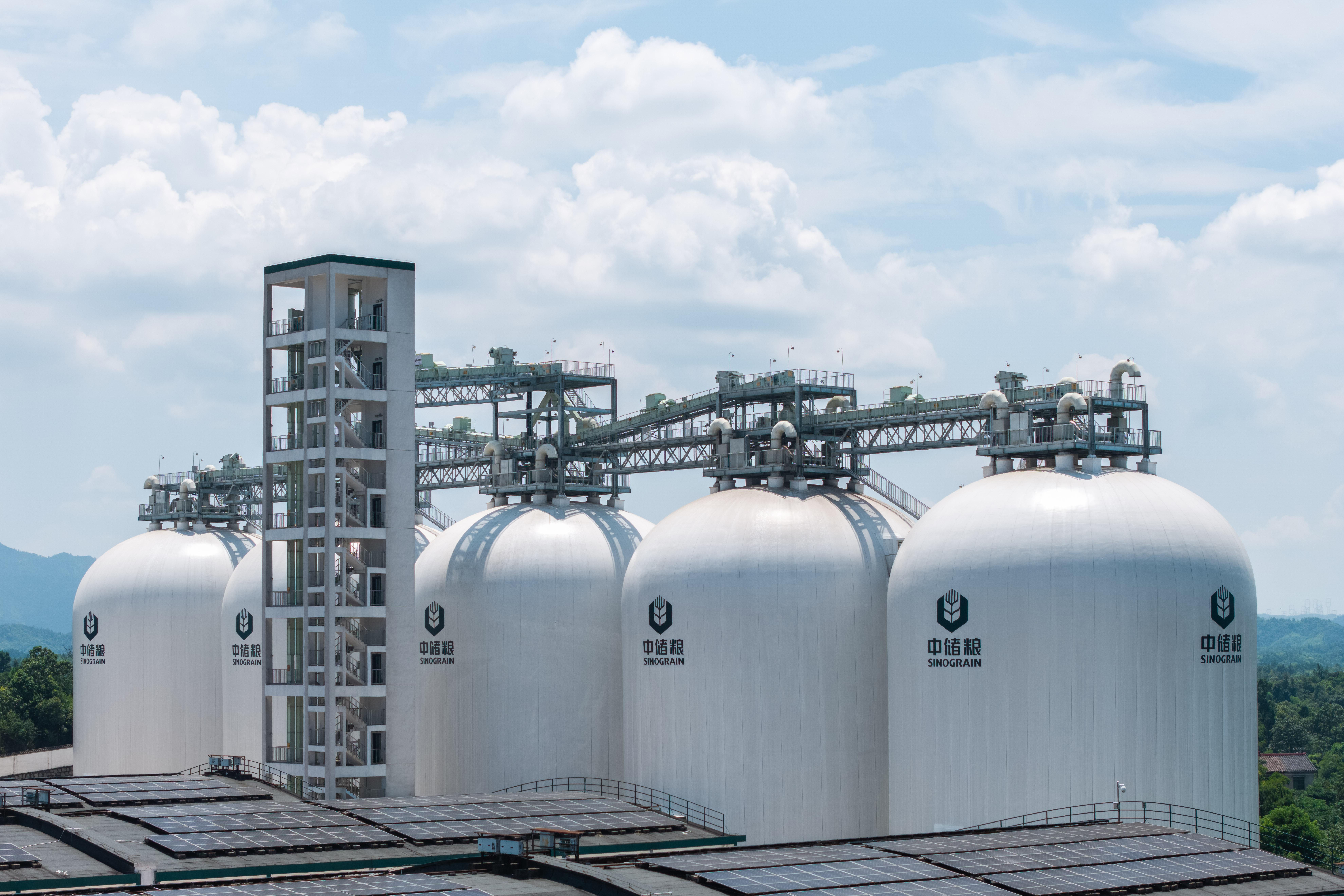
The first domestically built 9,000-tonne units recently went into service at the Sinograin Changsha depot in Hunan, following initial trials in Chengdu in May 2023. The pilot phase proved the concept; now the technology is moving from the lab into real-world, large-scale application.
Key breakthrough
The five new silos at Changsha are hard to miss. Each stands 33.6 meters tall—roughly the height of an 11-story building—with a smooth cylindrical body and an egg-shaped dome roof. They have more storage space and prevents rainwater from pooling.
China's grain storage has gone through three earlier generations. The first ones were simple earth, timber, or brick structures. The second improved on moisture protection, ventilation, and sealing with brick-and-concrete warehouses, though temperature control remained elusive. The third generation computerized monitoring, mechanical aeration, fumigation, and cooling — but still struggled with insulation and airtightness. The fourth generation version was built to fill this gap.
The breakthrough is in the walls. The fourth-generation silos use a three-layer "sandwich" construction that works like high-performance outdoor gear. The outermost layer is a tough PVDF membrane —a waterproof, fire-resistant, heat-reflecting shell. The middle layer is polyurethane, which acts as a thermal barrier while also serving as a mold during construction. The innermost layer is reinforced concrete, which bears the heavy lateral pressure of the thousands of tonnes of grain inside. The dome's lower interior height makes inspections safer and easier.
Performance-wise, the numbers speak for themselves. These new silos are over six times more airtight than what the national standard requires—a huge leap that means nitrogen gas, used to suppress oxygen and pests, stays trapped inside much longer, so refills are far less frequent. They're also about three times better insulated than conventional granaries, keeping the average grain pile temperature comfortably below 15°C. That steady chill slows down the natural aging of grain, keeps mold at bay, and cuts post-harvest losses significantly.
Smart controls
If the structure is the body, then each silo is wired with a nervous system to match. Inside each, 27 vertical cables carry a total of 378 temperature sensors, spread evenly through the grain mass. They constantly feed data back to a central control room, where operators can see real-time readings for every part of the stack on a large digital dashboard.
Temperature is just the start. Each silo comes with a full suite of smart tools: automated condition monitors, precision air conditioning, nitrogen regulation, and high-resolution cameras for remote visual checks.
The system keeps continuous tabs on humidity and gas levels, and it doesn't just sit there — it acts. If nitrogen concentration dips below a set point, the system automatically kicks on the valves and nitrogen generators to bring it up, no manual intervention is required. And because the silo holds its temperature so well, the smart controls have an easy job keeping the internal environment stable with far less energy use.
All of this adds up to what industry experts call "green storage." By maintaining a near-zero-oxygen, low-temperature environment, the silos slash the need for chemical fumigants. Grain stays fresher longer, waste is minimized, and the whole process is cleaner—both for the product and for the planet.
Lower costs, broader rollout
These high-tech silos initially cost more than traditional ones but the savings come over time. Early estimates show cooling fans use 4.33 percent less electricity, air conditioners use 50 percent less, and nitrogen consumption drops by nearly 17 percent. Overall, maintenance and operating costs are projected to be more than 30 percent lower than conventional storage costs.
The technology was developed entirely in-house by a joint team from Sinograin and China Coal Group, focusing on solving persistent headaches like poor sealing, weak insulation, and material failures in extreme weather. It has already earned a spot on the National Food and Strategic Reserves Administration's list of outstanding innovations from the 14th Five-Year Plan period (2021-2025).
Pilot projects are underway in five locations—apart from Changsha, they are Chengdu in Sichuan, Suzhou in Jiangsu, Changchun in Jilin, and Huaibei in Anhui, of which Changchun is building the country's first 10,000-tonne air-dome silo.
The footprint is still small, but the momentum is building. As construction speeds up and operators gain hands-on experience, these smarter, greener silos will spread across more regions, giving a solid boost to China's long-term food security.