

Comprehensive Measures Bolster Original Innovation
A symposium on strengthening basic research in April urged greater efforts and more concrete measures to strengthen basic research, enhance China's capacity for original innovation, and solidify the foundation for building the country's strength in science and technology.
In two months, a series of measures have been rolled out across the country for platform construction, talent cultivation, diversified capital investment as well as institutional reform.
Cradle of original innovation
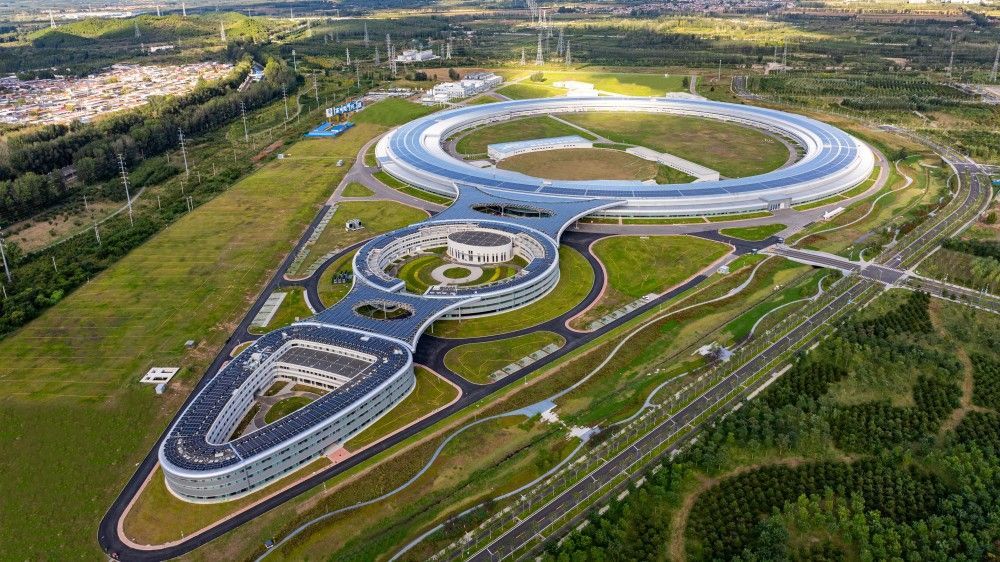
In the national comprehensive science center in Beijing's Huairou district, 37 world-class facilities and platforms are arranged in clusters. They integrate multiple extreme conditions, such as strong magnetic fields, extremely low temperatures and ultra-high pressure to support basic research in over a thousand domestic and foreign universities, research institutions and enterprises, promoting original innovation.
After the symposium, the acceptance and open sharing work of the High Energy Photon Source (HEPS) project in the national comprehensive science center was accelerated. After 10 years of dedicated work, HEPS was completed with the support of the Beijing municipal government.
"We are striving to put it into operation within this year," said Jiao Yi, a researcher at the Institute of High Energy Physics, Chinese Academy of Sciences (CAS).
Favorable ecology for innovation
Comprehensive efforts have been made to cultivate, introduce, and utilize talent and expand the talent pool for basic research.
According to an official with the Jiangsu Provincial Department of Science and Technology, the eastern province has put in place a full-cycle and progressive support system that covers young researchers at all stages — from exceptionally promising top-tier talents to up-and-coming scholars in the early phases of their research endeavors.
In the north, Shanxi's science department on May 9 launched its 2026 basic research program, with a dedicated young scientist track offering up to 50,000 RMB per project over three years, paid in one lump sum.
"We encourage young researchers to dare to think, try, and fail," said Guo Haicheng, director of the science bureau in Jinzhong, a city in Shanxi.
Fujian province in southeast China has found a way to bring private capital into research beyond public funding. On May 9, it called for more partners for its fourth-phase joint natural science fund, giving contributing firms the right to set topics and join project reviews. So far, it has leveraged nearly 170 million RMB in joint funds.
"We have taken steps to bring industry leaders such as battery giant CATL into the National Natural Science Foundation's joint fund program for private companies, so that more enterprises can lend strong support to original innovation," said an official in charge of the Basic Research and Fund Management Division at the Fujian Provincial Department of Science and Technology.