

Sci-Tech Guardians of Ancient Books
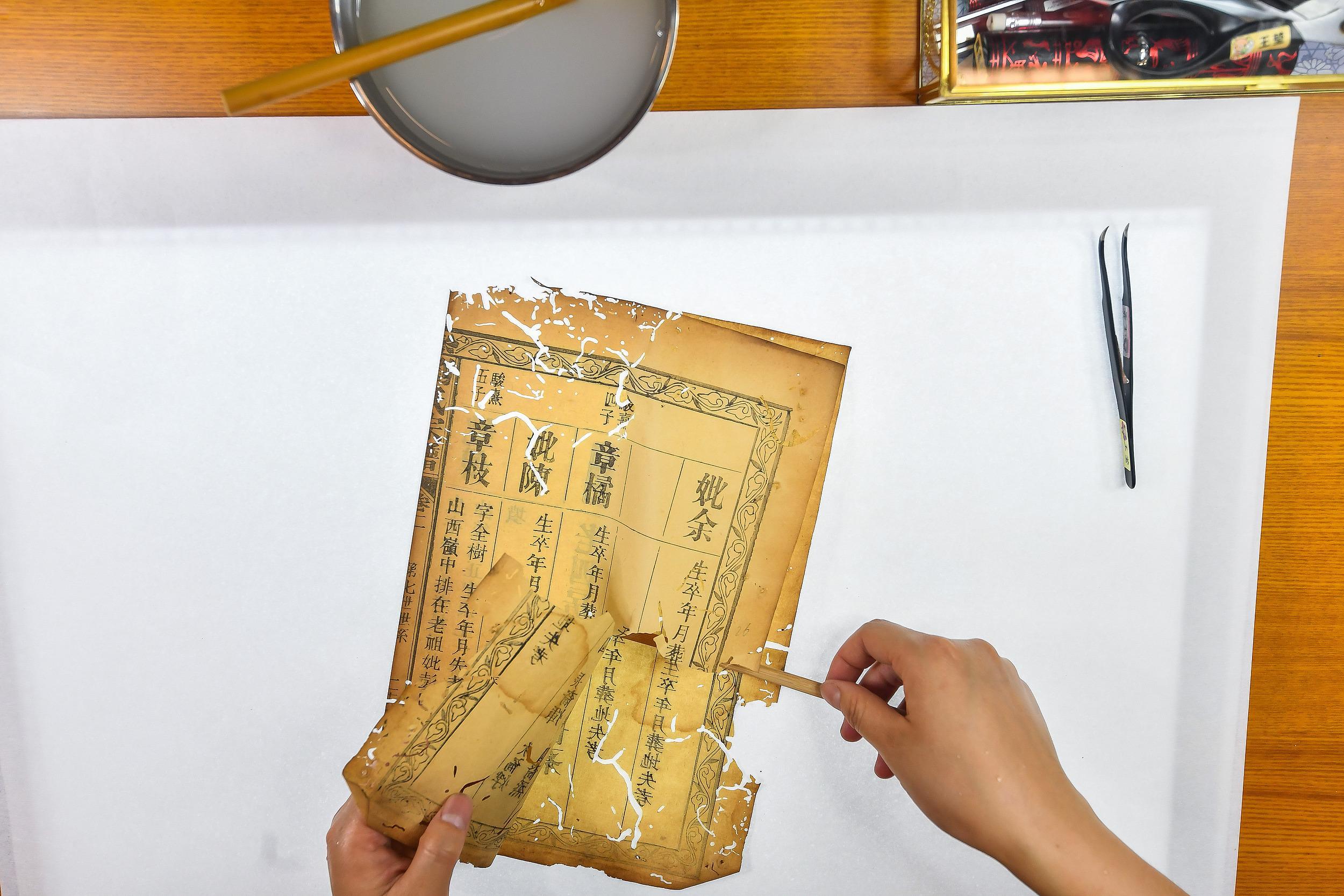
When we think about reading, we often picture books with pages smelling of ink or electronic screens displaying shifting light. However, on the fourth floor of the Shaanxi Library, there is a group of dedicated people who spend their days immersed in ancient texts dating back a thousand years or more. Their work goes further than just reading as they are the preservers of these precious books.
Scientific "diagnosis" prescribes the cure
Restoring ancient texts is a far more complex process than simple "cutting and pasting." The Qisha Tripitaka, a collection housed at the Shaanxi Provincial Library, is a monumental compilation of Buddhist scriptures from the Song and Yuan dynasties. It possesses immense historical, literary and artistic value. Some pages had fused together so tightly that they could not be opened or turned, resembling solid "bricks of books."
The restoration team deliberated long and hard before taking action. "Before we began the actual repair work, we first subjected the texts to a comprehensive 'scientific health checkup,' including pH testing, microscopic fiber analysis and multispectral imaging," said Xue Jimin, deputy director of the department of historical documents at the library.
"By determining the pH level, we know exactly what concentration of deacidification solution is required. By analyzing the paper fibers, we can select patching paper that perfectly matches the original material. With precise data on paper strength, we can confidently proceed with page separation and backing, ensuring that we do not inadvertently damage the ancient texts," Xue explained. He noted that this technological assessment serves as the "diagnostic report" preceding restoration, enabling conservators to apply precise treatments rather than working blindly.
Effective restoration can only be achieved after a precise diagnosis. The restoration team used a combination of dry separation techniques and progressive humidification methods to gently separate the fused pages. They also leveraged the naturally alkaline properties of the local water supply in northern China for the necessary deacidification.
In January 2026, the restoration of the two precious volumes of the Qisha Tripitaka was successfully completed. Following an expert review, the quality of the restoration work was officially rated "excellent."
The ongoing "revitalization" of ancient books
In this library, the quest to breathe new life into ancient books does not end on the restoration bench.
In 2024, the library's Qisha Tripitaka restoration project was selected as a "Public Welfare Project for the Preservation and Utilization of Ancient Books." After being resuscitated via the hands of restoration experts, this ancient text has now been made available to a wider public audience with the aid of community engagement.
Staff members from the Department of Historical Documents, who are responsible for cataloging and organizing ancient texts, discovered a true "treasure" within the dusty stacks. They found a record indicating that Wang Zheng, a Ming Dynasty poet, had designed a device resembling a bicycle. This fact had been buried in ancient texts and was largely unknown to the public. A digitization team formed by these staff members constructed a physical replica of the "bicycle" using LEGO bricks, winning top honors in relevant competitions. The team also produced animated short films based on ancient texts, bringing these dormant classics to life and introducing them to campuses and digital screens in a style that resonates with young people.
From 2008 to the present, the Shaanxi Library has restored 247 rare ancient works comprising over 100,000 pages, according to statistics. Zhou Yunyue, director of the library said, "We will continue to strive to ensure the enduring legacy of even more precious ancient texts, thereby making a greater contribution to preserving China's outstanding traditional culture and building China into a leading country in culture."