

China's Capacity for Sci-tech Innovation Greatly Enhanced
During the 14th Five-Year Plan period (2021-2025), China's capacity for scientific and technological innovation significantly improved, with breakthroughs in core technologies in key fields accelerated, according to an official report released by the National Bureau of Statistics on June 2.
The report highlighted significant progress in the country's innovation-driven development strategy.
R&D spending and talent pool grow
China's R&D expenditure increased from 2.44 trillion RMB in 2020 to 3.93 trillion RMB in 2025, marking an average annual growth rate of 10 percent, the report showed. The country's R&D intensity, or the share of R&D expenditure in GDP, rose from 2.36 percent to 2.80 percent during the same period, exceeding the average level of Organization for Economic Co-operation and Development (OECD) countries.
The number of full-time R&D personnel expanded from 5.24 million person-years in 2020 to 7.95 million person-years in 2025, maintaining its world-leading ranking for 13 consecutive years, according to the report. The value of technology contracts nationwide surged from 2.8 trillion RMB in 2020 to 7.6 trillion RMB in 2025, indicating improved efficiency in commercializing technologies.
Strategic breakthroughs and infrastructure
During the five-year period, China established 77 national major sci-tech infrastructure projects, the report said, adding that some of these facilities have reached world-class levels. Breakthroughs were made in frontier fields such as quantum information, AI, life sciences, and deep-sea, deep-earth and deep-space exploration.
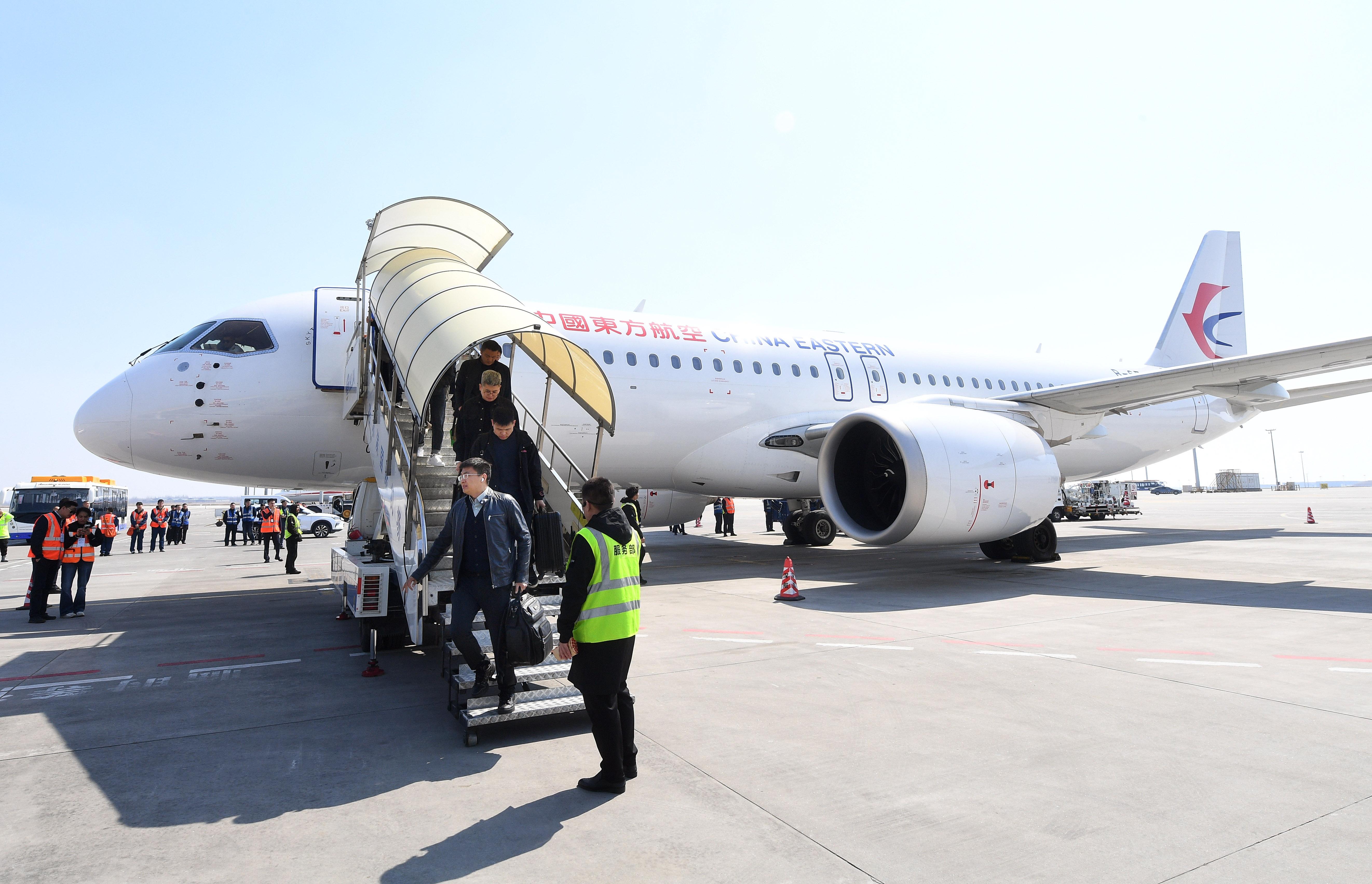
Progress in developing domestic chips and breakthroughs in operating systems was also made, along with leadership in LiDAR technology. Major achievements include the full operation and application of the Tiangong space station, regular commercial flights of the homegrown C919 large passenger aircraft, and the commissioning of the "Mengxiang" deep-ocean drilling vessel.
New quality productive forces
By the end of 2025, China had cultivated over 600,000 tech and innovative small and medium-sized enterprises (SMEs), 504,000 high-tech enterprises, and over 140,000 specialized and sophisticated SMEs, according to the report.
Nearly 90 percent of industrial enterprises above designated size had undergone digital transformation by the end of 2025. The added value of the "three new" economy — new industries, new business formats and new business models — accounted for 18.01 percent of GDP in 2024, up 1.5 percent from 2020. The digital economy's share of GDP rose to 33.1 percent in 2024, with China having 101 world-leading manufacturing facilities or "lighthouse factories," the highest number in the world.
Broader economic and social impact
The 14th Five-Year Plan period witnessed a leapfrog improvement in China's sci-tech innovation capability, achieving new breakthroughs in high-level technological self-reliance, the report said. It added that technological innovation has become the primary driver of high-quality development, fully integrated into all economic and social sectors.
Industrial robots are now used in 71 major industrial sectors, and the density of robot manufacturing in China far exceeds the global average, the report said. China's installed capacity of new energy storage accounts for over 50 percent of the global market, while the contribution rate of agricultural technology advancement surpassed 64 percent in 2025.
The report noted that remote medical service networks now cover all cities and counties, and cross-provincial direct settlement of medical bills has benefited over 560 million patient visits.
Looking ahead to the 15th Five-Year Plan period (2026-2030), the report called for deepening reforms of the sci-tech system, enhancing the overall efficiency of the innovation, and fostering new quality productive forces.