

How 'China Squeeze' Narrative Was Manufactured
U.S. think tank Peterson Institute for International Economics recently introduced a new term — "China squeeze," arguing that China's manufacturing sector is not only challenging advanced industries in Europe and the U.S., but also crowding out the industrialization opportunities of other developing countries in the Global South.
The sophisticated report, accompanied by economic models and detailed datasets, gives the impression of academic rigor, and has gained traction after being quoted by mainstream U.S. media outlets. One of them, Foreign Affairs, claimed China was "pulling up the ladder" for developing countries.
Responding to the claim, Chinese Foreign Ministry spokesperson Mao Ning said at a regular press briefing that the "China squeeze" was clearly inconsistent with the facts, and "countries of the Global South would not endorse this narrative either."
From the "China shock" narrative to accusations of "Chinese industrial overcapacity," from the so-called "debt trap" theory to today's "China squeeze" rhetoric, the terminology keeps changing, but the underlying logic remains the same: portraying China's development as a threat to others.
This time, however, the narrative has been packaged more carefully. Rather than targeting only Western audiences, its proponents have placed Global South countries at the center of the argument, attempting to sow distrust between developing nations.
The background of the narrative's main advocate raises questions about political bias. The report was led by Arvind Subramanian, who was the chief economic adviser to the Government of India from 2014 to 2018, and who has long expressed anxieties about China's economic rise, frequently advancing arguments centered on China's alleged economic dominance over other countries.
The degree of academic objectivity behind such a conclusion is therefore open to question.
More importantly, the narrative fits neatly into Washington's broader strategy of containing China's rise. The report has emerged and gained attention at a time when the U.S. has been intensifying trade pressure against China.
Washington has erected protectionist barriers in the name of safeguarding its own industries, while simultaneously accusing China of harming global development. It has even attempted to present itself as a defender of the interests of Global South countries.
Yet behind the polished rhetoric lies an old argument that cannot withstand scrutiny from facts and data.
A 2025 S&P Global report says over the past decade, China's imports of goods from Global South countries have more than doubled, reaching one trillion USD. As of May 1 this year, China has officially implemented zero-tariff treatment on 100 percent of tariff lines for the 53 African countries it has diplomatic relations with.
The extent of China's market opening is far from what certain reports have deliberately misrepresented. China is using its significant market demand to provide broad market access for products from Global South countries.
The actual development experiences of Global South countries also contradict the "China squeeze" theory.
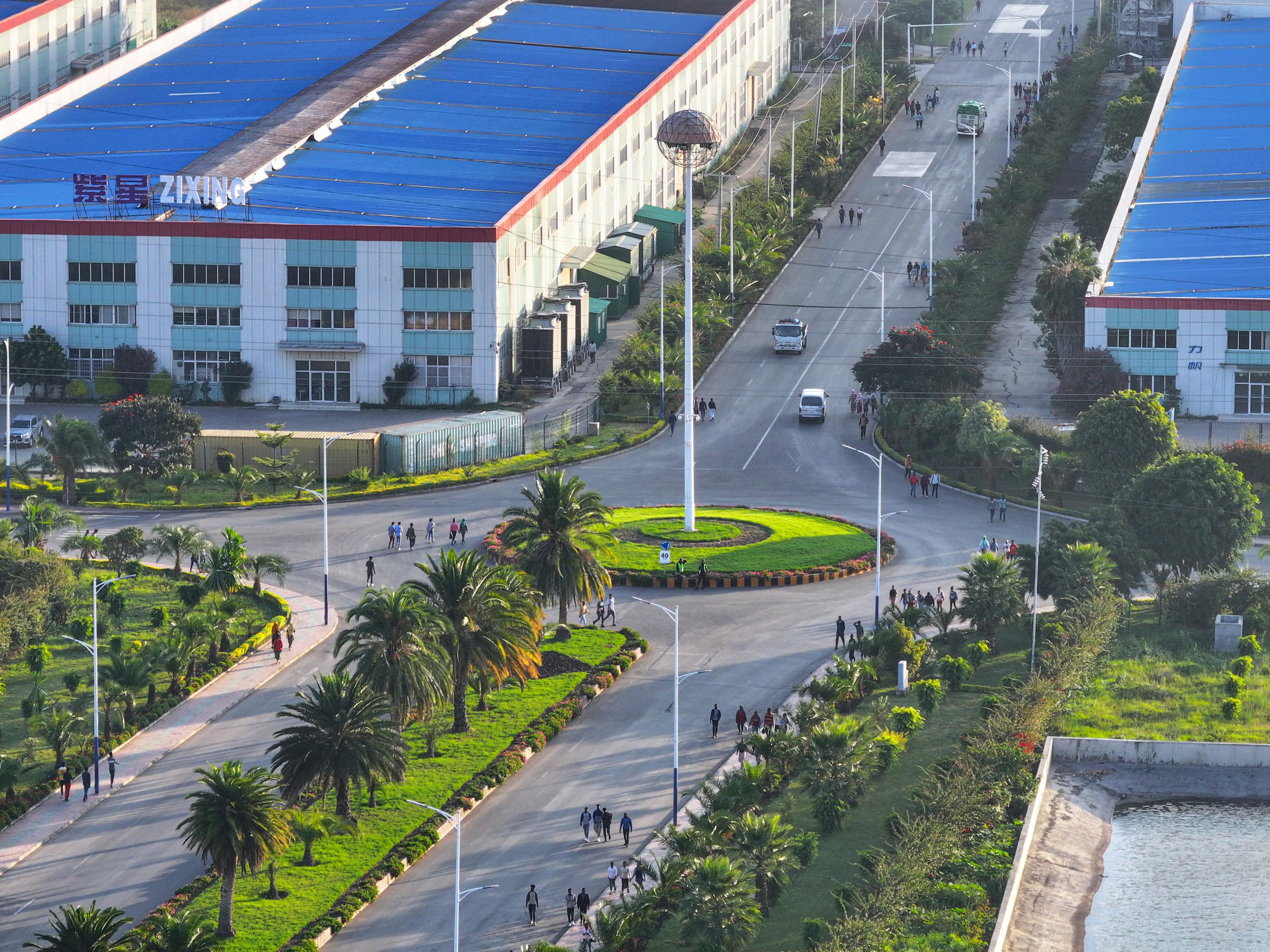
Ethiopia, leveraging the Eastern Industrial Zone established with Chinese investment, has built its manufacturing sector from scratch, creating over 20,000 local jobs cumulatively. Far from being "crowded out," it has gained new opportunities for industrialization through the radiating effect of China's development.
The facts also reveal China's broader responsibility toward global development. China has signed cooperation documents on jointly building the Belt and Road Initiative with more than 150 countries and over 30 international organizations. Research reports show that from the launch of the Belt and Road Initiative in 2013 to the end of 2025, the cumulative value of contracts and investment reached 1.4 trillion USD.
In Africa alone, 33 economic and trade cooperation zones have attracted over 13 billion USD in cumulative investment, generating 90,000 direct local jobs. China exports not just products, but also infrastructure and development opportunities. This is not "pulling up the ladder," but "building a ladder."
The true insidiousness of the "China squeeze" theory lies in its attempt to tear apart the solidarity between China and other Global South countries. China has stood with fellow developing countries through thick and thin for decades. Today, China is going even further to support the development of its partners — opening markets, investing in infrastructure, and transferring technology — all of which are tangible efforts on the ground. A tendentious report cannot erase this bond that has stood the test of time.
The greatness of a nation lies in its commitment to the world — this captures the broader logic of China's shared development with the world. China will continue to provide opportunities for the world through its own development and join forces with other Global South countries in pursuing shared prosperity.