

Robot Import Ban May Backfire on U.S.
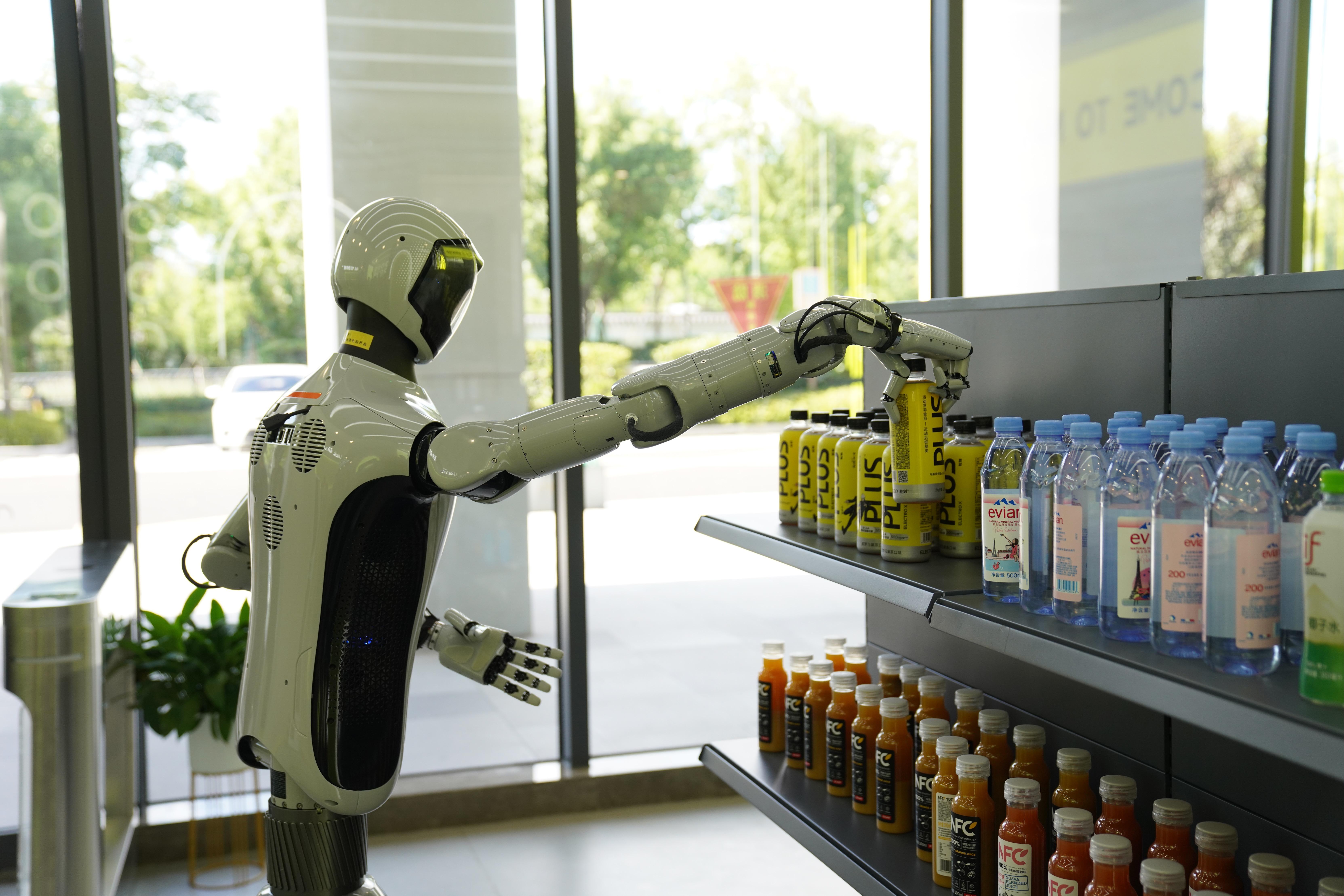
The U.S. has once again invoked "national security" to target Chinese robotics. On July 28, the U.S. Federal Communications Commission (FCC) announced that it would add foreign-produced "advanced robotic devices" and connected power inverters to its Covered List. This move blocks new foreign-made humanoid and quadruped robot models, as well as connected power inverters, from gaining authorization to enter the U.S. market. The FCC stated this was necessary because such equipment poses "unacceptable risks to the national security of the U.S. or the safety and security of U.S. persons."
Although the measure does not explicitly name China and instead targets "foreign-made" equipment, international media have widely pointed out that China is clearly in Washington's sights. As the U.S.-China high-tech rivalry intensifies, Washington's attempt to build a "small yard, high fence" to keep out competitors only highlights its own lack of confidence. As China gains an increasingly clear lead in robotics, the anxiety and sense of urgency in the United States appear to be growing stronger.
The root of this anxiety is the reality that the U.S. is falling behind in industrial competition. Data released at a news conference for the 2026 World Robot Conference showed that China accounted for 90 percent of global humanoid robot shipments in 2025, with more than 330 models, underscoring the explosive growth of the sector.
By contrast, a July report by the Washington, D.C.-based Information Technology and Innovation Foundation (ITIF) said that U.S. companies accounted for fewer than five percent of humanoid robot sales in 2025. In terms of individual companies, China's Unitree Robotics sold about 5,500 G1 robots, AgiBot sold about 5,168 A2 robots, and UBTECH sold 1,000 Walker robots. Meanwhile, U.S. companies Figure AI, Agility Robotics and Tesla each sold roughly 150 units. The ITIF report noted that while the U.S. lags in demand for its robots, China has cultivated robust domestic and export markets.
China's lead in humanoid robotics is the result of decades of investment in manufacturing and sustained innovation. U.S. technology outlet TechCrunch highlighted that China has a more robust hardware supply chain — much of it built up through the EV sector, from sensors to batteries — and the world's strongest manufacturing base, enabling companies to iterate far faster than Western competitors. The Wire China said Unitree Robotics' rise underscores how China's strengths in advanced manufacturing allow it to rapidly scale and commercialize emerging technologies.
In fact, the U.S. remains highly dependent on China for robotics hardware, making genuine "decoupling" extremely difficult. David Hansen, co-founder and CEO of U.S. robotics manufacturer Westmag, argues that the restrictions will do little to fundamentally weaken Chinese robotics companies.
Ted Xiao, a former Google DeepMind scientist, similarly pointed out that every single live player in "robotics + AI" relies on Chinese hardware; the U.S. robotics hardware ecosystem is years behind. Nvidia CEO Jensen Huang has called China "formidable" in robotics. China's microelectronics, motors, rare earths and magnets — which are foundational to robotics — are the world's best, according to Huang.
The same dependence on Chinese-made hardware can be found in U.S. research. An increasing number of American research institutions have opted to purchase complete Chinese-made robots while directing more resources toward the "software layer" of robotics, including robot algorithms and AI models. This reliance on Chinese hardware has become deeply embedded in the ecosystem supporting cutting-edge U.S. research.
Consequently, Washington's use of administrative power to impose restrictions could further slow the pace of American exploration, ultimately backfiring on the U.S. itself.
Responding to the U.S. restrictions on July 29, a spokesperson for China's Ministry of Foreign Affairs stated that protectionism does not make the U.S. more competitive and will only harm the interests of U.S. companies and consumers. A spokesperson for China's Ministry of Commerce added on July 30 that if the U.S. insists on moving ahead, China will take countermeasures to safeguard its legitimate rights and interests.
True competitiveness has never been achieved by shutting others out, but by competing fiercely in an open market. Restricting competitors cannot create a competitive edge, nor can protectionism substitute for industrial upgrading. The door to the robotics era has already opened, and building higher walls will not make the U.S. run faster.