

Smart Mosquito Traps Make Summer Parks More Pleasant
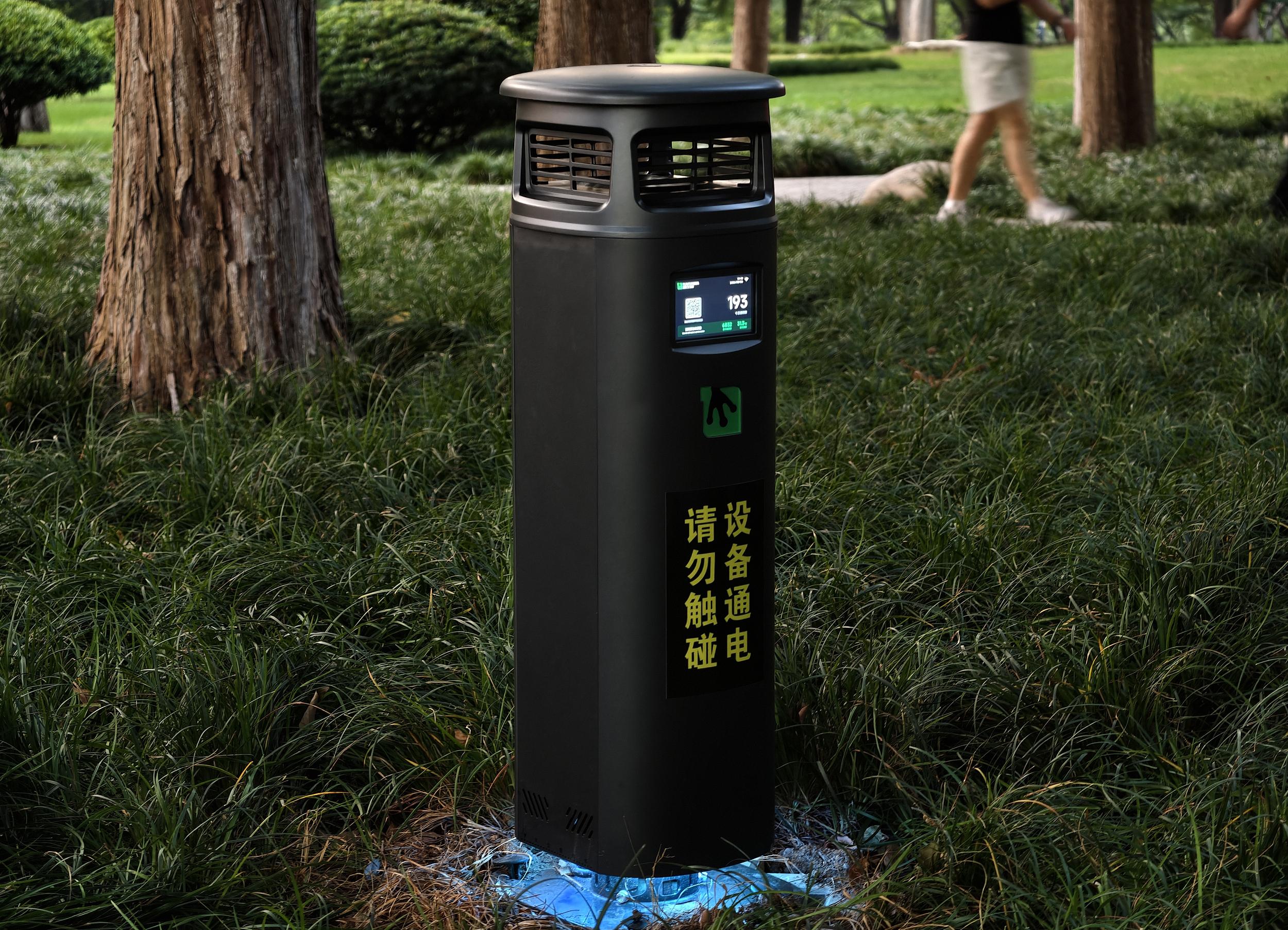
As evening falls, visitors stroll along the shores of Northwest Lake Park in Wuhan, central China's Hubei province, enjoying the cool air. Many have noticed a striking difference this summer: Unlike in previous years, when mosquitoes frequently feasted on parkgoers, there seem to be far fewer of the insects buzzing around.
The change can be attributed to a batch of high-tech mosquito traps that have gone into operation in the park.
"These smart, breathing-simulation biological mosquito traps use biomimetic technology to capture and eliminate mosquitoes, without using chemical agents throughout the process," said Wang Zeming, a senior engineer at the park.
The machines attract mosquitoes by releasing carbon dioxide at a specific concentration to continuously simulate human breathing. Standing quietly among the grass, the black cylindrical devices have a simple, understated design that blends into the surrounding landscape. An electronic display on each machine provides real-time updates on mosquito-catching data, making the equipment's operating status easy to monitor.
When in operation, the traps also activate special-spectrum lights that provide a secondary attraction for mosquitoes in the surrounding area, improving the capturing efficiency. Once mosquitoes are lured close to the machine, a negative-pressure airflow draws them inside like a vacuum cleaner, where they are confined in a sealed collection box and killed by dehydration.
"Compared with traditional methods such as pesticide spraying and sticky mosquito traps, smart mosquito traps are environmentally friendly and pollution-free. They can operate around the clock, with real-time access to mosquito-control data," Wang said. "They target only blood-feeding mosquitoes, without harming beneficial insects such as bees and dragonflies, making mosquito control more efficient, environmentally friendly and visually unobtrusive."