

AI for Science Shifts from Efficiency Boost to Systemic Reform of Research
AI for Science has entered its "second half" — shifting from building AI-powered research tools to restructuring the entire research ecosystem, according to E Weinan, an academician of the Chinese Academy of Sciences and academic committee chair of the AI for Science Institute, Beijing (AISI).
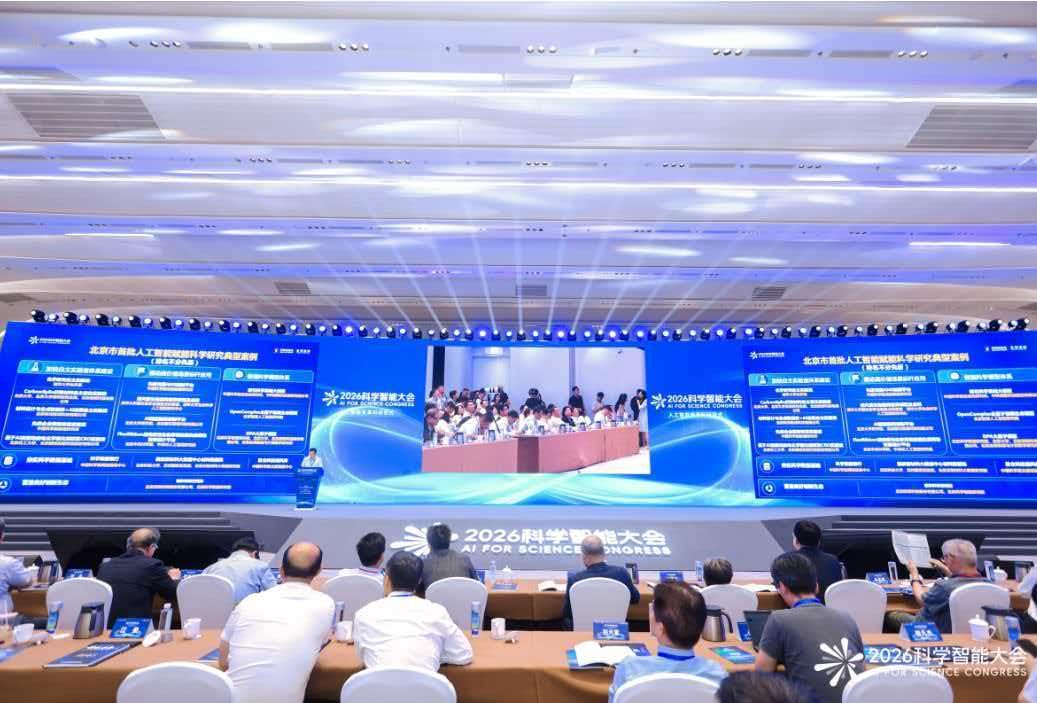
Speaking at the recently-concluded 2026 AI for Science Congress in Beijing, E said: "The value of AI goes far beyond speeding up research. It will structurally reshape the production model and operational system of basic research."
From tool to system
Many still view AI as a research assistant — handling literature searches, large-scale simulations and other tasks within the existing framework. E called this only the first stage, an improvement in research productivity.
The real question, he said, is what comes "after AI for Science": once technological capabilities leap forward, how should research organization, evaluation criteria and resource allocation be systematically redesigned?
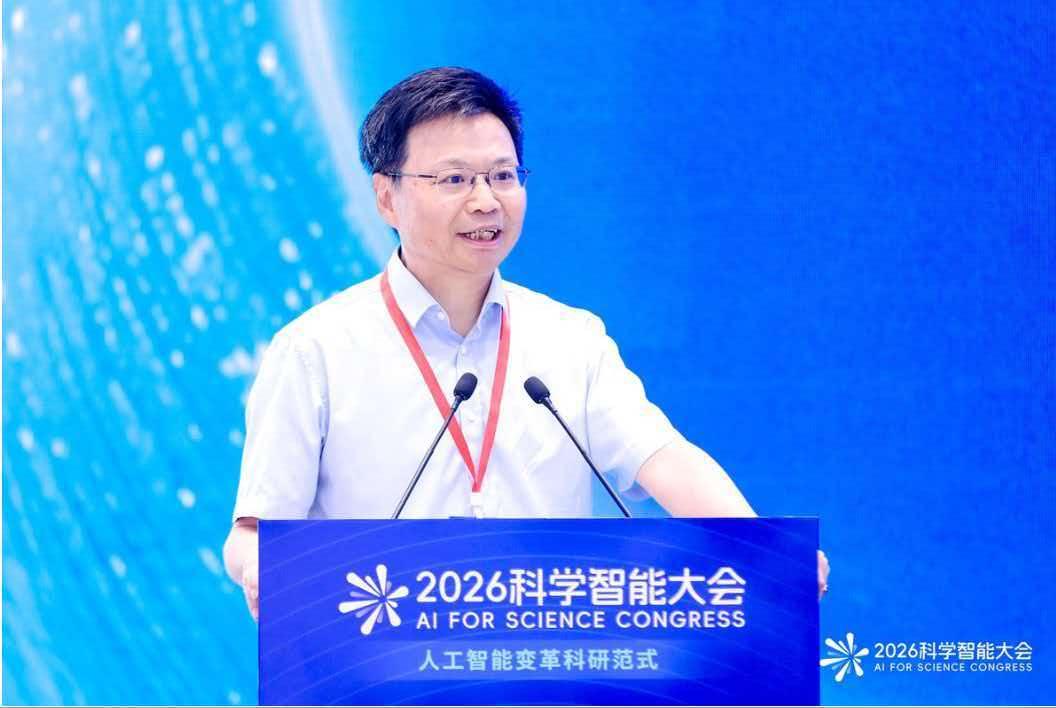
Drawing an analogy to general-purpose software ecosystems, E envisioned an open, universal research infrastructure integrating computing power, simulation engines, domain knowledge bases and automated laboratory interfaces — dramatically lowering the barrier to research.
Routine and repetitive work will be automated and handled by platforms, while original and disruptive discoveries become more visible and valuable.
"It's like carpentry — apprentices used to study under a master for three years. Now those tasks are mechanized, but the highest level of craftsmanship stands out even more. True scientific discovery returns to its rightful place," E said.
Research will no longer depend heavily on large laboratory hardware. Scientists who can pose clear questions will complete full research cycles using shared platforms, changing the traditional model of small, independent labs. AI can take over literature sorting, routine simulations and standardized writing, but the difficulty of original innovation will not diminish.
Infrastructure and model architecture
AISI has built its first "four-beam, N-pillar" infrastructure system. Unlike traditional platforms focused on instruments and computing clusters, it integrates knowledge parsing engines, large-scale simulation modules and automated closed-loop experimental systems, enabling cross-disciplinary knowledge synthesis, multi-scale computation and experiment-simulation iteration. Simulation capabilities have improved by orders of magnitude in just a few years.
"The core modules of this infrastructure are self-developed and fully under domestic control," he said.
He warned against a common misconception in scientific large model development: Simply stacking scientific capabilities onto general-purpose models through incremental patches cannot solve difficult basic science problems. Truly research-adapted models require fundamental architectural reconstruction, not feature add-ons.
The infrastructure is scheduled for multiple rounds of key technical iteration this year, with independently developed intelligent laboratories expected to achieve engineering breakthroughs between late 2026 and 2027.
Talent and institutional reform
A shortage of interdisciplinary talent — fluent in both basic science and AI — remains a key bottleneck. E noted that many current projects are led by AI specialists, but valuable scientific questions should originate from fundamental researchers, followed by cross-disciplinary collaboration.
He predicted that the democratization of research will be a long-term trend.
He specifically cautioned against copying Internet industry playbooks: "The Internet's core is information and communication; AI's core is intelligent decision-making. The underlying logic is fundamentally different — directly applying existing industry experience can lead to technical path deviations."
"Only by seizing this historic opportunity of research paradigm transformation and tackling the challenges of technical infrastructure, scientific data, interdisciplinary talent and institutional mechanisms can we translate first-mover advantage into original innovation leadership," E said.
The two-day conference, held August from 21to 22, gathered nearly 50 academicians and over 80 young scholars.