
Modern Technology Revitalizes Ancient Irrigation Civilization
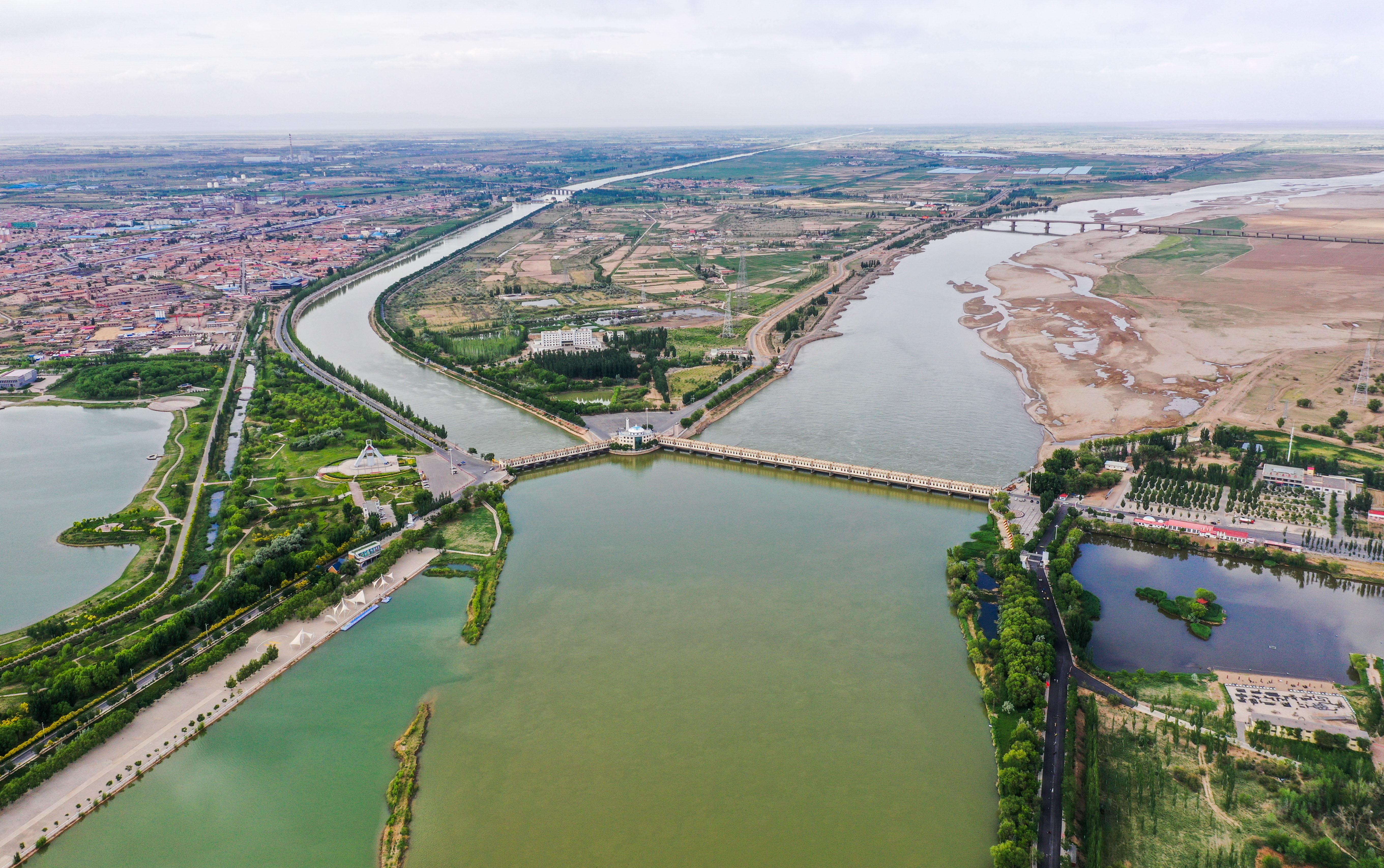
Perched on the top of the Yellow River's iconic "Ji-shaped" bend in Inner Mongolia autonomous region in northern China, the Hetao Irrigation Area is one of China's three largest irrigation schemes. Home to 183,500 irrigation and drainage structures, it diverts river water to irrigate approximately 769,000 hectares of farmland, serving as a core national grain and oil production base. With a 2,200-year irrigation history tracing back to the Qin and Han dynasties, it was inscribed on the World Heritage Irrigation Structures List in 2019.
The Yellow River's heavy sediment load and the Hetao Plain's gentle gradient make precise canal siting critical for stable operation. In the late Qing Dynasty, hydraulic engineer Wang Tongchun developed a pioneering dam-free gravity irrigation system after years of fieldwork. Leveraging the region's southwest-high terrain, he located the intake at a river bend at a 60-degree angle to the downstream flow, pairing it with a carefully designed drainage outfall.Yet the design had inherent flaws: competition for water between different canals caused drought in dry seasons, while high flows flooded farmlands.
A 1950s blueprint solved the problem: A single intake feeding a central trunk canal could be connected to all existing waterways for unified distribution. The Sanshenggong Water Control Project turned this vision into reality, ending centuries of water management struggles. Today, its hundred-meter sluice splits the river's flow. Each year, 4.6 billion cubic meters of water reach farmlands via the canal network; 700–800 million cubic meters of drainage flows through Wuliangsuhai Lake back to the Yellow River, forming a fully integrated single-intake system.
To combat soil salinization, the district has designated over a dozen ecological conservation zones, using the natural principle of salt traveling with water to trap saline deposits in low-lying plots. It has integrated high-standard farmland construction, water-saving technologies and innovation, driving smart, data-enabled agriculture.
Today, Hetao diverts up to five billion cubic meters of water annually, producing roughly three billion kilograms of grain and living up to its reputation as the "granary beyond the Great Wall." The Sanshenggong Water Control Project also handles flood control, ice flood prevention, hydropower and water supply, fusing ancient wisdom with modern engineering to revitalize this millennia-old irrigation civilization.