
Fourier Showcases 'Tech + Ecosystem' at WRC 2026
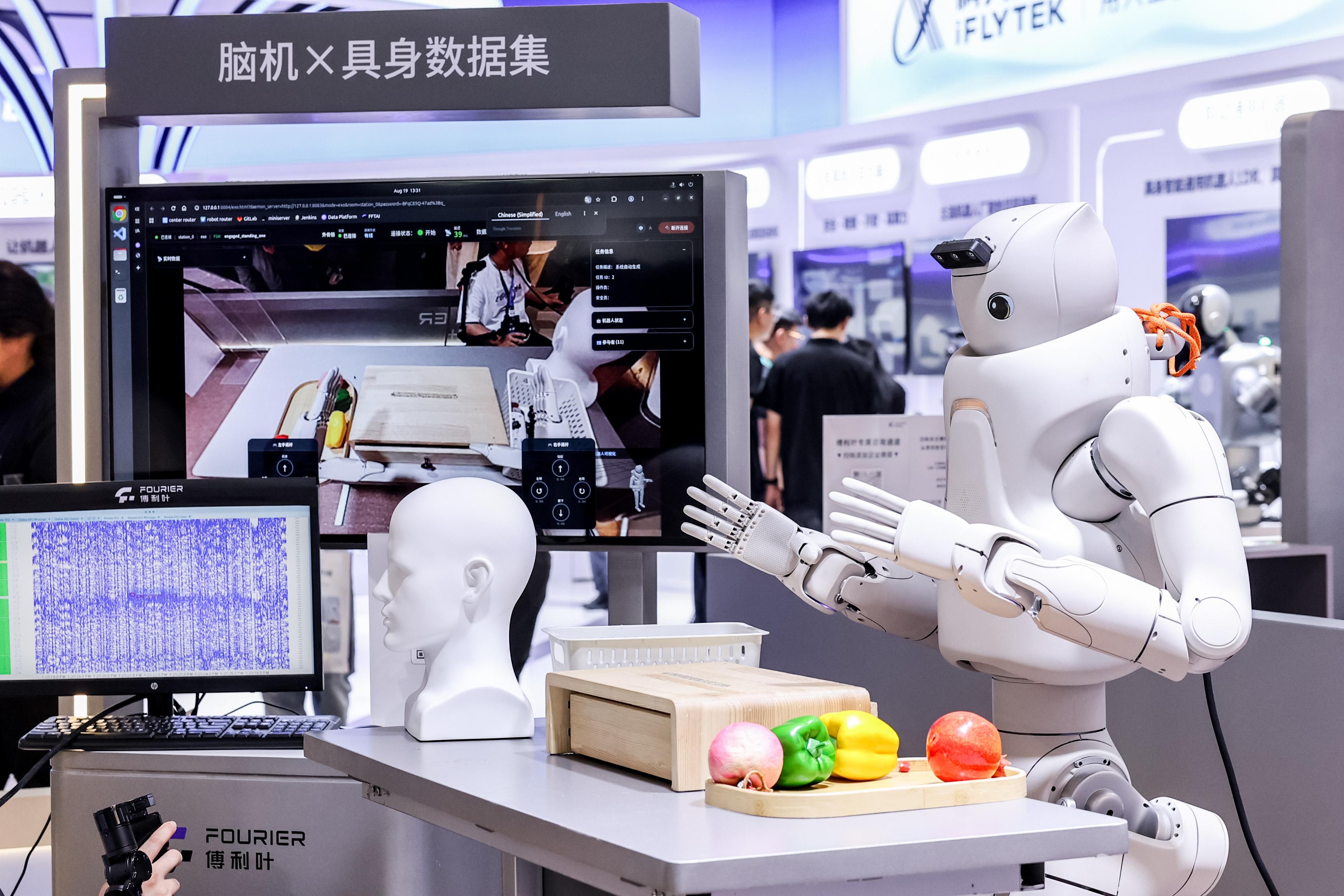
Shanghai-based AI robotics company Fourier, together with multiple ecosystem partners, made a collective appearance at the 2026 World Robot Conference (WRC), showcasing cutting-edge applications in embodied models, data infrastructure, core components, and scenario-specific solutions.
A major highlight at the exhibition booth was Fourier’s "Embodied Home" technology solution, a comprehensive demonstration of its GRx humanoid robot's full-stack capabilities for residential services.
Through an immersive experiential space themed "A Robot Butler's Day," attendees experienced how multiple GR-3 robots, powered by proprietary semantic mapping technology, operated as intelligent butler assistants. Using natural language commands, visitors directed the robots to autonomously divide tasks ranging from home security and item delivery to companionship and guest reception. This demonstration took human-robot interaction beyond mere "command execution" toward deeper understanding and proactive service, showcasing new possibilities for robots to integrate into future family life.
Currently, the embodied intelligence industry is transitioning from a phase of isolated technological breakthroughs to a new stage of comprehensive, system-level development. As robots increasingly enter real-world production and daily-life scenarios, their capability advancement is becoming ever more dependent on collaborative innovation across multiple areas—including models, data, core components, scenario applications, and development tools. How to connect innovation efforts dispersed across different segments of the industrial chain, and how to accelerate the journey from technological breakthroughs to productization and large-scale deployment, are now critical factors driving the growth of the embodied intelligence industry.
Based on this assessment, Fourier is building an open and collaborative industry ecosystem. Leveraging its expertise in robot hardware, core technologies, supply chain systems, and real-world application scenarios, it is proactively connecting upstream and downstream innovators. Through strategic investments, technical collaboration, joint R&D, and shared industrial resources, it provides an "interface" for external innovations to access the robotics industry system, accelerating the validation and iteration of technologies based on real product and application needs. This "chain-driven" innovation creates a closed loop of "technological innovation—product validation—scenario application—data feedback—capability iteration."