
Cold Climate, Hot Industry: Tech Empowers Plateau Agriculture
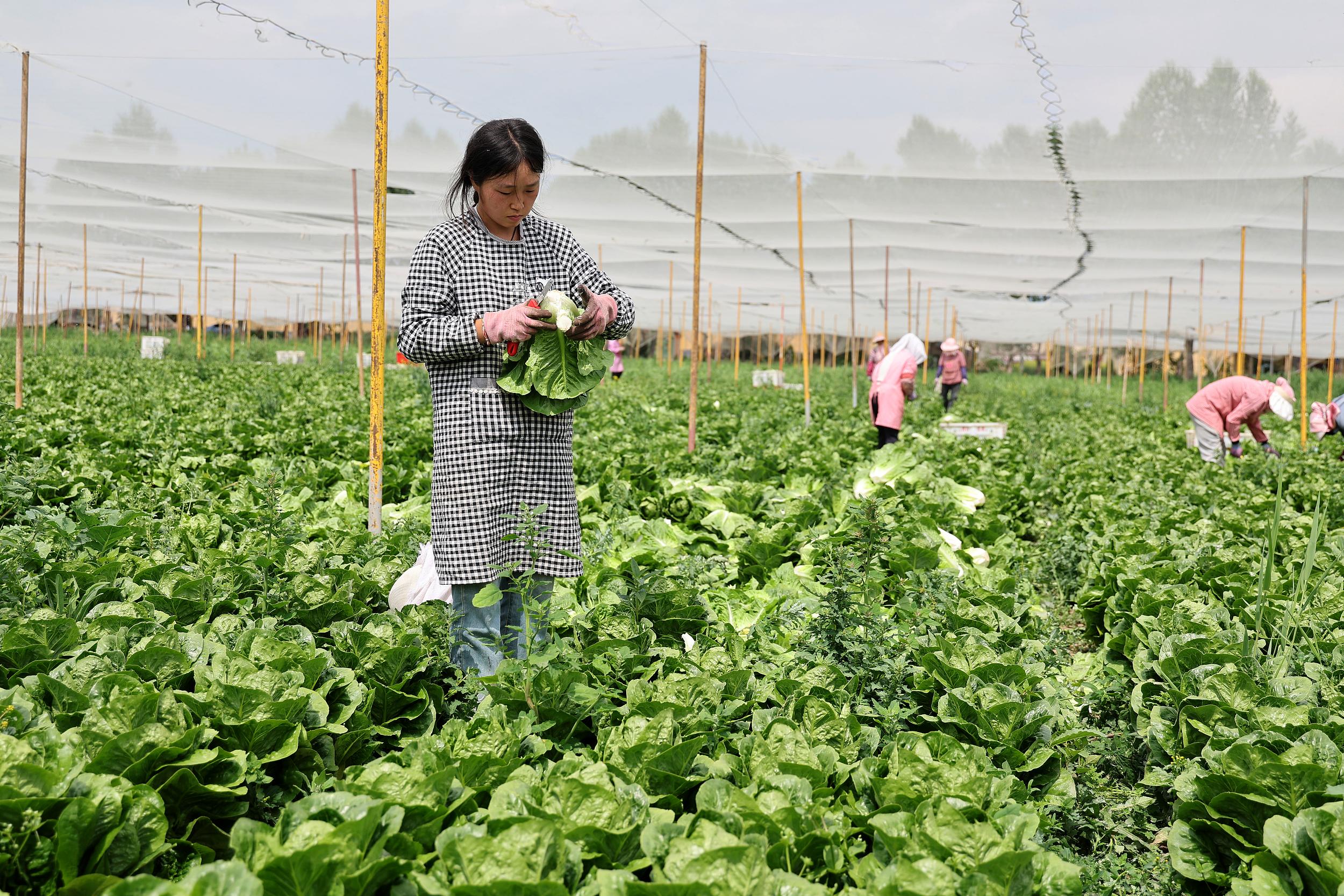
In Huangzhong, a district of Xining city, capital of northwest China's Qinghai province, cold-climate vegetable farms have entered their peak harvest time. The vegetables are picked and packed, and then shipped to markets both at home and abroad.
Cold-climate vegetables are produce suited to high-altitude (typically above 800 meters) or high-latitude cold regions, with an optimal growing temperature of 17-25℃. Major varieties include Chinese cabbage, radish, broccoli, onion, pumpkin and potato.
From scattered, extensive cultivation to tech-enabled standardized production, Huangzhong's transformation is a vivid microcosm of Qinghai's efforts to revitalize its ecological resources via tech advancement.
A recipe for higher yields
Huangzhong, at an altitude of over 2,200 meters, has a cold climate with a short frost-free period. The pristine ecology means fewer pests and diseases, while the abundant sunlight and sharp day-night temperature swings help crops accumulate more nutrients, improving their taste and quality.
Around 2010, Huangzhong put its cold-climate vegetable industry on a fast track, shifting from scattered smallholder planting to contiguous, standardized cultivation.
After 2016, the district moved toward facility-based, technology-driven farming, expanding plastic greenhouses and solar greenhouses year by year and building a cluster of large-scale facility planting bases. Variety selection has since grown from conventional types to more than 50 varieties, including choy sum and crown daisy.
Building on its modern agriculture industrial park, Huangzhong has set up an intelligent seedling center. Using the Internet of Things to precisely control temperature, humidity, light, water and nutrients for seedling growth, the center has revolutionized traditional seedling raising techniques.
Wang Jianzhong, deputy head of the district seed station, said seedlings cultivated with the new technologies have stronger cold resistance and higher survival rates. Combined with the cold-climate resources, yields can be lifted by more than 20 percent.
From local supply to national market
Currently, Huangzhong has a stable vegetable planting area of around 130,000 mu (approximately 8,667 hectares), with an annual output of 344,500 tonnes. The industry drives employment and income growth for nearly 100,000 people.
Huangzhong's story mirrors the broader rise of Qinghai's cold-climate vegetable sector.
In 2025, the planting area for cold-climate vegetables in the province reached 695,000 mu (about 46,333 hectares), with a total output of 1.79 million tonnes. It accounted for 12 percent of the province's primary industry value-added.
In the first half of this year, Qinghai exported over 3,700 tonnes of cold-climate vegetables, up 91.9 percent year-on-year, making the sector a key pillar of its export of green, organic agricultural and livestock products.