

From Frontier Technologies to Development Engines
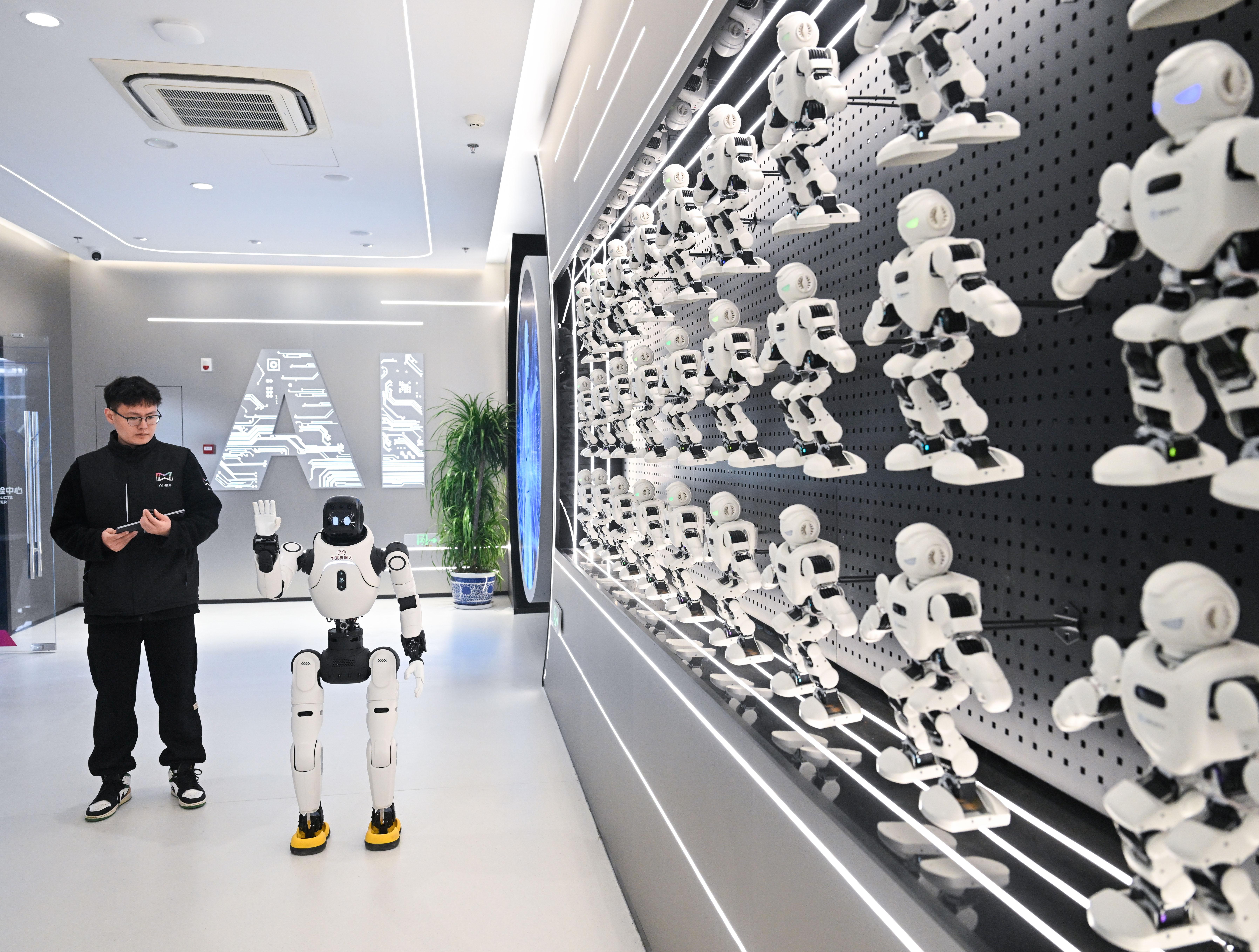
From the innovation of humanoid robots to the rise of intelligent connected vehicles, and the establishment of a commercial spaceflight ecosystem, a series of practices are transforming cutting-edge technologies into productive forces all over China.
A crucial step for the industrialization of science and technology is its entry into real application scenarios. Some 300 robot ecosystem enterprises in the Beijing Economic-Technological Development Area vividly demonstrate how this works.
The Beijing Innovation Center of Humanoid Robotics in the development area collected data from real scenarios like supermarkets and talent apartments, and achieved rapid technology iteration via dedicated pilot factories, establishing a closed-loop "scenario-data-computing power" system, Wei Jiaxing, brand and public relations lead at the Center, said.
Qingdao in Shandong province in east China conducted a sci-tech innovation project with 10 demonstration projects, building 100 innovation platforms, tackling 1,000 technological barriers, and fostering 10,000 sci-tech enterprises.
During the 14th Five-Year Plan (2021-2025) period, Qingdao's smart home appliances, rail transit equipment, instruments and meters, and marine engineering equipment industries were selected as national advanced manufacturing clusters.
To truly translate into productive capacity, technological innovation must seamlessly integrate multiple stages —from R&D and pilot testing to industrialization — ensuring technologies smoothly enter the market.
The Xiang'an Biomedicine Laboratory in Xiamen in southeast China, established in 2021, harnessing the biomedicine research team of Xiamen University, has been granted full autonomy to build platforms, assemble teams and innovate mechanisms to overcome bottlenecks in commercialization. This will drive the commercialization of biomedicine innovation achievements.
The efficient coordination mechanism between research institutions and enterprises has a huge contribution in the successful launch of products, Wang Daning, R&D director at Xiamen Innovax Biotech Co., said.
The research teams in universities focus on "zero to one" fundamental research, conducting mechanism research, technological path exploration and concept verification during the lab phase, while enterprises undertake the "one to 100" industrialization, rapidly advancing process development, enlarging commercial scale, and quality control to ensure stable and efficient production of products, Wang added.
The automotive supply chain has also achieved critical linkages across multiple cities. Chongqing in southwest China has accelerated the development of intelligent connected new energy vehicles by increasing R&D investment and launching multiple industrial innovation initiatives.
In Heihe in Heilongjiang province in northeast China, the world's largest year-round low-temperature testing facility enables winter testing throughout the year. Previously, they had to be done overseas. This has halved the time taken by corporate R&D cycles and enhanced the automotive supply chain.
In addition, localized innovation ecosystems also play a key role in promoting new quality productive forces.
Previously known for its coal industry, Hebi in central China's Henan province has been transformed into a hub for commercial spaceflight, gathering nearly 40 upstream and downstream enterprises. The city also set up the first batch of satellite industry fund worth 400 million RMB and leveraged nearly four billion RMB in social investment. The fund primarily supports the development of satellite manufacturing, launch, application and related industries.
Jilin province in northeast China cultivates new quality productive forces in agriculture tailored to local conditions and has established a number of high-level breeding innovation platforms.
Jiang Hongwei, director of the institute of soybeans at the Jilin Academy of Agricultural Sciences, said the Academy has established five demonstration bases for soybean yield enhancement across eastern, central and western parts of the province, showcasing over 20 new varieties to advance crop improvement.
Concurrently, Jilin's laboratory system development has reached a new height, establishing a multi-tiered, high-level innovation platform matrix.