
COMMTR: A Beacon of Global Transportation Research
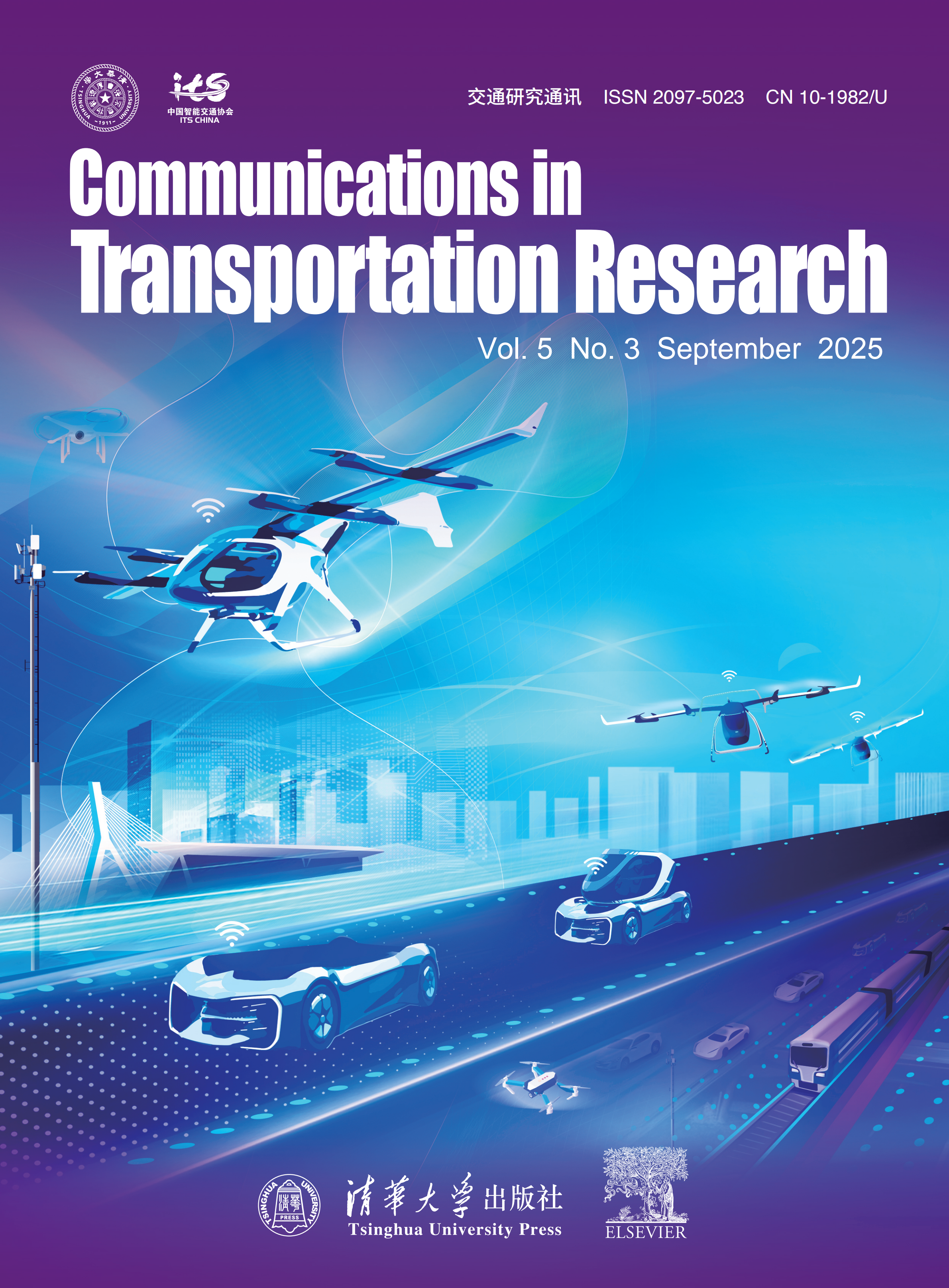
Communications in Transportation Research (COMMTR) has rapidly emerged as a leading international platform in the field of transportation research, since its inception in 2021. The peer-reviewed journal is committed to publishing high-impact, authoritative studies and serves as a vital bridge connecting Chinese expertise with global innovation.
Building an interdisciplinary ecosystem
Modern transportation systems represent a complex integration of civil engineering, information science, energy, environmental studies and social behavior. Recognizing this, COMMTR has embedded interdisciplinary collaboration at its core from the outset. The journal's editorial board comprises 55 members from over 20 countries, with overseas scholars accounting for 69 percent — including 13 academicians. This international diversity has attracted high-quality submissions worldwide, with international contributions reaching 70 percent.
A representative example of a modern transportation system is the Demand-Responsive Transit Vehicle Scheduling (DRTVS) method developed by Tsinghua University and CRRC Electric Vehicle Co., Ltd. This research innovatively integrates spatiotemporal network algorithms, user behavior analysis, and transportation demand modeling. By analyzing multi-source data such as historical order records and population density distribution, the approach enables dynamic optimization of an on-demand vehicle dispatch system. The implementation of this system in Zhuzhou, Hunan, boosted daily revenues to several times those of conventional buses, demonstrating the significant practical value of interdisciplinary research. Following its publication in COMMTR, the research has been widely cited, spurring international collaboration across Asia, Europe and North America.
Promoting data sharing and open research
Upholding open science as a core principle, COMMTR launched the ETS-Data platform in 2022 in collaboration with Tsinghua University Press. This initiative provides the global research community with open data resources, hosting nearly 100 datasets from 24 countries by 2025. The platform's impact was recognized when it was included in the Data Citation Index in 2023. To ensure transparency and reproducibility, COMMTR mandates that contributing authors share their research code and key data. This policy not only allows reviewers to verify research findings but has also significantly increased the reuse rate of research materials compared with similar journals.
Furthermore, COMMTR supports an international reviewer database and an intelligent pre-screening system, reducing the average time from research submission to first decision to just seven days. To foster inclusive academic exchange, COMMTR co-organized an online symposium in 2022, attracting 7,700 scholars from 18 countries. In addition, its 2024 "micro-lecture" series reached a cumulative audience of over 100,000 viewers.
Future trends and leading transformation
To anticipate emerging research and industry directions, COMMTR employs a "Trend Radar" mechanism. As part of this mechanism, the platform proactively organized a special issue on "Advanced Low-Altitude Transportation Systems" in early 2023 and a virtual issue on "Transportation Electrification and AI Integration" in early 2024. This trend tracking is driven by a global team of early-career researchers from institutions such as Tsinghua University and the University of Wisconsin-Madison, who conduct quarterly scans of frontier research, with insights validated by senior scholars.
COMMTR is now indexed in both SCIE and SSCI. In June 2025, it received a Journal Impact Factor of 14.5, ranking first among 61 journals in the JCR Transportation category.
In 2026, COMMTR plans to transition to independent operation on the SciOpen platform — an international digital publishing platform launched by Tsinghua University Press. The journal aims to evolve into a collaborative infrastructure for global transportation research, contributing Chinese expertise to addressing shared challenges facing humanity.
The authors are the co-editors-in-chief of COMMTR: Qu Xiaobo, a professor at Tsinghua University, and Wang Shuaian, a professor at The Hong Kong Polytechnic University.
Journal Review
COMMTR has charted a distinctive path, becoming a successful exemplar of how China's transportation journals can rise to world-class status. The journal has established robust mechanisms for data sharing and international collaboration, providing a high-level platform for global academic exchange in transportation.
At the intersection of academia, industry and research, COMMTR demonstrates remarkable foresight by focusing on cutting-edge topics such as intelligent transportation and green mobility. It serves as a bridge connecting research innovation with industrial application, accelerating the transformation of scientific advances into productive forces — embodying the mission and responsibility of a high-caliber academic journal.
It is hoped that COMMTR will continue to uphold this vision, take on a leadership role in driving disciplinary innovation, provide strategic support for building a strong transportation nation, and contribute Chinese wisdom to global science and technology governance, becoming a key force for the sustainable development of transportation science and technology.
——Wang Yunpeng, academician of the Chinese Academy of Engineering, and president of Beihang University