

Global Spotlight on China's Two Sessions
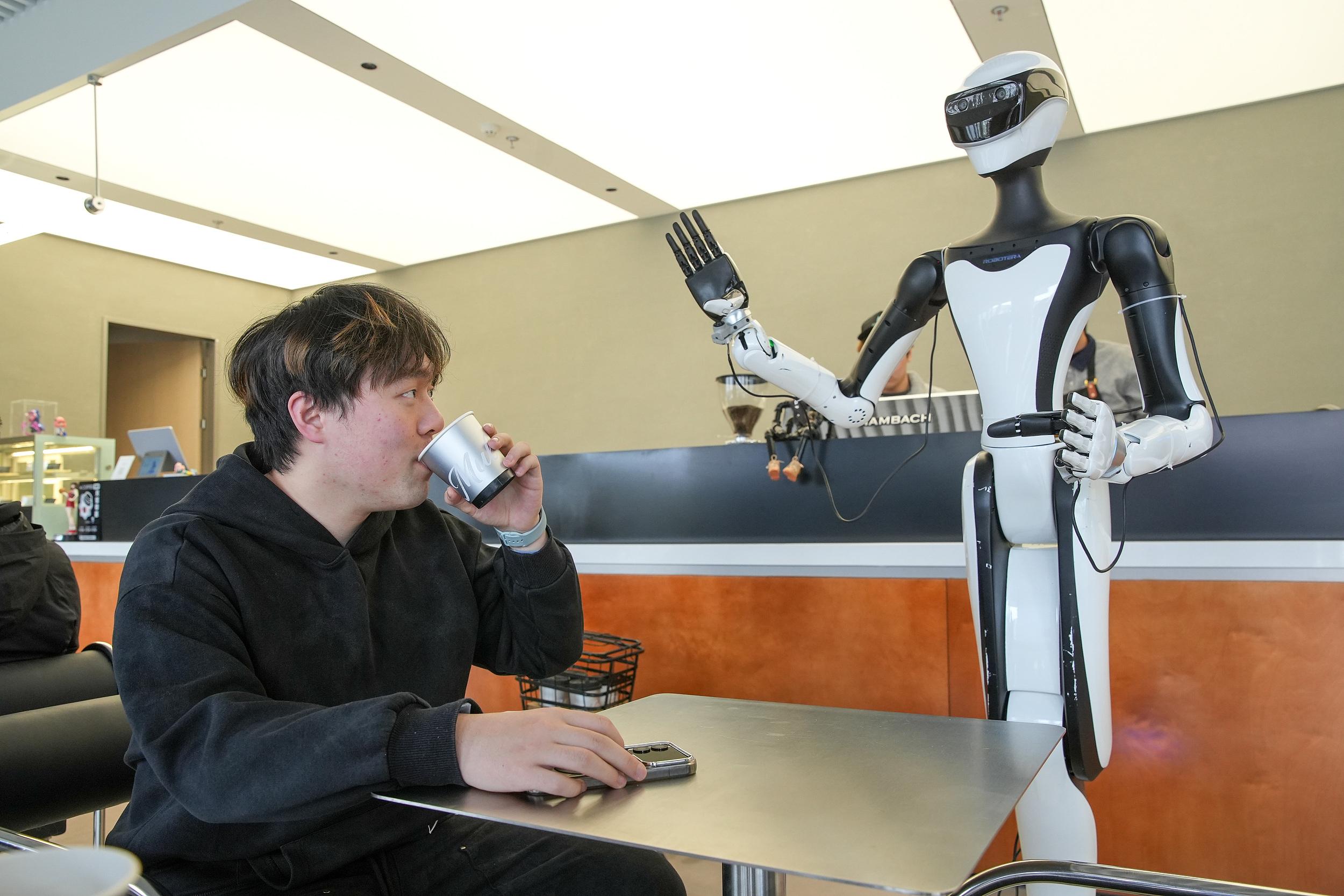
As China holds its 2026 Two Sessions — the fourth session of the 14th National People's Congress (NPC) and the 14th National Committee of the Chinese People's Political Consultative Conference (CPPCC) — in Beijing, international media outlets are closely following the meetings, viewing them as a key signal of China's policy direction.
A defining political moment
This year's sessions are particularly important as 2026 marks the start of the 15th Five-Year Plan (2026-2030).
"The Two Sessions usually tell us what Beijing wants to do over the next 12 months. This year, they'll also set out a much bigger strategy for navigating a decisive period of geopolitical and technological change," Ruby Osman, a senior policy adviser at the London-based Tony Blair Institute for Global Change, told The Guardian.
Channel News Asia called the meetings a defining political moment, listing "technology self-reliance" among the central issues to watch. In its analysis titled "five things to watch at China's Two Sessions," the outlet pointed to semiconductors, AI, and next-generation telecommunications as key themes shaping both domestic policy and global expectations.
Malaysia's English-language daily Malay Mail described the gathering as unusually significant, writing that the 2026 session "matters more than any in recent memory" due to its connection to the forthcoming development blueprint and long-term industrial strategy.
Technology and innovation take center stage
In international reporting, one area has consistently stood out: technology and innovation.
Reuters reported that China is expected to clarify its strategy to strengthen high-tech industries and reduce external vulnerabilities, especially in areas such as AI chips, robotics and advanced manufacturing. The agency noted that the meetings come roughly a year after Chinese AI developers drew global attention for rapid advances in capability.
DeepSeek, the Chinese startup whose viral AI model release last year triggered a global tech share selloff, is widely expected to roll out a next-generation model in the coming days.
"Now there is an expectation of what China can come up with next," Alfredo Montufar-Helu, a managing director at Ankura Consulting, a global expert services and advisory firm, told Reuters, reflecting the heightened global anticipation of China's technological trajectory.
An article titled Why The Two Sessions Mark A Watershed For The Global Economy in Eurasia Review underscored the scale of China's support for sci-tech innovation, noting "record levels of investment in high-tech sectors such as quantum computing, bio-manufacturing, and hydrogen energy."
The article argued that the drive for self-reliance in semiconductors and AI has become "a pillar of national stability," reflecting what it described as "strategic patience" that prioritizes long-term resilience over short-term market fluctuations.
While many observers remain fixated on the headline growth number, the real story lies in a fundamental shift of the Chinese economic model: a move away from the era of growth at any cost toward a sophisticated, technology-driven, and consumption-led future.
As CNN reported, China spent the last five years cultivating innovation and new technology at home. The next half decade will be dedicated to deploying the fruits of its labor to transform its economy.
"If the (last) Five-Year Plan's innovation policy was largely defensive, this one is much more proactive. The focus is on achieving breakthroughs in key technologies and accelerating the integration of technology and industry," said Yue Su, principal economist for China at the Economist Intelligence Unit.
Sharing China's development benefits globally
For the Global South countries, the role of the Two Sessions in steering China's economy toward an expansion of domestic demand and innovation-driven transformation is of vital importance, and is expected to open up new market spaces and development opportunities for all countries.
According to European opinion-maker Modern Diplomacy, the Two Sessions in 2026 represent a strategic focal point for the Global South, outlining the 15th Five-Year Plan, supporting high-quality development through new productive forces, and strengthening trade partnerships, particularly in the areas of energy, transportation, and the digital economy.
Its importance to the Global South lies in China's leadership of economic integration. China is promoting openness and cooperation, providing an opportunity for the Global South to benefit from the growth of the world's second-largest economy.
According to New Zealand's public broadcaster RNZ, the two-way trade between China and New Zealand exceeded 40 billion USD in the year ending June 2025, representing more than one-fifth of New Zealand's total exports and 16 percent of its imports.
Higher growth targets, combined with supportive policy measures, could bolster domestic demand for imported food and commodities, with New Zealand exporters poised to benefit.
According to the BBC, from electric vehicles and solar panels to humanoid robots and AI apps, China's industrial and technological footprint has expanded at breathtaking speed in recent years. These developments follow a state-driven road map to transform the country's status from the world's factory floor to a global tech powerhouse.
As The Pakistan Observer reported, China's Two Sessions signify the continuation of structural reforms, people-friendly policies, enhanced inflows of FDI and sustained industrial growth, alongside modernization, openness, digitalization, AI and quantum technologies.