
Chinese Electricity Becomes 'Digital Oil' Powering Global AI
With the rise of intelligent agent tools like OpenClaw, developers around the world are increasingly turning to Chinese AI models. According to OpenRouter, the world's largest AI model aggregation platform, Chinese models have surpassed their overseas counterparts in application programming interface (API) calls for a month running, consistently ranking among the global leaders in API call volume.
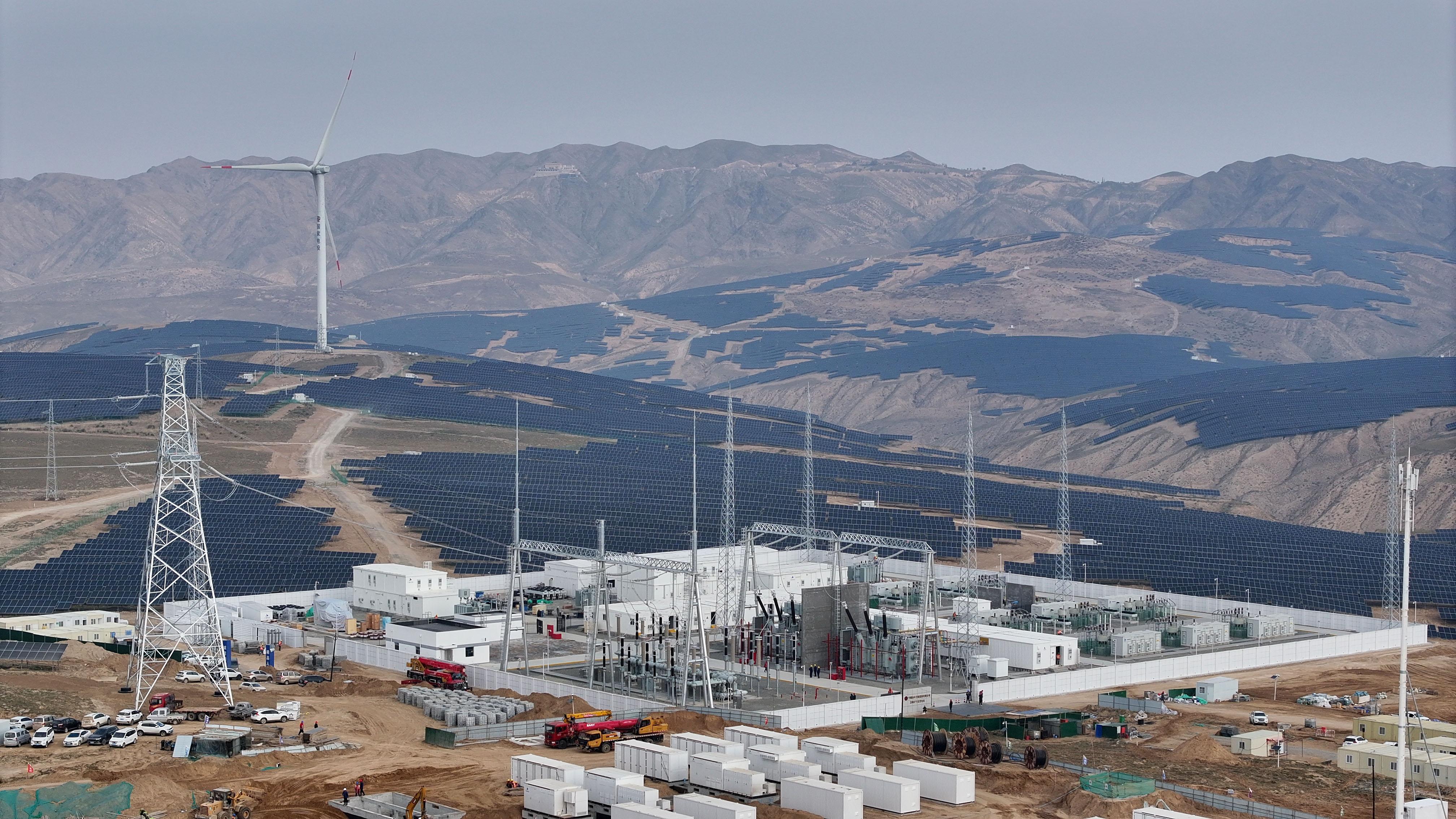
Behind the scenes, invisible currents flow through the solar panels in the Gobi Desert in western China and the wind turbines across its grasslands. Channeled through the world's largest power grid, this electricity feeds into AI computing clusters, where it is transformed into tokens — the smallest information units for AI — and then travels at the speed of light across oceans to reach global users.
Why can China's invisible electricity, packaged as tokens, drive global AI like "digital oil"? The answer lies in a combination of systemic advantages that make Chinese tokens both abundant and affordable — an edge that is exceptionally hard to replicate.
Low-cost green power builds a fundamental moat.
China has built the world's largest renewable energy supply system. Western and northern China are rich in wind and solar resources, and the low cost of electricity makes it economical to convert it locally into high-value tokens.
This not only addresses the challenge of renewable energy curtailment but also gives China's computing industry a significant cost advantage. Brokerage estimates show that the comprehensive inference cost of Chinese AI models is only one-tenth to one-sixth that of overseas models, giving Chinese token services a strong competitive edge in global markets.
The computing-energy synergy strategy removes supply-demand bottlenecks.
The national "East Data, West Computing" initiative has established eight major computing hubs, deeply integrating power transmission with computing networks. This enables intelligent scheduling: The western regions handle non-real-time tasks such as AI training and batch inference, while the eastern hubs support low-latency applications like finance and industrial control systems.
The spatial and temporal alignment of computing and green electricity significantly reduces overall energy consumption and operating costs.
A self-sufficient supply chain ensures a robust infrastructure.
From domestic GPUs, liquid-cooled servers, and high-density computing clusters to cross-border subsea cables and global low-latency networks, China has built a complete computing infrastructure supply chain. This reduces reliance on any single external link and ensures stable, efficient computing power supply.
Meanwhile, rapid progress in domestic models—through advanced computing techniques and iterative engineering optimizations—continues to lower token-wise computing resource consumption and boost inference efficiency, further amplifying cost advantages.
The rise of the token economy is reshaping global AI and energy landscapes.
It has broken the pricing monopoly of overseas tech giants, restructuring global computing markets with high cost-performance. It is opening new avenues for green power absorption in western China, creating a win-win loop between energy transition and digital economy.
It is also accelerating China's upgrade from a "physical world factory" to a "digital world smart factory," exporting intelligent services rather than just hardware. Finally, it is driving the entire industry chain—including computing leasing, cross-border networks, and AI plugin ecosystems— going global, forming a new paradigm for digital service globalization.