
Protectionism Futile for EU's Car Industry
A new act requiring automakers to ensure that at least 70 percent of the components in their vehicles are produced within the European Union (EU) if they are to be eligible for subsidies from EU countries and contracts from public institutions, is planned for release by the the European Commission, according to recent reports by foreign media including the Financial Times. Called the Industrial Accelerator Act (IAA), the measure is aimed at protecting the EU's automotive industry from strong competition from China.
In recent years, Chinese automobiles, particularly electric vehicles, have become very popular in the European market. In 2025, Chinese automakers sold over 810,000 vehicles in Europe, a 99 percent increase compared to 2024. By December 2025, the market penetration rate had approached 10 percent.
In January 2026, the total sales volume of new vehicles in the European market decreased by 3.6 percent year-on-year, while the sales of Chinese automobiles in Europe still increased by 80 percent year-on-year. It is noteworthy that this was achieved despite the fact that the EU imposed a hefty 35 percent tariff on Chinese electric vehicles.
As their tariff barriers proved ineffective, the EU proposed the IAA to double down by insisting on local production of components. Its intention is to prevent Chinese automakers from obtaining subsidies from EU countries, and further reduce the price advantage of Chinese electric vehicles. In the same broad stroke, it also forces European automakers to purchase automotive components locally, promoting the development of the local automotive industry and improving the related supply chain.
This move by the EU is a gross violation of the principles of equality and openness in international trade, and it is blatant trade protectionism. The "Agreement on Trade-Related Investment Measures (TRIMs)" of the World Trade Organization (WTO), clearly stipulates that WTO members shall not adopt any measures that discriminate against foreign products, especially the "local content requirements (LCRs)" that force enterprises and governments to use domestic products or services. The European Commission's plan to require that 70 percent of car components be sourced within the EU is a typical example of LCRs.
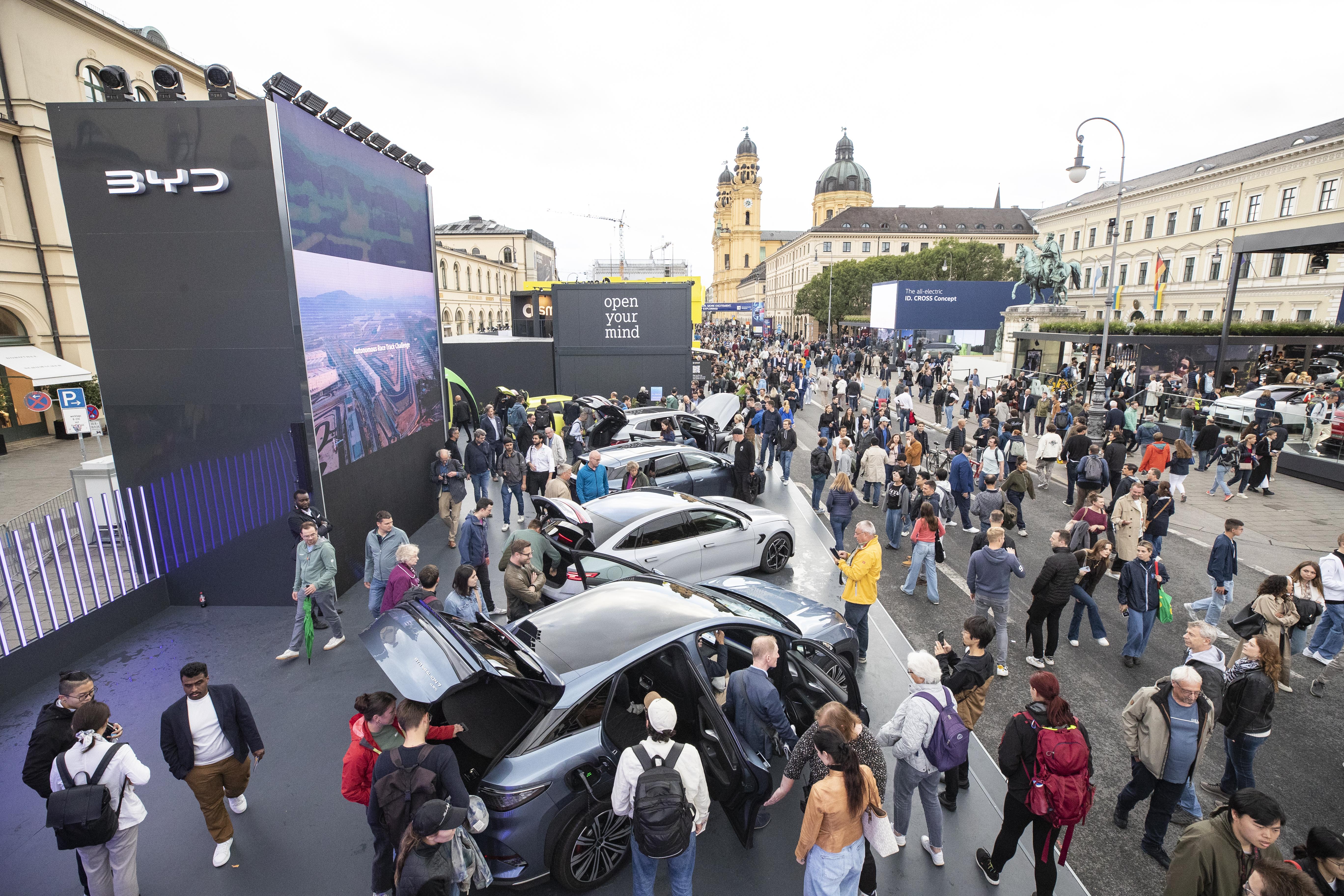
Chinese vehicles have provided Europeans with a budget-friendly transport option. For example, the BYD Seal U swiftly became Europe's best-selling plug-in hybrid vehicle within its first year of launch.
In February this year, the Center for European Policy Analysis (CEPA) in the U.S. praised Chinese cars for their "excellent performance and low prices." The average price of electric vehicles produced by European automakers is close to 50,000 euros, while the starting price of some Chinese cars ranges from 20,000 to 34,000 euros. Consequently, European buyers of Chinese cars could be adversely effected if tariffs are raised or subsidies are removed, potentially hiking up their prices.
In addition, in February this year, several researchers from the Bruegel, a European think tank, published an article stating that the EU should not follow the path of LCRs in order to protect industries, but should rather maintain an open attitude towards international cooperation. The article indicates that industrial policies should take into account the "global comparative advantages," meaning that certain countries can produce certain products at a much lower cost than other countries. The requirements of the IAA will increase the costs of export-oriented enterprises, thereby slowing down the transformation of local industries in the EU.
In light of the growth of China's automotive industry, the EU should focus on technological innovation or policy optimization in related industries, rather than trying to block Chinese cars from entering the market through protectionist actions. It is an approach that will do nothing to make the EU's automotive industry more competitive. Opening up and embracing competition is the right path for the development of the industry.