

Sci-tech Force Strengthened Amid GDP Growth in 2025
Based on preliminary estimates, China's GDP in 2025 exceeded 140 trillion RMB, growing by five percent over the previous year. The expenditures on R&D were 3.9 trillion RMB in 2025, up by 8.1 percent over that in 2024, accounting for 2.80 percent of GDP.
The statistics came from a recently released communiqué by the National Bureau of Statistics (NBS).
As China's economic scale continues to expand, the five percent economic growth translates to an additional five trillion RMB, according to Sheng Laiyun, deputy commissioner of NBS. This breakthrough in economic aggregate is a demonstration of the solid foundation, multiple advantages, strong resilience and large potential of China's economy, he said.
Looking from a global perspective, China's five-percent growth is among the highest in major economies, with its contribution to global economic growth expected to remain around 30 percent.
China has been advancing high-standard opening up and actively participating in global economy governance, injecting stability into the global supply system.
In 2025, the value of goods imported reached 18.48 trillion RMB, making China the second largest import market for 17 consecutive years.
In addition, the total value of trade in services in 2025 surpassed eight trillion RMB. The new establishment of foreign-funded enterprises rose by 19.1 percent over that of the previous year. Non-financial outbound direct investment exceeded one trillion RMB.
Science, technology and innovation are a crucial part of this economic progress. China has been enhancing the capability of original innovation. In 2025, China's R&D spending as a share of GDP exceeded the average level of OECD countries for the first time.
It is worth noting that the integrated development of sci-tech innovation and industrial innovation achieved fruitful results with high-end equipment and information technology gaining an edge.
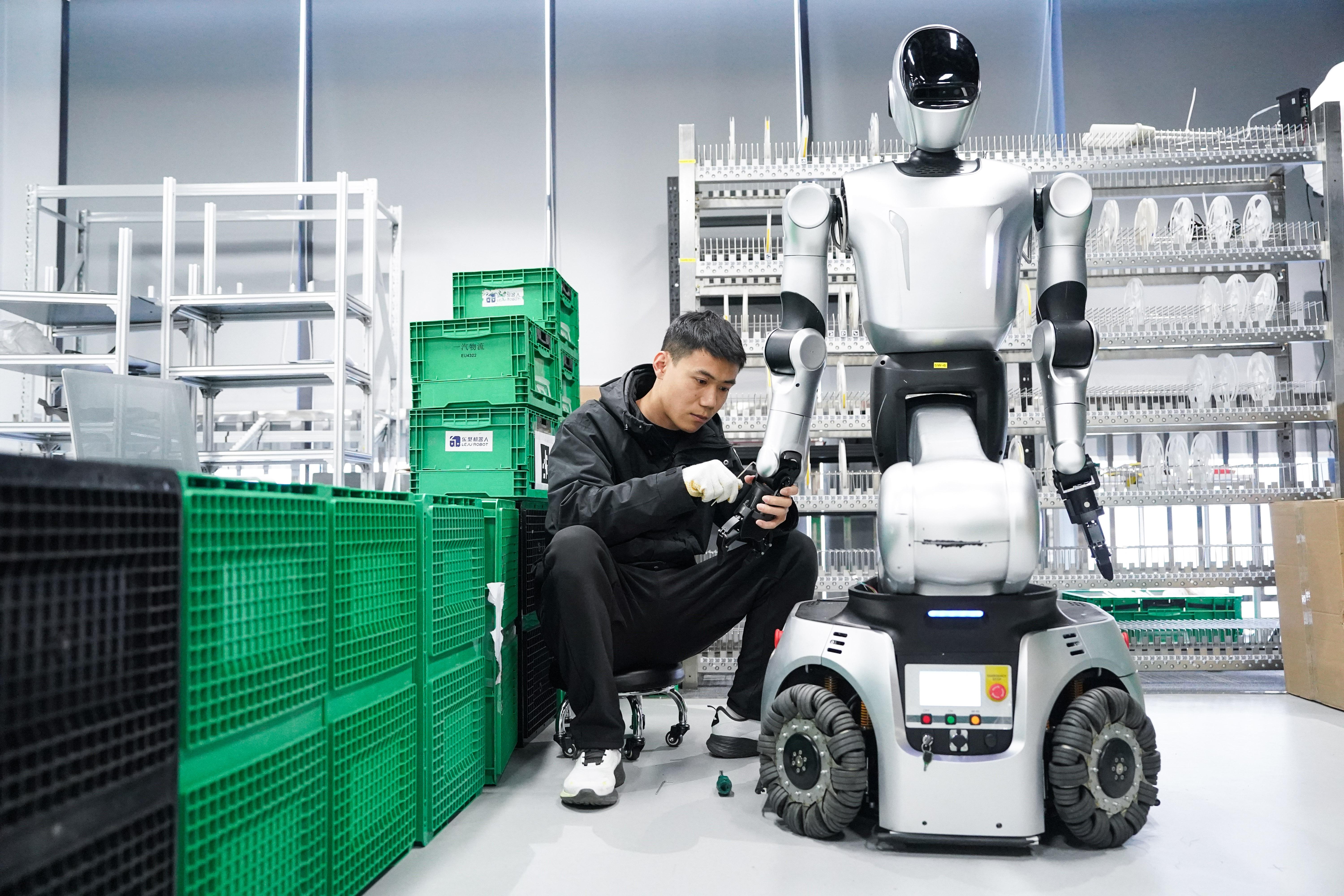
In 2025, the value added of high-tech manufacturing increased by 9.4 percent, accounting for 17.1 percent of that of all industrial enterprises above the designated size. The output of service robots increased by 16.1 percent over the previous year, and the production of 3D printing devices surged by 52.5 percent.
Digital technologies are accelerating their integration into daily life. By the end of 2025, there were 4.84 million 5G base stations all over the country, and Internet penetration reached 80.1 percent.
Massive orders flowed through the cloud, injecting more digital momentum into the economy. Online retail sales reached nearly 16 trillion RMB in 2025, up by 8.6 percent over the previous year. The value added of digital product manufacturing grew by 9.3 percent, accounting for 12.5 percent of that of all industrial enterprises above the designated size.
According to Sheng, the output of intelligent products such as industrial control computers and systems, CNC metal-cutting machine tools and 5G smartphones increased by 86.5 percent, 13.7 percent and 12.5 percent respectively in 2025.
Green and low carbon transformation also witnessed progress. In 2025, clean energy consumption, such as natural gas, hydropower, nuclear power, wind power and solar power accounted for 30.4 percent of the total energy consumption.
According to preliminary estimates, the energy consumption per 10,000 RMB worth of GDP decreased by 5.1 percent over that of the previous year after deducting energy consumed for raw materials and non-fossil energy consumption.
The national carbon dioxide emissions per 10,000 RMB worth of GDP in 2025 dropped by five percent over that of the previous year.
Of the 3,641 sections under the national monitoring program for surface water, 91.4 percent were of fairly clean water quality (Grade I to III), maintaining a 90 percentage for the second consecutive year.
Looking ahead, the 15th Five-Year Plan (2026-2030) has commenced, and Chinese modernization will unfold with an even brighter future, Sheng said.