

GCI a Pathway for Peaceful Co-existence
March 15 was the third anniversary of the China-proposed Global Civilization Initiative (GCI), marking a pivotal moment in global discourse. Calling for inter-civilizational dialogue and mutual learning, the vision GCI offers is more than an abstract ideal. It serves as a much-needed path forward for a world urgently seeking new models of coexistence.
Across the globe, people have gained a deeper understanding of the significance of this initiative in the context of the century-old changes.
The current conflicts and unrest in the Middle East have deepened Kawa Mahmoud's understanding of the contemporary value of the GCI. As the Head of the Global Civilization Initiative Research Center headquartered in Iraq, he believes the GCI advocates mutual respect and inclusive dialogue, which helps break the narrative framework of "Clash of Civilizations" and builds a bridge for enhancing understanding and trust among different civilizations.
Mahmoud said in an era of escalating turmoil and increasing uncertainty, the GCI offers crucial guidance for steering the world towards a future of peace, stability and inclusive development.
At a time when the international situation is so complex, conflicted and diverse, the Chinese philosophy of harmony brings clarity of thought.
Mars Sariev, a political scientist and expert on Central Asian issues from Kyrgyzstan, understands the essence of the GCI from China's role and actions on the multilateral stage. The "Shanghai Spirit" upheld by the Shanghai Cooperation Organization emphasizes "respect for diversity of civilizations," and China-Central Asia cooperation also attaches importance to "mutual respect, mutual trust, mutual benefit and mutual assistance" among different civilizations, he said. Both of these align strongly with the GCI.
The GCI provides more space for dialogue among countries around the world that have different historical and cultural backgrounds but are facing the same challenges, he said.
In early February, the year 2026 was designated Year of China-Laos Friendship. The two countries share the natural bond of the Lancang-Mekong River and the modern infrastructure bond of the China-Laos Railway.
Kertmee Sackdanouvong, acting director of Center for China Studies at National University of Laos, believes that under the guidance of the GCI, exchanges and mutual learning between the two countries will flow naturally into the daily lives of the two peoples, forming a deeper bond of friendship.
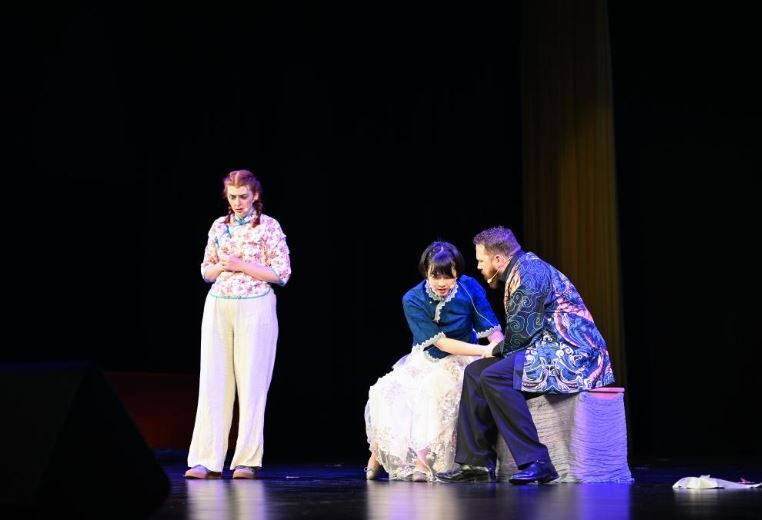
Connected by the love of theater and drama, the UK town of Stratford and Fuzhou city in Jiangxi province, east China, became twin cities in 2016. Steve Ansell, artistic director of stage at the University of Leeds in the UK recalls how he was once astonished when attending drama activities in Fuzhou, and seeing Chinese audience's familiarity with Shakespeare. He said it was "far beyond his expectations," and affirmed that the echo of cross-cultural resonance is key to cultural exchange activities.
Yukteshwar Kumar, former deputy mayor of Bath city in the UK, has been paying close attention to the cultural and people-to-people exchanges between China and the UK in recent years. He said the GCI will effectively promote cultural exchanges, especially enhancing mutual understanding among young people, thereby contributing positive energy to the stable development of bilateral relations.
These ongoing cultural exchanges between China and foreign countries are powerful examples of GCI implementation and how they continue to strengthen bonds and promote harmony and understanding between people.