

Bamboo: Symbol of Chinese Values
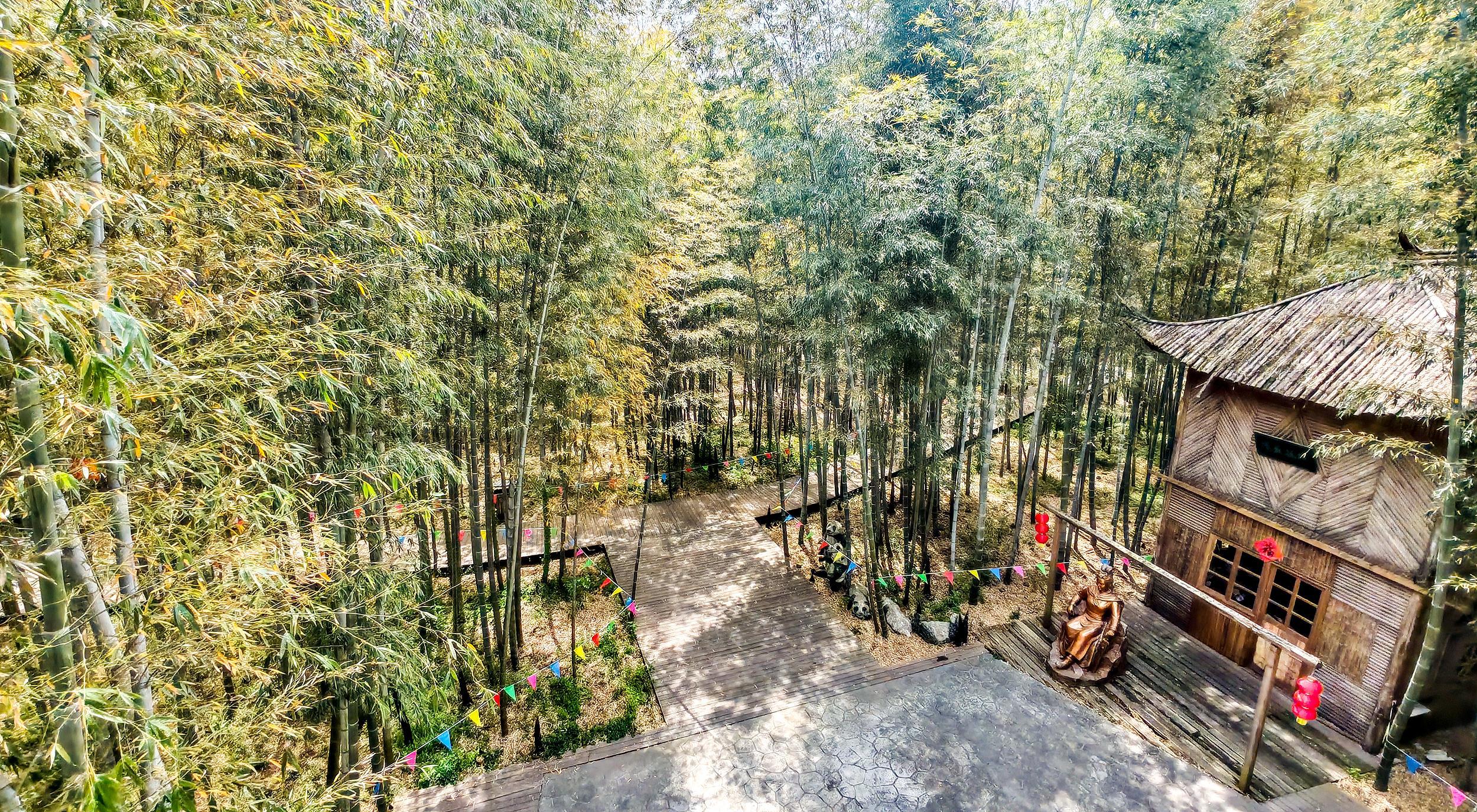
China is the first country in the world to cultivate bamboo. Its hollow yet sturdy, highly lignified above ground stems make it ideal for crafting everyday items, tools, and even architectural structures.
As early as 7,000 years ago, during the Hemudu culture period, ancient Chinese began cultivating wild bamboo. By the Liangzhu Culture period 5,000 years ago, archaeological excavations in China have yielded many woven bamboo artifacts. Around 3,000 years ago, during the Western Zhou Dynasty, the artificial cultivation of bamboo officially began — The Book of Songs (Shijing) contains records describing extensive bamboo groves.
During the Spring and Autumn and Warring States periods, bamboo was used for stationery, agricultural implements, and architecture. Through the Southern Silk Road, bamboo products, such as Qiong bamboo walking sticks, were introduced to India, Central Asia, and Afghanistan.
During the Wei, Jin, and Northern and Southern Dynasties period — following the publication of The Bamboo Compendium (Zhupu), China's first specialized treatise on bamboo — cultivation techniques gradually became systematized. These techniques included selecting loose, fertile, and well-drained soil; choosing robust bamboo seedlings for transplanting with their root balls intact, spaced at appropriate intervals; applying "root-setting" water immediately after planting to maintain soil moisture while avoiding waterlogging; and performing fertilization, weeding, and branch pruning during the growing season.
Furthermore, measures were implemented to prevent root rot caused by water accumulation during the rainy season and to pack soil around the base of the plants in winter to protect against frost damage.
During the Tang Dynasty, bamboo was widely planted in gardens, agricultural fields, and Buddhist monasteries, resulting in a rich diversity of varieties. In the Song Dynasty, the cultivation of bamboo shoots for food, and bamboo stalks for timber was differentiated into distinct categories; the bamboo industry reached a highly advanced state, and bamboo was introduced on a large scale to Korea and Japan.
During the Ming and Qing Dynasties, bamboo weaving, craftsmanship, and architecture applications reached their zenith, giving rise to famous regional bamboo production centers. In the Ming Dynasty, Portuguese merchants brought bamboo seeds and finished products to Europe. Later in the Qing Dynasty, Britain and France imported Chinese bamboo species for ornamental landscaping. In modern times, bamboo species from China were successively introduced to the U.S., South America, Africa, and Oceania, spreading across the globe.
In traditional Chinese culture, bamboo is a symbol of Oriental beauty. It symbolizes virtues such as moral integrity, resistance, modesty and loyalty. It also symbolizes the harmony between nature and human beings. Ancient Chinese scholars referred to plum blossom, orchid, bamboo, and chrysanthemum as the "Four Gentlemen," and grouped pine, bamboo, and plum blossom together as the "Three Friends of Winter."