

Genesis of Confucianism
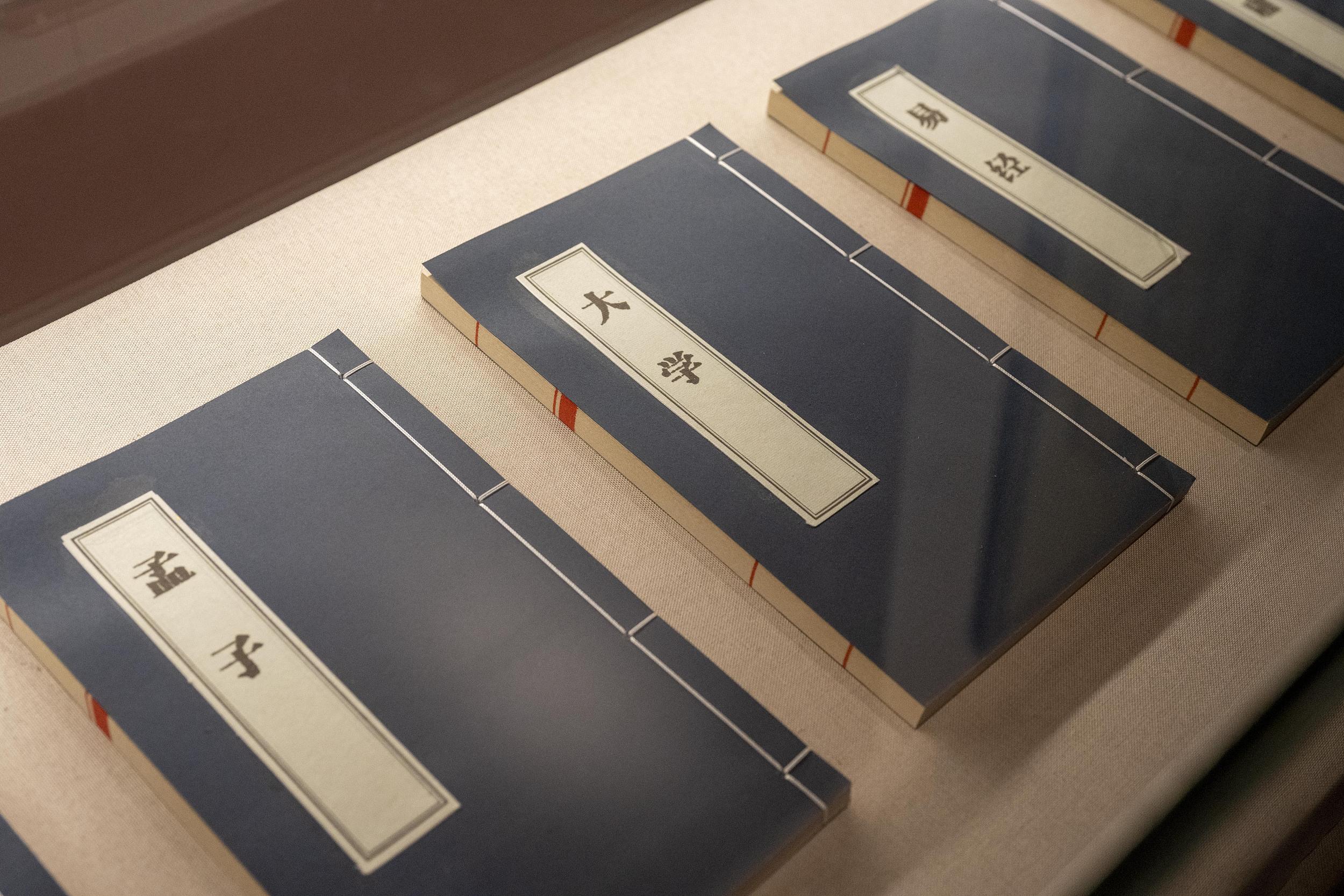
The Four Books and Five Classics constitute the core texts of Confucian thought. They were the basis of the civil examination in traditional China from the Han Dynasty onwards and can be considered the Confucian canon.
The Four Books include the Doctrine of the Mean, the Great Learning, Mencius, and the Analects, and the Five Classics comprise the Book of Odes, the Book of Documents, the Book of Changes, the Book of Rites, and the Spring and Autumn Annals.
The Four Books are classic Chinese texts that demonstrate the fundamental values and belief systems of Confucianism. The Great Learning serves as a manual for cultivating moral character. By exploring or studying various subjects, one gains insight into the underlying principles of all things, enabling a deeper understanding of the world.
Similarly, the Analects also highlights the importance of learning. The Analects states that the initial step to understanding the "way" is to commit oneself to education. Besides education, the Analects also highlights the significance of effective governance, respect for parents, morality and ceremonies.
Mencius comprises a series of dialogues between the scholar Mencius and the kings of his era. Unlike the concise and self-sufficient sayings of Confucius, the Mencius features lengthy dialogues filled with elaborate prose. The Doctrine of the Mean, meanwhile, emphasizes adhering to the way and behaving in a manner that is right and natural, yet recognizes that individuals frequently fail to act appropriately.
The Five Classics consist of five pre-Qin Chinese texts that are integral to the Confucian tradition:
The Book of Documents is a collection of 58 chapters that recount the history of ancient China and the exploits of early sage-kings Yao and Shun.
The Book of Odes features 305 poems addressing various topics, such as love and marriage, agricultural issues, everyday life, and warfare.
The Book of Rites outlines the societal standards, political structure and ceremonial practices in the Zhou Dynasty.
The Book of Changes offers a method of divination primarily focused on the concepts of yin and yang.
And the Spring and Autumn Annals, as the longest of the Five Classics, serves as a historical record for the State of Lu.