

'China Shock 2.0' a Rhetorical Disguise for Protectionism
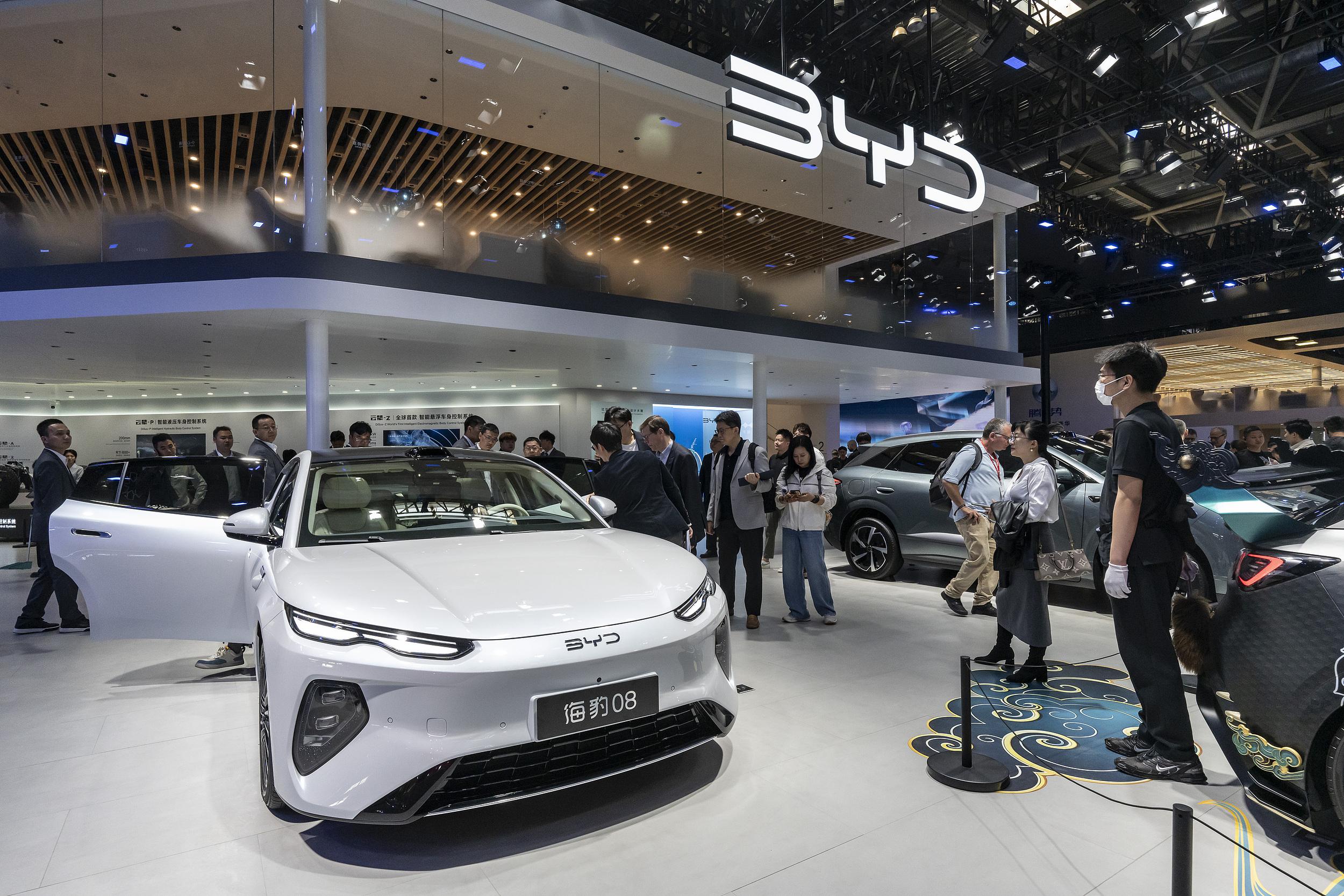 Some Western media outlets and think tanks recently hyped up the so-called "China Shock 2.0." They claim that China's booming high-end manufacturing industries like electric vehicles (EVs), solar panels, and semiconductors are generating overcapacity, flooding global markets with low-cost goods and fueling trade tensions.
Such a narrative is neither objective nor fact-based. It stems from a biased zero-sum mindset and is underpinned by trade protectionism.
Previously, the "China Shock" narrative was used as a scapegoat for low-skilled manufacturing unemployment. But according to Nobel laureate economist James Heckman, such narrative is incomplete. Heckman said in an interview that it fixates on localized job losses while ignoring broader welfare gains: Cheaper imports boost consumer purchasing power, lower input costs benefit producers, and competition drives the reallocation of resources to more productive sectors.
"A lot of politicians look only at the job loss but don't count the benefits," he said.
Now, the core allegation of "China Shock 2.0" revolves around the claim of "overcapacity." However, this is fundamentally flawed. In particular, labeling the current green tech capacity as "excessive" ignores the urgent imperative of tackling climate change.
According to the International Energy Agency, under the Announced Pledges Scenario, the global electric vehicle stock could reach 585 million units by 2035, while under the Net Zero Emissions by 2050 Scenario, the figure could hit 790 million.
That means China's rising EV output represents not overcapacity, but precisely the capacity the world urgently needs to combat global warming.
In green technology industries, China's competitive edge comes from technological innovation and industrial ecosystem scale. For instance, enterprises such as BYD and CATL invest billions in R&D, pioneering breakthroughs including blade batteries and highly efficient manufacturing models.
More importantly, China has built a fully comprehensive and deeply integrated supply chain spanning raw material processing to final assembly, which naturally drives down costs. Confusing the efficiency of economies of scale with illegal dumping is an intellectual cop-out.
Furthermore, international trade is rooted in comparative advantage. If exporting competitive products is deemed dumping surplus capacity, should America's massive exports of agricultural goods and advanced microchips also be labeled a "shock" to the global market?
The real driver behind the "China Shock 2.0" narrative is geopolitical anxiety. It serves as a rhetorical disguise for trade protectionism, exemplified by the EU's anti-subsidy probes and the exclusionary clauses within the U.S. Inflation Reduction Act.
China's rapid development poses no threat to any nation; instead, it is an indispensable driving force for global shared progress. China's green manufacturing strengths have filled supply-demand gaps in global green growth, providing strong impetus to the global energy transition and low-carbon development.
In addition, China's high-tech offerings, represented by robots, AI and innovative medicines, are breaking technological barriers and ending market monopolies, making cutting-edge yet affordable technologies accessible to more people around the world.
The real shock is not China's innovation-driven industrial advancement, but the West building tariff walls against progress. In an era of deep economic interdependence, the world needs rules-based competition rather than protectionist paranoia. China has always supported and will continue to uphold an open, inclusive and win-win global trading system.