
Biological Conservation a Mission Shared By All
May 22 is celebrated as the International Day for Biological Diversity (IDB). The 2026 theme, "Acting locally for global impact," underscores the importance of applying the whole-of-society approach. China's biodiversity conservation has become a nationwide endeavor where local actors such as communities, enterprises, public organizations and research institutions contribute innovative solutions under government guidance.
Digital empowerment
Xishuangbanna in southwest China's Yunnan province boasts one of the country's most well-preserved tropical ecosystems.
On last year's IDB, the Xishuangbanna Biodiversity Platform was launched as the first digital platform in China with tropical biodiversity as its theme. It integrates the species record data contributed by researchers and nature enthusiasts in Xishuangbanna over the years. Currently, it displays 90,000 records of more than 15,000 species to the public, including more than 400 national protected species.
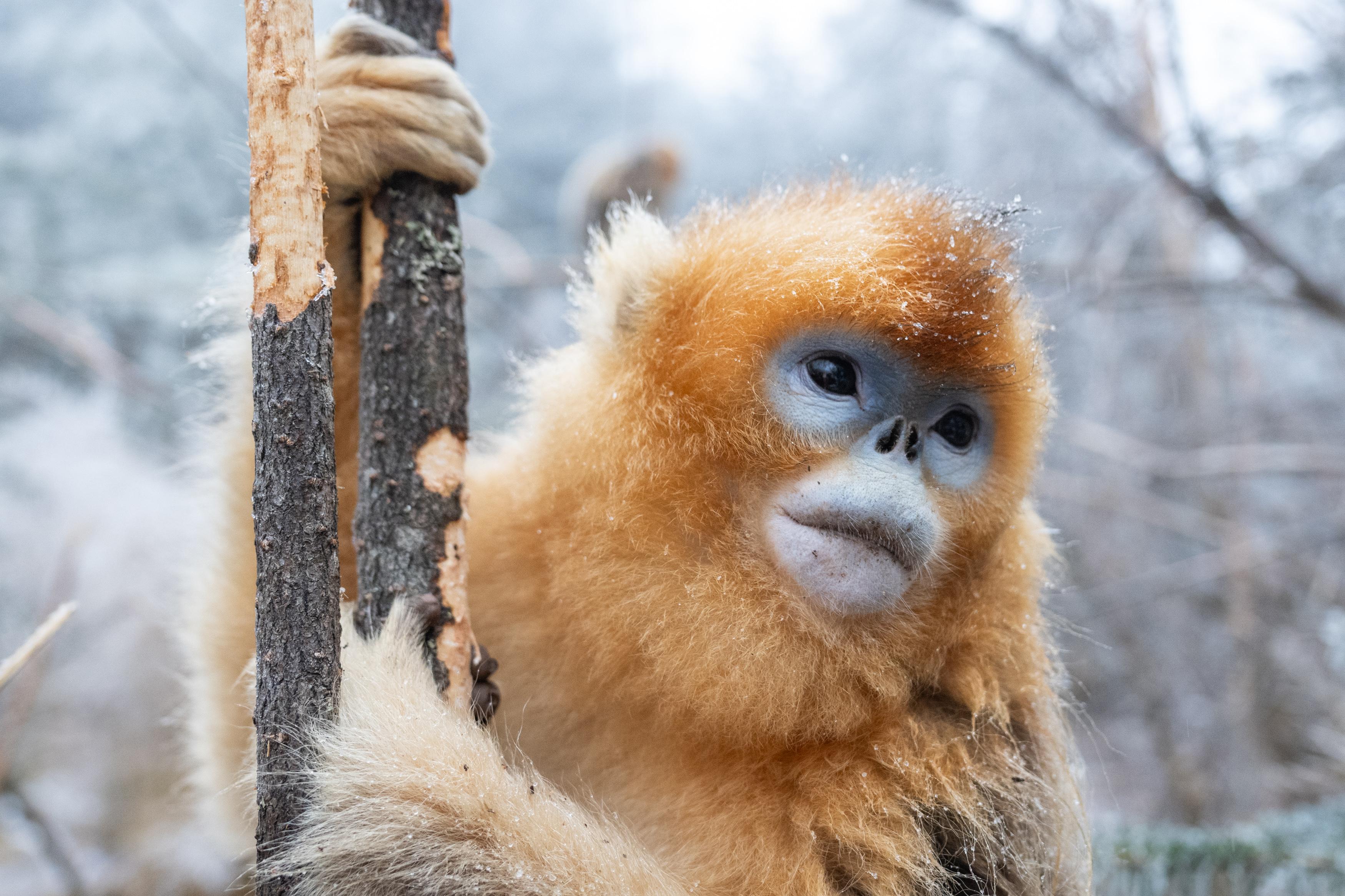
Digital technology is injecting strong impetus into biodiversity conservation. For example, 4G and 5G infrared cameras installed in the Shennongjia Forestry District in central China's Hubei province send images of the golden monkeys, an endangered species, and other wildlife activities in seconds; Wuhan is using underwater sonar and AI voiceprint technology to establish a "digital identity file" for endangered finless porpoises in the Yangtze River; and the Yellow River Delta Wetland Ecological Data Platform integrates over one billion pieces of data and can automatically generate assessment reports, realizing the whole process of monitoring, analysis and decision-making. These technologies have improved the ecological monitoring quality and enabled the public to participate in ecological protection.
Community model
The Leyi Habitat Garden, Shanghai's largest community habitat garden, used to be an abandoned, waste-strewn public space. The over 730-square-meter area has today been transformed into an ecological haven where birds fly out of bushes and squirrels frolic in the woods, though it is in a residential community in the metropolitan area.
The garden hosts 129 plant species, 36 bird species, over 30 insect species, and four mammal species, including nationally protected animals and birds such as the raccoon dog, crested goshawk, and kestrel.
It has a special governance model—government funding, expert design, and resident autonomy. A volunteer team nicknamed the "F4" (four retired residents) leads the daily maintenance work, while the adjacent 600-square-meter Habitat Museum serves as an educational and cultural hub.
The garden gained international acclaim when it was selected as one of the "100+ Typical Global Cases of Biodiversity" at the 15th meeting of the Conference of the Parties to the Convention on Biological Diversity (COP15) in Kunming in 2021.
Shanghai's 15th Five-Year Plan (2026-2030) includes recommendations for construction of habitat gardens to provide habitat corridors for urban wildlife, integrating ecological functions and community recreation.

Enterprises' role
Chinese enterprises are also indispensable contributors in biodiversity conservation. Their contribution has gone far beyond donations. They are creating a series of innovative and effective solutions to address ecological issues by integrating business with cutting-edge technologies.
The Sinopec Zhenhai Refining & Chemical Company (ZRCC), located in Ningbo city, Zhejiang province in east China, demonstrates how heavy industry can coexist with nature, and was featured as a case study at COP15.
To protect local egrets, the company nurtures a 2,200-square-meter native wetland within the industrial zone. The pipelines are adjusted, and high-noise construction is halted during the egrets' breeding season.
Over the past two decades, the ZRCC has expanded its annual crude oil processing capacity fourfold into a world-class coastal refining and chemical base. At the same time, the number of egrets has increased from the initial few hundred to a peak of over 5,000. The recorded bird species in the industrial park has increased from 28 to 51, an 82 percent increase.
Since 2012, the Egret Garden of ZRRC has been open to the public. By 2025, it had hosted more than 900 open-day events with nearly 30,000 participants. In 2022, the world's first egret live-stream platform "I-EGRET" was launched, providing HD broadcasts of nesting, incubation, and chick-rearing 24/7.
China National Petroleum Corporation is one of the world's first energy enterprises to systematically implement "Other Effective Area-based Conservation Measures," an innovative conservation mechanism established under the Convention on Biological Diversity.
It has established 12 self-contributing biodiversity conservation areas over approximately 49 square kilometers, where the enterprise voluntarily utilizes its own land or sites to carry out biodiversity protection and management.
Some leading enterprises are leveraging their technology and platforms to play a more important role in global ecological governance.
In January, BYD, a leading Chinese new energy vehicle manufacturer, partnered with UNESCO to launch the third season of the "Light Chaser Program." This program organizes in-depth scientific investigations in key ecological areas such as the Northeast Tiger and Leopard National Park and the Dongting Lake Wetland in central China to grow replicable protection plans. All collected data is uploaded to UNESCO's open database, making it freely accessible to global researchers.