

Unwise to Restrict Investment in China's Biotech Sector
John Moolenaar, chairman of the U.S. House Select Committee on China, recently wrote to U.S. Secretary of Treasury Scott Bessent, urging him to add biotechnology as a prohibited technology under the Comprehensive Outbound Investment National Security Act of 2025.
The letter particularly cited a partnership worth up to 15.2 billion USD between U.S.-based Bristol Myers Squibb (BMS) and China's Hengrui Pharma as a typical example of U.S. capital and technology flowing into China's biotechnology industry.
Chinese biotech firms have gained robust global traction in recent years.
The total value of China's out-licensing deals for innovative drugs hit nearly 136 billion USD in 2025, according to the National Medical Products Administration (NMPA). In the first quarter of 2026, such out-licensing transactions surpassed 60 billion USD, nearly half of the total deal value in 2025, as per the NMPA.
Rapid advances in China's biomedical technologies and the country's distinctive innovation-friendly industrial ecosystem are key factors behind the sector's growing appeal to international investors. According to a report by CBRE in April 2025, pharmaceutical and medical technology patent applications in China surged by 379 percent over the past decade. According to pharmaceutical data provider Citeline's report in March, China's share of global drug development is nearly 30 percent.
BioPharma Dive, a biopharma industry news outlet, reported that China's licensing deal boom is rooted in its efforts to upgrade biotech capabilities by upping investment in technological innovation. Chinese cities like Shanghai and Suzhou boast abundant skilled R&D professionals and hundreds of homegrown biotech companies that employ them. Clinical trial enrollment is speedy, while staffing and supply chain costs are lower, helping companies move drugs along more cost-effectively.
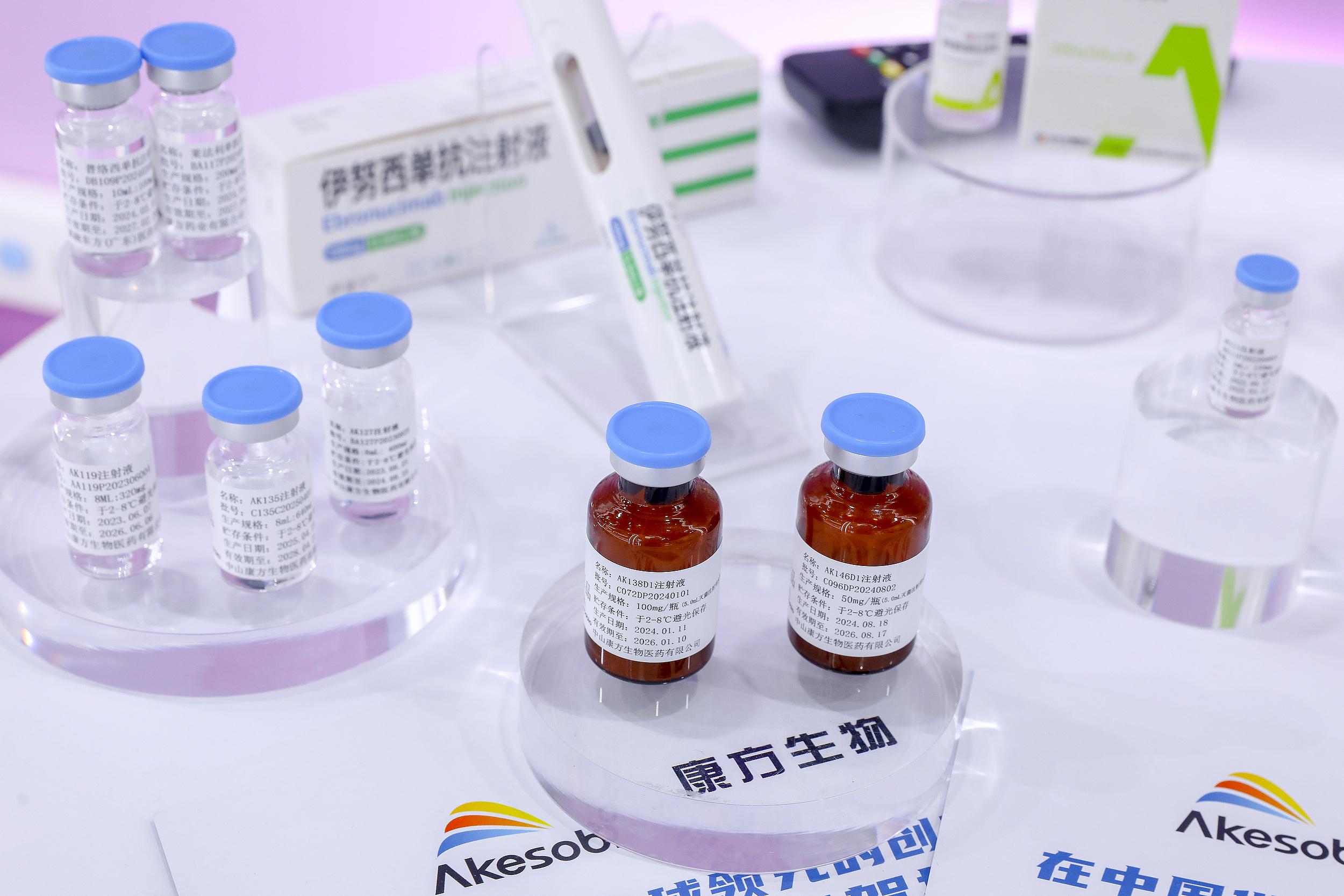
U.S. drugmakers stand to reap substantial prospective financial gains from investing in China's biotech space. For instance, the antibody ivonescimab was developed by Chinese biotech company Akeso. In 2022, U.S.-based Summit Therapeutics was licensed to secure certain overseas commercial rights.
Though Merck's blockbuster immunotherapy Keytruda has been called "the pharmaceutical industry's most lucrative single product" currently, a study shows ivonescimab outperformed Keytruda in a Phase III trial.
Investment and joint R&D partnerships between Chinese and U.S. biomedical enterprises deliver tangible health benefits to patients in both nations and across the globe. Partnerships such as those between Hengrui Pharma and BMS, or Akeso and Summit Therapeutics, are largely focused on difficult-to-treat or rare diseases in cancer, metabolic disorders and autoimmune. Scientific achievements generated through such collaborations create commercial value and technological progress for companies while also expanding access to more effective therapies and offering new hope for patients.
Efforts by several U.S. lawmakers to tighten restrictions are unlikely to bring Sino-U.S. biotechnology cooperation to a halt. Just days after Moolenaar's letter, U.S. pharma giant Pfizer and China's Innovent Biologics agreed to a global licensing and collaboration deal worth up to 10.5 billion USD to develop 12 early-stage cancer medicines, Reuters reported.
As the world's two leading biotech powerhouses, China and the U.S. bear a shared responsibility to deepen collaboration for the future of global public health. From both the commercial and global governance perspectives, moves to restrict U.S. biotech investment in China are shortsighted and extremely unwise, reflecting an overreach of national security rhetoric among certain U.S. politicians who politicize normal commercial cooperation.