

Foreign Visitors Discover China's Dynamic Reality
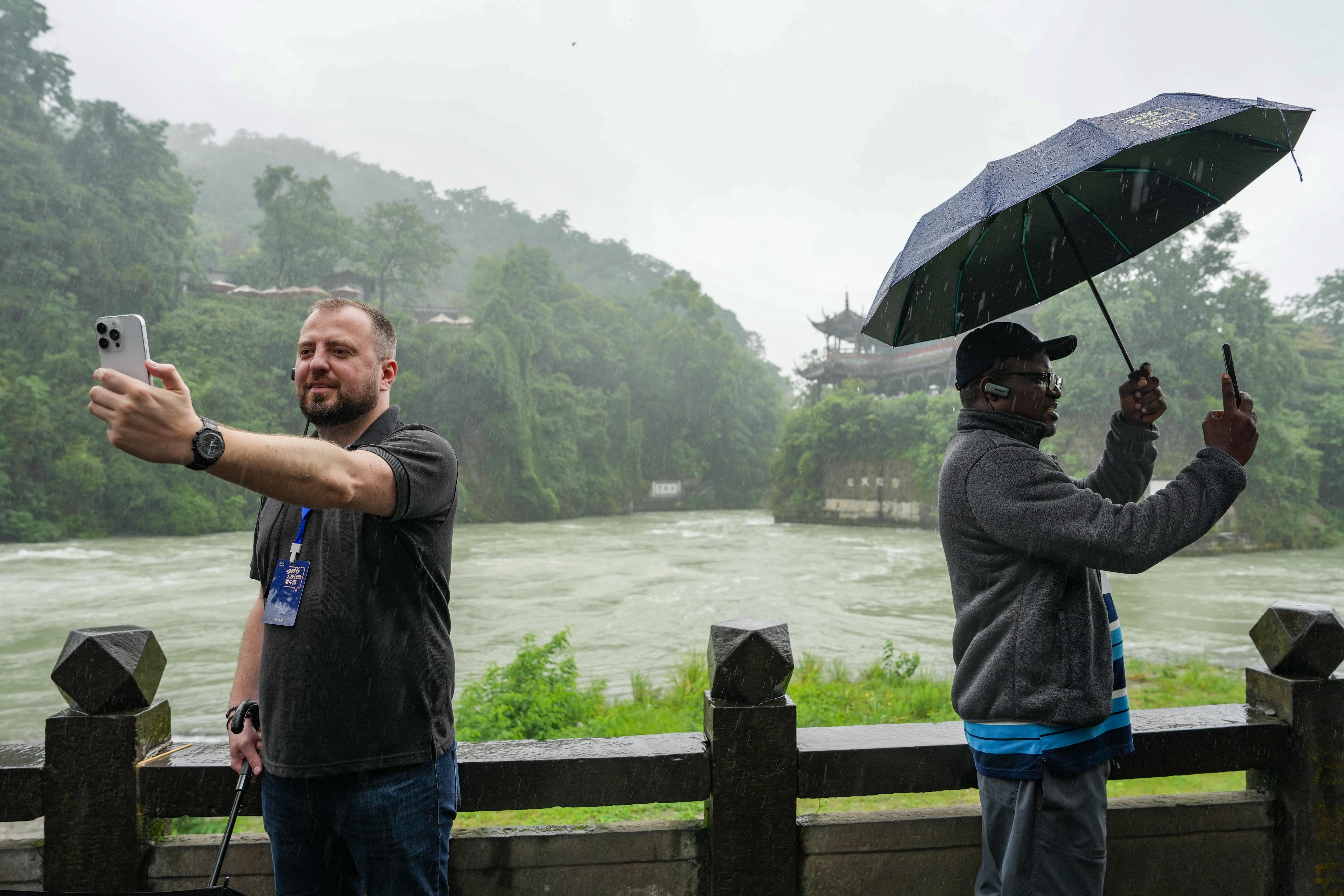
China has seen marked improvements in its ecological environment, continuous breakthroughs in sci-tech innovation, and sustained enhancement of people's living standards in its recent past, something which hasn't gone unnoticed by foreign officials, representatives, and scholars visiting the country, who believe other nations could take a leaf out of China's book.
Schleswig-Holstein, Germany's northernmost state, has had friendly relations with Zhejiang province in east China for 40 years. The governor of Schleswig-Holstein, Daniel Günther, said, "Over the past few decades, China has made significant progress in many fields. In areas such as electric vehicles, battery industries, and green transformation, China's progress is remarkable. I greatly admire the achievements China has made. This has provided a broader space for cooperation between Germany and China."
Moacir de Oliveira Filho, director of the Press Department, Brazilian Press Association, expressed similar sentiments. "During my two recent visits to China, I visited several cities, among which Chongqing and Shenzhen left a deep impression on me. Through the development of these two cities, I have closely observed the vibrant energy of this land, gaining a deeper understanding of China's remarkable achievements, its developmental journey, and its future direction."
After visiting Chongqing in southwest China, Sylvester Sinvula Sibungo, a senior official from Namibia's Ministry of Justice and Labor Relations, was impressed by the environment. "Here, everything is lush and green. The ecological environment far exceeds my expectations, and it is also equipped with complete environmental protection facilities. I can clearly sense that China has put a lot of effort into protecting the environment," he said.
American Michael Spence, the winner of the 2001 Nobel Memorial Prize in Economic Sciences, visited Chengdu, Sichuan province in southwest China, for the first time in May.
"This place has a unique and interesting culture, and it also has a considerable number of technology industries," he said. In his opinion, the southwestern region of China needs an important financial center, and Chengdu has the potential to become such a center. Spence particularly mentioned the development of the Chengdu-Chongqing economic circle. "It sounds very promising," he said, adding that this regional coordinated development model will bring more growth space to the economy of China's southwestern region.
After visiting the Dujiangyan irrigation system, a UNESCO World Heritage Site in Chengdu, the director of Human Rights at the Ministry of Foreign Affairs of the Dominican Republic, Neyra Paulino Estévez praised its long history, its effectiveness in flood prevention, and its lasting benefits for future generations.
In the robotics field, Georgi Milkov, special contributor to international affairs at Bulgaria's 24 Chasa (24 Hours) newspaper, is very optimistic about the development of China's robot industry. He conducted a field investigation of the development history and training process of intelligent humanoid robots in Chengdu, saying, "Now China has achieved digitalization, and we can learn a lot from it."