
Americans' Opposition to Data Centers Has Nothing to Do with China
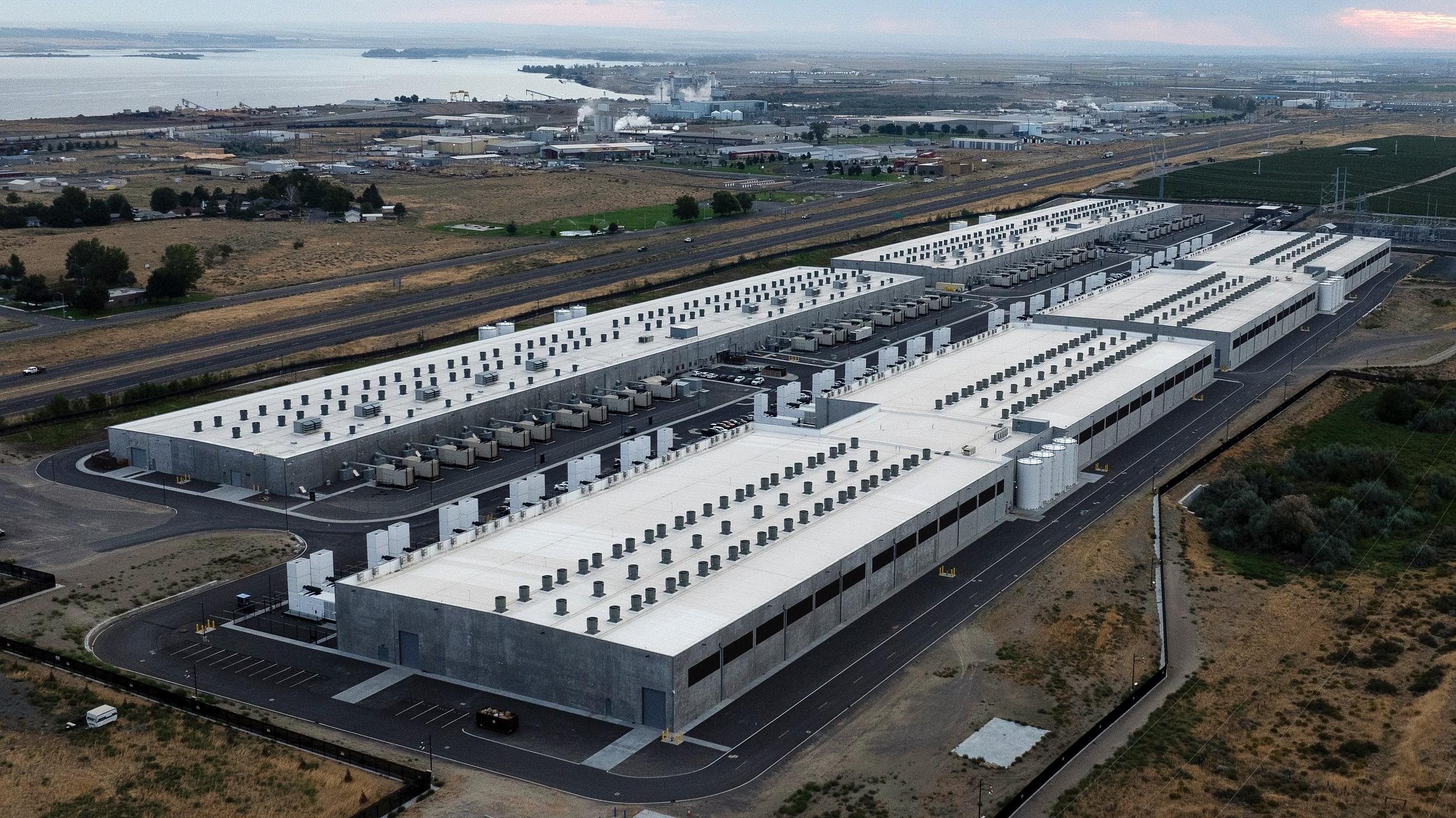
U.S. Senator Tom Cotton recently asked the Department of Justice to investigate attempts by "foreign adversaries, including China, to manipulate U.S. policy and public opinion on data centers."
Meanwhile, OpenAI released a report alleging a cluster of accounts originating in China have been spreading anti-U.S. data center messages on social media. Similar claims have previously been made by various U.S. politicians and tech figures.
These allegations share one common flaw: None provide any evidence. They are nothing more than irresponsible speculation and unfounded accusations.
On June 12, the U.S. tech news outlet Wired published an article titled "China Didn't Make Americans Hate Data Centers." It reported that Graphika, a social media analytics company, has been tracking data center opposition across several social platforms, including Facebook, Bluesky and TikTok for the past year. The piece cited Dina Sadek, an analyst at Graphika, as saying that the company has "not yet seen evidence of organized or scaled influence operations or campaigns that can be traced back to a foreign actor."
Public opposition to data centers in the U.S. has intensified in recent years. A survey released in May by the consulting firm Gallup showed that 71 percent of Americans oppose local construction of AI data centers, with 48 percent strongly opposing it. A June poll by the UK policy research agency Public First shows that among the 15 countries surveyed, support for data centers in the U.S. was the lowest.
Public dissent has now become a major obstacle to data center construction in the U.S. According to the U.S. tech media outlet Ars Technica, protestors "blocked or delayed at least 75 projects nationwide worth about 130 billion USD from January through March."
The motive behind attempts by certain U.S. politicians and tech companies to smear China as the "manipulator" of this anti-U.S. data center sentiment is therefore not difficult to discern. Eager to accelerate construction but unable to address public opposition through conventional means, they are politicizing the issue. By portraying China as the "mastermind" behind the opposition, they are seeking to stigmatize legitimate public concerns and pressure citizens into changing their views.
As U.S. sociologist Tracy McMillan Cottom noted in her commentary on the OpenAI report, there is an attempt to frame public dissent as "un-American."
Nevertheless, the negative public sentiment toward data centers is rooted in practical realities and will not be swayed by crude political tactics. A Pew Research Center survey in March showed that 38 percent of U.S. respondents believe data center construction will increase home energy costs.
This concern has already materialized. In March, the U.S. consumer advocacy group Consumer Reports reported that electricity costs across the U.S. are skyrocketing with AI data centers undoubtedly serving as a major driver. Data shows that areas with high concentrations of data centers saw electricity prices jump 267 percent over the past five years.
In an article published by Harvard Law Today in September 2025, Ari Peskoe, director of the Electricity Law Initiative at the Harvard Law School Environmental and Energy Law Program, explained the primary reason ordinary Americans are footing the bill for data centers: U.S. utilities build a lot of new infrastructure to generate power and deliver that power, and these costs are ultimately spread across all ratepayers. This is the "business model" of U.S. utility companies.
Blaming China will not help the U.S. data center industry win public favor. What U.S. politicians and tech companies should do is take concrete measures to mitigate the negative impacts of data centers on people's daily lives and fundamentally address legitimate public concerns, rather than using China as a scapegoat.