

China's Edge in Autonomous Driving Tech Wins Recognition
"In Beijing's Yizhuang district, driverless vehicles have become a common sight," says a BBC report."Robotaxis weave through traffic alongside ordinary cars, while autonomous delivery vans glide along the inside lane as they carry packages to collection points." This is a recognition of the rapid development of autonomous driving technology in China.
In 2025, China's intelligent driving market crossed 450 billion RMB, with Level-2 assisted driving penetration exceeding 60 percent, and Level-3 autonomous driving entering pilot testing in some areas.
China's edge in autonomous driving lies in its complete industrial system. "China's autonomous driving companies already have a powerful advantage — the industrial ecosystem that helped turn the country into the world's largest EV(electric vehicle) market," the BBC report says.
It analyzes China's self-driving industry as built around a network of automobile companies. There is already an enormous scale of automobile supply chains, including batteries, sensors, chips and onboard computers, so companies can develop technology faster and at a lower cost.
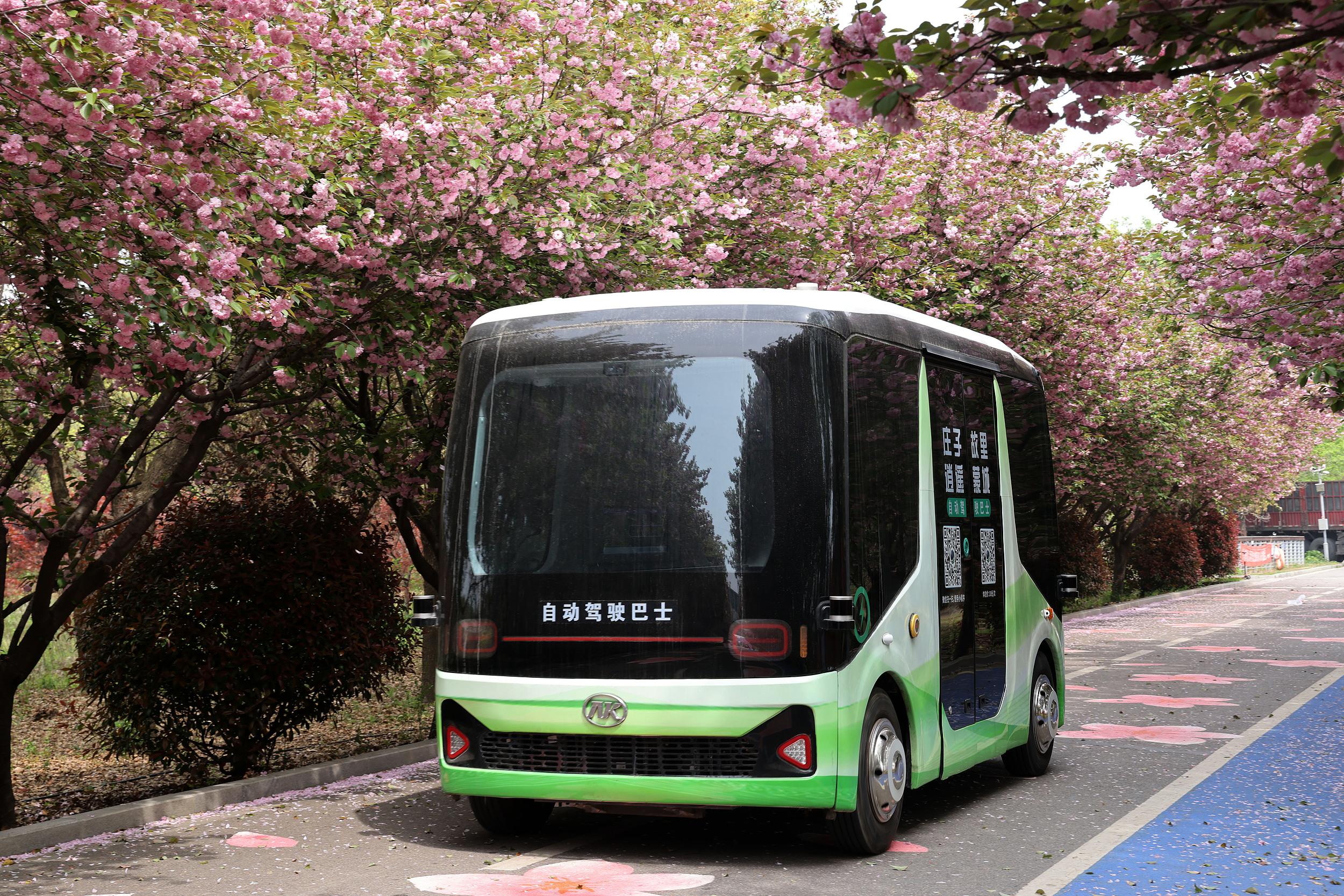
Kyle Chan, a foreign policy fellow at the Brookings Institution told BBC, "What you see is a pace of innovation and adaptation in the Chinese EV industry that I don't think is matched anywhere else around the world."
The CBT News, an EV industry news platform, said China is making advanced driver assistance systems standard on affordable vehicles, giving it a data advantage.
It noted that some vehicles capable of hands-free driving from one parking spot to another cost only around 30,000 USD, adding that China's large engineering workforce, tech-savvy customers, and robust EV infrastructure give it a structural advantage in scaling autonomous driving technology.
In addition, the Navigate on Autopilot (NOA) penetration rate is continuously increasing in China. According to research by CIC Consultancy, the NOA penetration in Chinese cities reached 11 percent in 2025, and is expected to hit 62 percent in 2030.
Government policy support plays a role in these achievements. As the BBC news says, pilot programs in several Chinese cities allow companies to test the autonomous driving technology on selected public roads.
The growing international media attention reflects this broader reality: China's autonomous vehicles are stepping onto the global stage, driving multiple industrial chains forward and setting the pace for the future of autonomous driving technology.