

Global Change Biology: Advancing Science for a Rapidly Changing Planet
The past few decades have been marked by unprecedented environmental change. Climate warming, biodiversity loss, land-use transformation and biogeochemical disruptions are reshaping ecosystems across the globe. Addressing these challenges requires not only scientific excellence, but also truly interdisciplinary thinking and international collaboration.
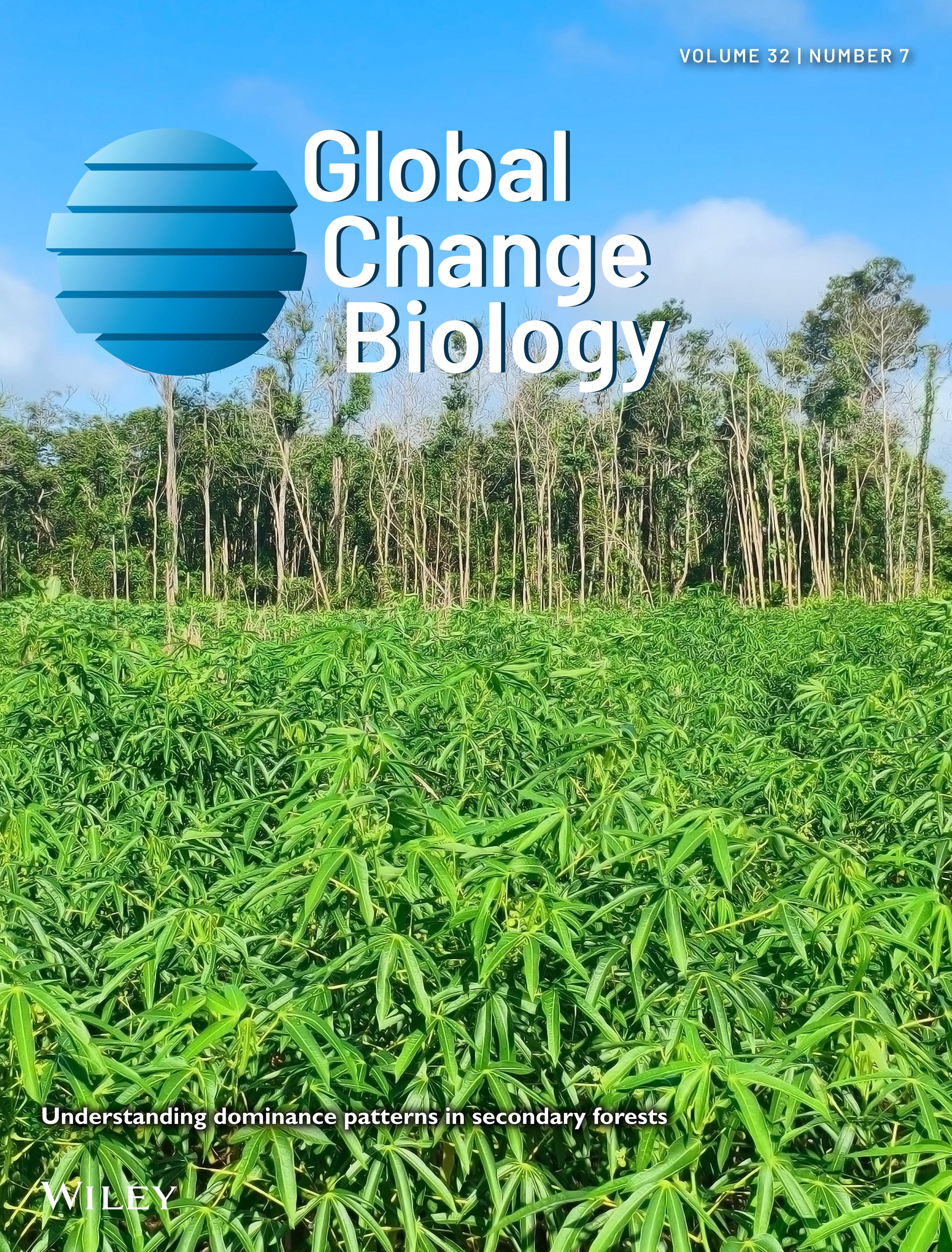
Global Change Biology (GCB) was founded to serve precisely this purpose. Since its launch in 1995, GCB has been dedicated to publishing research that improves our understanding of biological responses to global environmental change and informs solutions for a more sustainable future. Our mission has been clear and consistent: to provide a rigorous, inclusive platform where science can contribute meaningfully to societal decision-making.
A journal at the intersection of disciplines
Research published in GCB spans ecology, evolution, biogeochemistry, agriculture, forestry, marine and freshwater science, and Earth system science, united by a shared focus on biological change in a rapidly evolving world. By bringing together these perspectives, the journal encourages synthesis, comparison and conceptual innovation.
We particularly value work that connects fundamental biological processes with large-scale environmental drivers and real-world implications. From climate impacts on food security to ecosystem feedbacks that shape the carbon cycle, GCB seeks to highlight research that advances both theory and application.
Supporting global research community
GCB has always welcomed submissions worldwide. In recent years, contributions from China and the broader Asia-Pacific region have grown significantly, reflecting both the scale of environmental change in these regions and the strength of local research communities.
Chinese scientists have made important contributions to topics such as terrestrial and marine carbon dynamics, ecosystem responses to climate extremes, land-use change, and conservation biology. GCB values these contributions and is committed to fostering strong engagement with researchers in China and globally, including early-career scientists.
Beyond publishing research, the journal promotes scientific exchange through editorial participation, invited pieces that make novel work more broadly accessible, and community engagement. These efforts help ensure that cutting-edge science is shared across borders and disciplinary divides.
Science with responsibility and impact
GCB strives to uphold the highest standards of research integrity, transparency and peer review, while also supporting practices aligned with open and responsible science.
We encourage the clear communication of complex findings and welcome research that informs policy discussions, management strategies and long-term planning. By publishing robust evidence on biological responses to global change, GCB aims to support informed decision-making at local, national and international levels.
Beyond academia, GCB also contributes to global science-policy processes. Research published in GCB has been widely cited in major synthesis efforts, including reports by the Intergovernmental Panel on Climate Change, particularly in areas such as terrestrial carbon cycling, ecosystem responses to climate extremes, and land-climate feedbacks. By encouraging interdisciplinary research with real-world relevance, GCB supports the translation of scientific understanding into assessments that shape international climate discourse.
As environmental challenges intensify, GCB will continue to adapt — embracing new methodologies, supporting interdisciplinary collaboration, and amplifying diverse scientific voices — while remaining anchored in its core mission.
We look forward to working with researchers worldwide to advance knowledge, inspire collaboration and contribute to a shared understanding of how science can help societies navigate global environmental change.
The author is Danielle WAY. She is the editor-in-chief of Global Change Biology and a professor at The Australian National University.
●Journal Review
GCB was launched in 1995, at a pivotal moment when global change ecology was transitioning from theoretical groundwork to rapid growth. Over the past 30 years, it has remained focused on the major scientific questions of global change, chronicling and guiding the development of global change biology and ecology. It has grown into a key platform linking China with the world and advancing exchanges in this field.
For Chinese researchers, GCB has long been a window onto international frontiers and a compass for the discipline's direction. My personal journey with the journal — from first reading it as an undergraduate to later serving on its editorial board — reflects a path shared by many mid-career and early-career global change scientists in China. The journal has helped bring cutting-edge theories and methods into China, while deepening the integration of Chinese research with the international academic community.
At the same time, GCB has served as a bridge through which the world has come to know China's contributions. Over two decades, Chinese scientists have published substantial high-impact, original work in the journal, showcasing the country's achievements in global change biology and ecology and steadily raising China's international standing in the field. I look forward to seeing more Chinese scientists leverage this platform to contribute China's wisdom to global change science.
—— Piao Shilong, academician of the Chinese Academy of Sciences and vice president of Peking University