

Reusable Rocket: More than One Technical Path
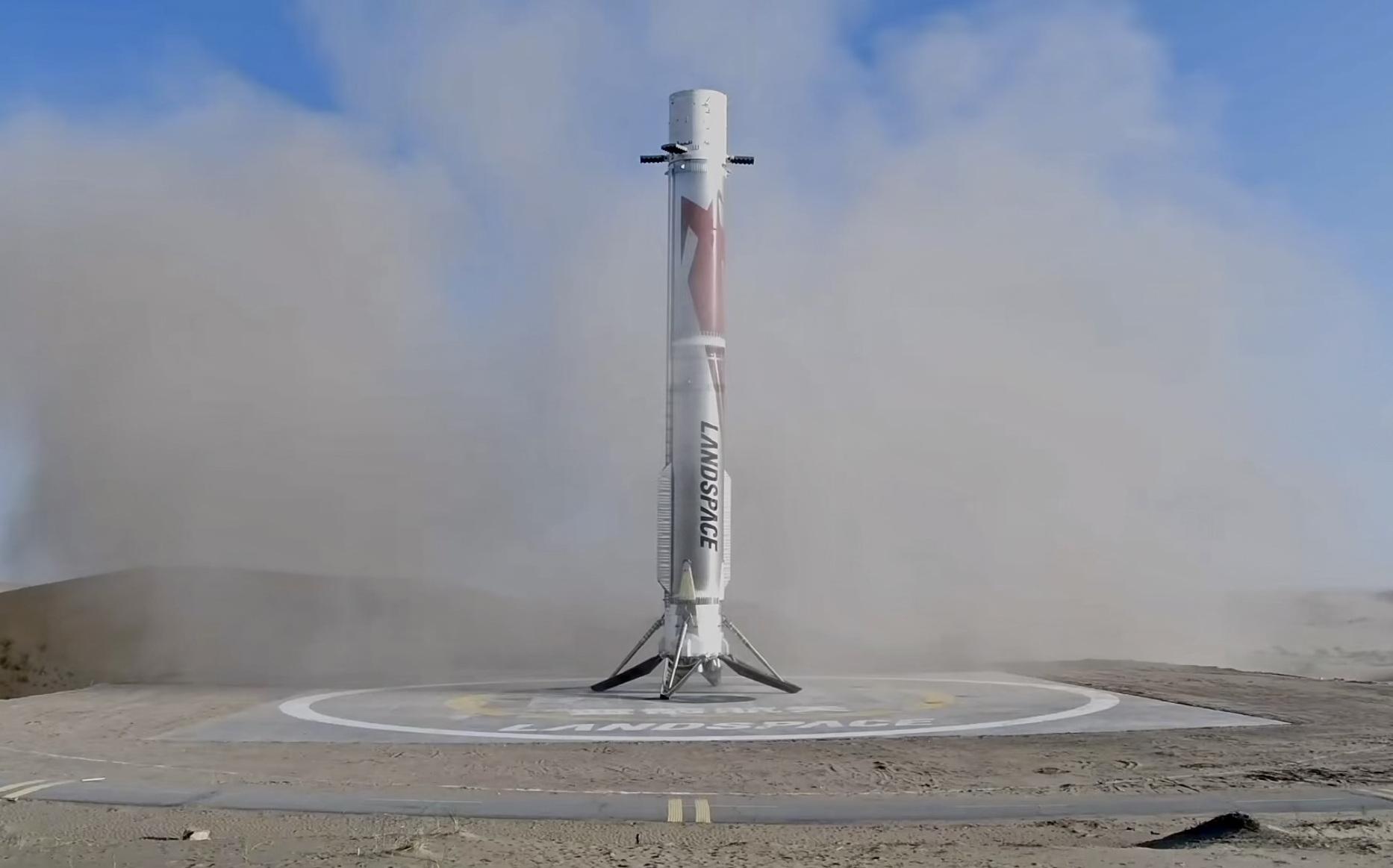
The Zhuque-3, a reusable launch vehicle developed by Chinese commercial aerospace company LandSpace Technology Co., Ltd., was launched from the Dongfeng commercial space innovation pilot zone in northwest China on August 19, and its first stage successfully landed at the designated location in the recovery area.
This mission marks China's first successful on-land recovery of a launch vehicle's first stage and first recovery using landing legs, representing a major breakthrough in reusable rocket technology.
There are different choices over the body materials and recovery solutions of reusable rockets. What are the advantages and shortcomings?
Stainless steel or aluminum alloy?
The rocket body structure primarily consists of fuel tanks, casing sections and other components, and the materials to build the structure affect the rocket's payload capacity, cost and manufacturing.
The mainstream choice for expendable rocket structure is aluminum alloy, which is also used in many reusable rockets such as SpaceX's Falcon 9 and China Aerospace Science and Technology Corporation's Long March 10B.
Stainless steel has become another popular option for commercial rockets in recent years. Both the Zhuque-3 and SpaceX's Super Heavy used this material.
Aluminum alloy has high intensity, which helps reduce the rocket's weight and increase its payload capacity, whereas stainless steel has large density. Limited by welding techniques, stainless steel has to be constructed to a certain thickness, which makes the rocket heavier.
This, however, changes with the rocket size. Calculations show that using aluminum alloy can significantly reduce weight and improve efficiency when the rocket body diameter is no more than five meters. As the diameter increases, the designed thickness of the rocket body gets closer to the thickness determined by welding techniques, and stainless steel's impact on payload capacity decreases. For heavy rockets whose diameters reach 10 meters, stainless steel materials can enhance their comprehensive competitiveness.
Dong Kai, deputy chief designer of the Zhuque-3, said the cost of the rocket's stainless steel raw materials and manufacturing was about one fifth of those of aluminum alloy. Stainless steel parts offer higher forming efficiency and better material utilization, making the material more suitable for large-scale industrial applications.
While there are reasons for stainless steel's popularity, aluminum alloy will also not be discarded.
Landing legs or net-capture recovery?
Various launch vehicle recovery approaches have been explored internationally. They include parachute, horizontal and vertical recovery. At present, vertical recovery is the dominant approach worldwide, with the Falcon, New Glenn, Long March 10B and Zhuque-3 all adopting vertical recovery.
The deployable landing leg solution used by the Zhuque-3 was verified hundreds of times by the Falcon 9, offering a clear technical pathway and a high degree of engineering certainty. It can meet the demands of high-frequency reuse but the thrust-control precision and the landing cushioning system requirements are very stringent.
The requirement for the landing site is relatively low, so is the cost of its construction and maintenance. Shen Chao, deputy commander-in-chief of the Zhuque-3, said the square landing pad at the Zhuque-3 recovery site measures less than 400 square meters. A control area has been built at the rear of the site to support telemetry, tracking and command throughout the rocket's return and landing, as well as post-landing processing.
On the other hand, the Long March 10B used China's proprietary sea-based net-capture and recovery technology with high load-bearing and buffering capacity. High-altitude cables to arrest the descending rocket were deployed on a seaborne platform. When the rocket descended to a certain altitude, its onboard cable-catching mechanism was caught by four cables arranged in a cross-shaped configuration, completing the capture and recovery.
Compared with other vertical recovery approaches currently in use, net capture and recovery is more accommodating of rocket landing requirements in several respects. The rocket does not need to be equipped with landing legs, thereby simplifying its structure and reducing the weight.
Also the system has greater tolerance for deviations in the rocket's landing point, as the net-based system can effectively expand the capture window and improve the success rate of capture and buffering.
Finally, the recovery system can be designed as a series of standardized configurations to accommodate rockets of different sizes.
The drawbacks are also obvious: Not everyone can build — or afford to build — such a complex and massive recovery platform.