
Technology Safeguards National Granary
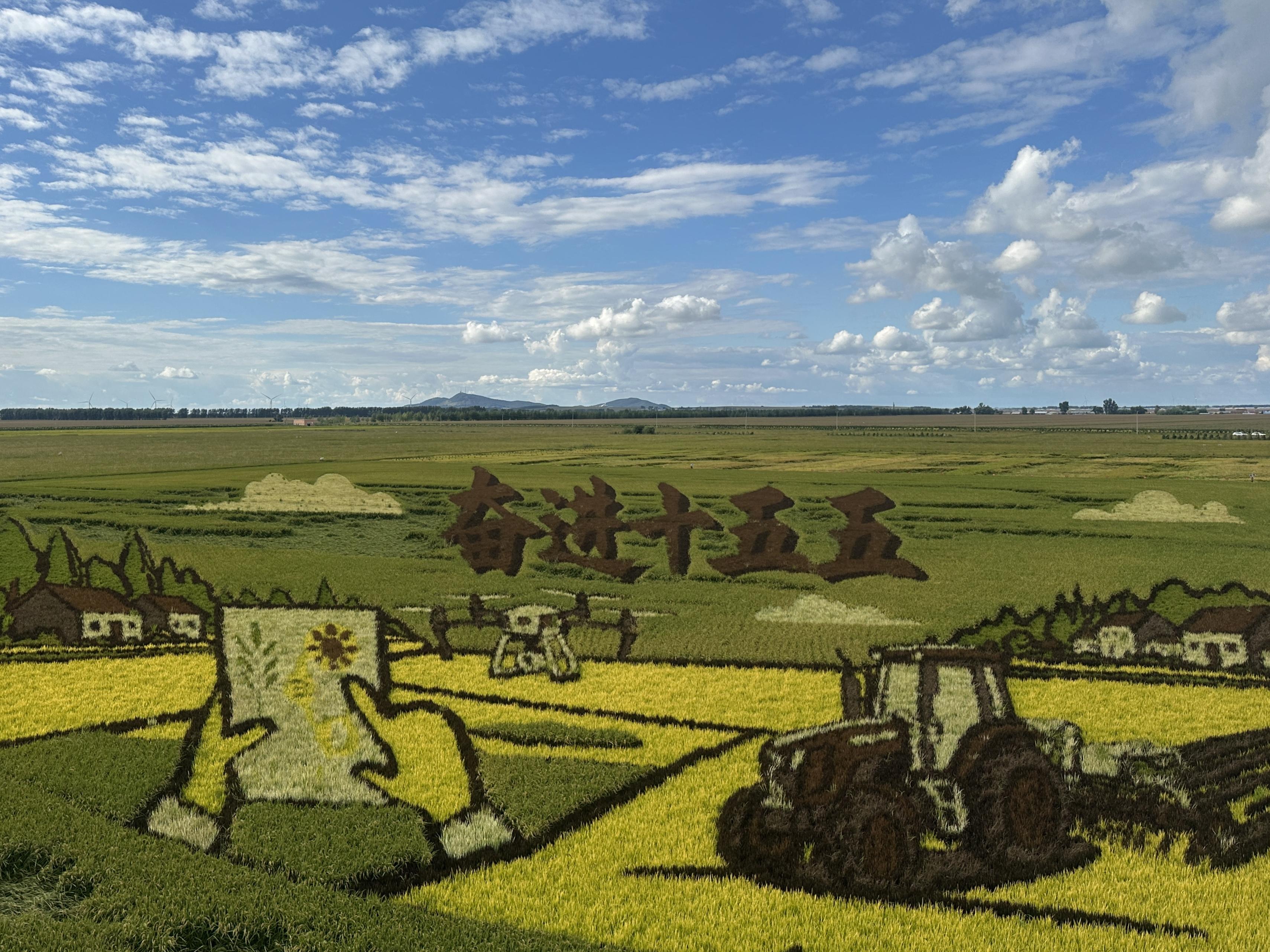
Heilongjiang province in northeast China, the nation's major grain producing province, is leveraging scientific and technological innovation to strengthen the whole-chain grain production and consolidate national food security.
Breakthroughs in seed breeding
How can the dilemma of balancing yield and resistance with taste in cold-region rice breeding be resolved?
The answer lies in biological breeding technologies, such as molecular breeding and gene splicing. These techniques integrate genes for high resistance, high yield and excellent taste to cultivate new varieties boasting all three merits.
The biggest bottleneck for cold-region breeding is its single cropping growth cycle per year.
In the past, breeders traveled to warm Hainan province in south China in winter to advance generations before returning to northeast China for further trials.
Today, the experimental base of the Yazhou Bay grain and oil crops innovation platform is under accelerated construction in Hainan's Sanya. It will have specialized facilities for molecular testing, quality analysis and germplasm preservation, enabling integration between field trials and indoor research.
Efficient seeding
Although high-end foreign seeders boast superior performance, they cost two to three times more than domestic models. Also, once they begin to malfunction, getting spare parts and technical maintenance is a lengthy process, often taking several weeks. This frequently leads to missing the farming windows.
Du Mujun, chief engineer of Heilongjiang DEWO Technology Co., Ltd., said the firm holds independent intellectual property rights to most components of its large-scale seeder series and they are mass produced locally. The complete machines are exported to Russia, South Korea and other regions.
The manufacturing cost of DEWO's high-end electric-drive seeder series costs is only 50 percent to 60 percent of the costs of their international peers.
Over the past three years, DEWO's intelligent electric-drive seeders have operated across more than three million mu (1 mu equals approximately 0.0667 hectares) in Heilongjiang, Jilin, Liaoning, Inner Mongolia autonomous region and Xinjiang Uygur autonomous region. At the Fuyu ranch alone in Qiqihar, the second largest city in Heilongjiang, one 18-row seeder covers over 12,000 mu in a single farming season.
Smart farming guarantees food security
In Jucheng, a village in Heilongjiang's Zhaodong city, science-driven farming ensures crops get sufficient water and nutrients, delivering stable yields and higher farm incomes.
To overcome the limitations of conventional planting, the village has promoted wide-ridge double-row planting and integrated water and fertilizer management, raising seedling density to 7,360 plants per mu, compared to 4,000-5,100 plants under standard cultivation.
"We plant corn on both sides (of the ridges). With better ventilation and light penetration, higher planting density barely reduces the corn yield. We also sow wheat on the empty middle ridges, which gives us an extra harvest," explained Chen Yong, a professor at the College of Land Science and Technology at China Agricultural University and director of the Zhaodong Experimental Station.
Wheat in Jucheng, sown on March 25 and harvested on July 15, yielded 400kg per mu this year.
In addition, technologies including full straw return to farmland — an agricultural practice where crop residues are incorporated back into the soil after harvest — soil hydrothermal sensors and AI-powered intelligent analysis have enabled Jucheng to achieve green "tonne-grain fields" — farmland yielding one tonne or more of grain per mu annually — for three consecutive years starting from 2024.