
China's Innovative Pharmaceuticals Gain Momentum
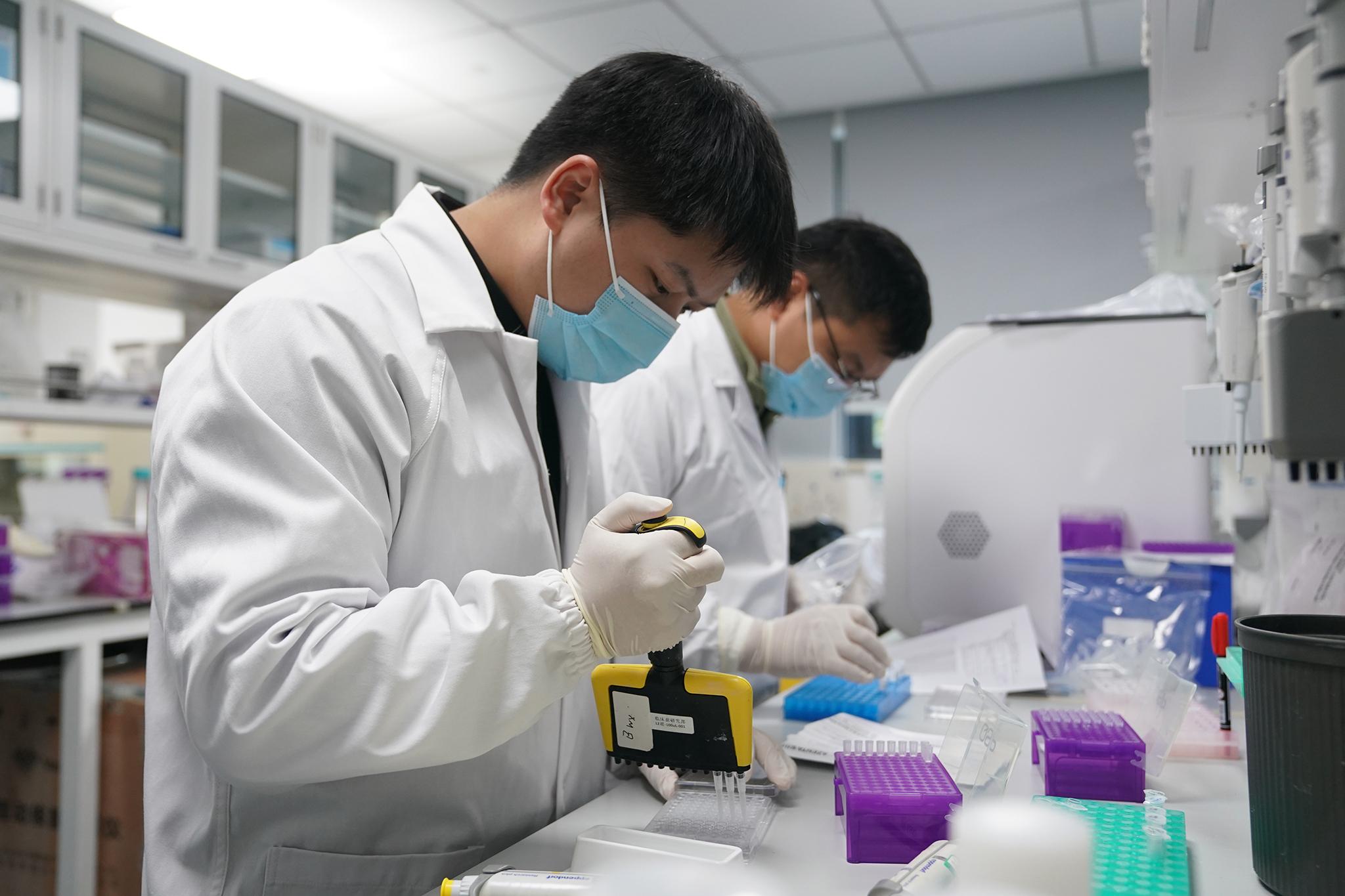
This year, drugs with independent intellectual property patents have emerged as a dark horse among the ranking list of China's export products, demonstrating strong innovative capabilities. Global pharmaceutical companies are eager to license Chinese innovative drugs with their improved quality and upgrading, marking a new phase in the development of China's pharmaceutical industry.
Data from China's National Medical Products Administration shows that in the first half of the year, 81 out-licensing deals for innovative drugs were struck, with a total transaction value of approximately 110 billion USD. This is more than double the value of 2024 and over 80 percent of 2025.
In terms of product types, the licensing transactions of China's innovative drugs cover 10 major therapeutic fields including oncology, metabolism, immunology and neurology. The main acquiring companies are from 20 countries and regions such as the U.S., France, the UK and Italy.
Reuters reported that global drugmakers are stepping up their search for China-developed experimental medicines as they cut costs ahead of patent expirations. Industry analysts predict biotech licensing deals would surge to a fresh record this year.
Jiangsu province in eastern China will support enterprises in participating in global trade and licensing cooperation, the provincial government said in a statement on its three-year plan for promoting the local bio-pharmaceutical industry.
This will boost pharmaceutical companies developing new medicines and help bring potential treatments faster to the market for patients overseas.
According to The New York Times, clinical trials in China received attention at an international oncology gathering in Chicago. In what appeared to be a first, one of the five coveted headliners at the conference was a presentation of a clinical trial conducted only in China.
That milestone at the meeting of the American Society of Clinical Oncology (ASCO), the world's biggest annual cancer conference, reflects the growth of China's biotechnology sector. In just a few years, it has transformed to a juggernaut, rapidly inventing and testing cutting-edge medicines.
"This tells us that the Chinese biotech industry has arrived," said Dr. Otis Brawley, a professor at Johns Hopkins who has attended the ASCO meeting every year since 1989.
According to a Bloomberg article, for U.S. drugmakers, the expanding tie-ups with Chinese companies mean lower costs and more access to breakthrough treatments.
Executives of U.S. pharmaceutical Merck & Co. are excited. They are working on a drug with the potential to become a "cornerstone" treatment for cancer, with 17 late-stage trials pitting it against lung, breast and other tumors. "It is one of the broadest programs in our pipeline," senior vice president Marjorie Green told analysts at the ASCO conference. But the 135-year-old American drugmaker hasn't invented the treatment itself. It has licensed the drug from China's Sichuan Kelun-Biotech Biopharmaceutical Co.
Merck isn't alone in scouting China for ideas. U.S. and Chinese drugmakers have struck at least 32 licensing deals this year through the end of July, putting 2026 on track to surpass last year's record of 45, data from Bloomberg Intelligence shows. Bloomberg Businessweek calculates that in addition to Merck's trials, Western drugmakers are running at least 38 global late-stage trials of drugs created in China, including possible treatments for cancer and obesity. "China is now becoming an alternative to the Bay Area; to Cambridge, Massachusetts; to Oxford," said Diederik Stadig, a senior healthcare economist at ING. "Pharma companies would be foolish to ignore this."
For U.S. drugmakers, the expanding tie-ups with Chinese companies are a no-brainer. "You can go twice as fast at half the cost in China," Merck CEO Rob Davis told reporters in July.
Jacob Van Naarden, Eli Lilly & Co.'s head of oncology and business development, also likes what he sees: "There's a ton of innovation coming out of China," he said in an interview in June. "We're shopping there just like we're shopping everywhere else."