

Blocking Ford's China Battery Ties to Hurt U.S. Industry
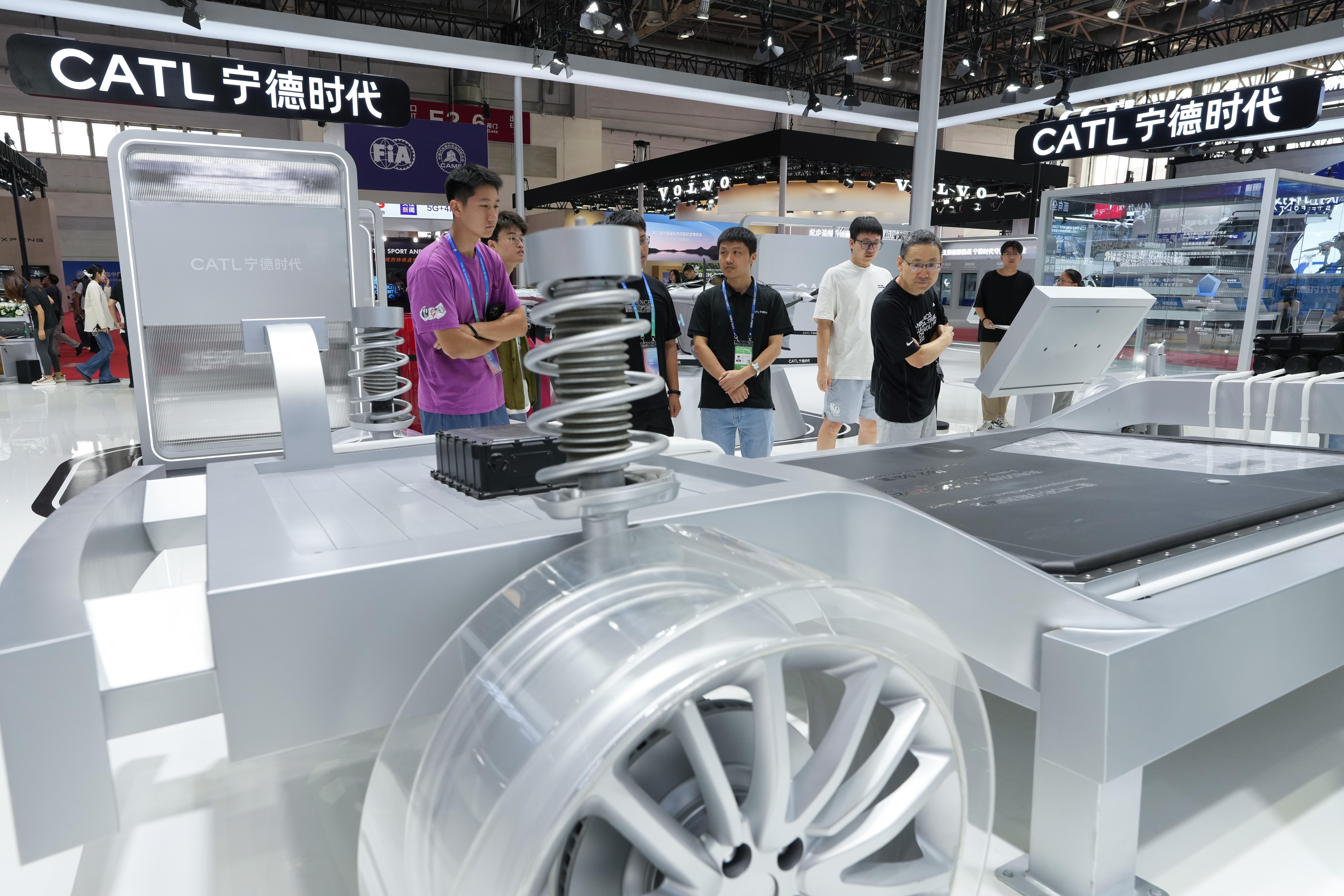
Recently, John Moolenaar, chairman of the U.S. House select committee on China, sent a letter to Ford Motor Company CEO Jim Farley, questioning Ford's cooperation with Chinese battery manufacturers such as Contemporary Amperex Technology Co., Ltd. (CATL).
Moolenaar portrayed China as a grave threat to U.S. supply chain independence and economic security, and raised alarmist concerns about China "exploiting" key U.S. industries and the alleged risks of deploying batteries based on Chinese technology in critical American infrastructure.
The intent behind this move is clear: to exert political pressure on Ford and obstruct its technological cooperation with Chinese battery companies.
Last December, Ford announced plans to produce lithium iron phosphate (LFP) batteries under a licensing agreement with CATL for use in energy storage systems. On January 15 this year, The Wall Street Journal reported that Ford was also in talks with Chinese high-tech company BYD for a battery deal for hybrid vehicles.
That same day, Moolenaar issued a statement calling the cooperation a serious "security risk" and insisting that Ford should work with U.S. allies rather than so-called adversaries.
In reality, the U.S. battery industry lags far behind China in both scale and technological capability. In January, the internationally renowned investment research firm Bernstein projected that by 2026, the U.S. would account for only about 10 percent of global battery production capacity, while China's share would reach as high as 80 percent.
Across major battery segments — including lead-acid, lithium-based, sodium-ion, and nickel-metal hydride — China holds a commanding lead over the U.S. in patent ownership.
As a legacy automaker with decades of deep engagement in the Chinese market, Ford's pursuit of battery technology cooperation with CATL and BYD is not only rational but strategically sound.
In recent years, LFP batteries — thanks to their superior safety profile and cost advantages — have come to dominate the energy storage sector, capturing more than 90 percent of the global market.
They are also increasingly becoming the mainstream solution for electric vehicles, with global market share exceeding 50 percent by 2025. CATL is the undisputed leader in LFP technology, accounting for 48 percent of global installed capacity. In the hybrid vehicle battery segment, BYD ranks among the world's leaders, with its market share approaching 30 percent in the third quarter of 2025.
Cooperation with Chinese companies is therefore critical to Ford's transition toward new energy. In a June 2025 media interview, Lisa Drake, Ford's vice president for electric vehicle industrialization, explained the rationale behind introducing CATL's technology: "It's hard to innovate something when you've never seen it with your own eyes. That's why we need to bring it here."
Throughout its cooperation with Ford, the Chinese side has demonstrated confidence and openness. There has been no fear that licensing certain technologies to the United States would undermine China's leading position, nor has there been any attempt to stoke paranoia about American companies "stealing" advanced Chinese battery technologies — tactics frequently employed by U.S. politicians against Chinese firms.
On the contrary, a CATL representative stated plainly: "We are committed to supporting the global energy transition, including the U.S. market."
The real irony lies in the fact that some U.S. lawmakers are disregarding the interests of their own companies, repeatedly intervening to obstruct legitimate business cooperation. They seem oblivious to the reality that Ford stands to gain the most from such partnerships — and to lose the most if they are delayed or derailed.
Even without cooperation with Ford, CATL and BYD would remain global leaders in the battery industry. For Ford, however, every day of delay means falling further behind in acquiring high-performance LFP technology and entering the rapidly expanding energy storage market, with inevitable spillover damage to related U.S. industries.
At the root of these misguided actions is an obsessive tendency to overgeneralize national security concerns, driven by the paranoid assumption that the use of Chinese technology or products is inherently risky. This mindset reflects a classic case of projecting suspicion onto others.
Such U.S. politicians would do well to acknowledge the reality of China's technological progress, recognize the necessity of China-U.S. cooperation in science, technology, and industry, and stop interfering in normal commercial exchanges between companies.
Continuing down the current path will only delay U.S. industrial development and compound the difficulties a shrinking American manufacturing sector already faces.