

Xuelong Completes Survey for 42nd Antarctic Expedition
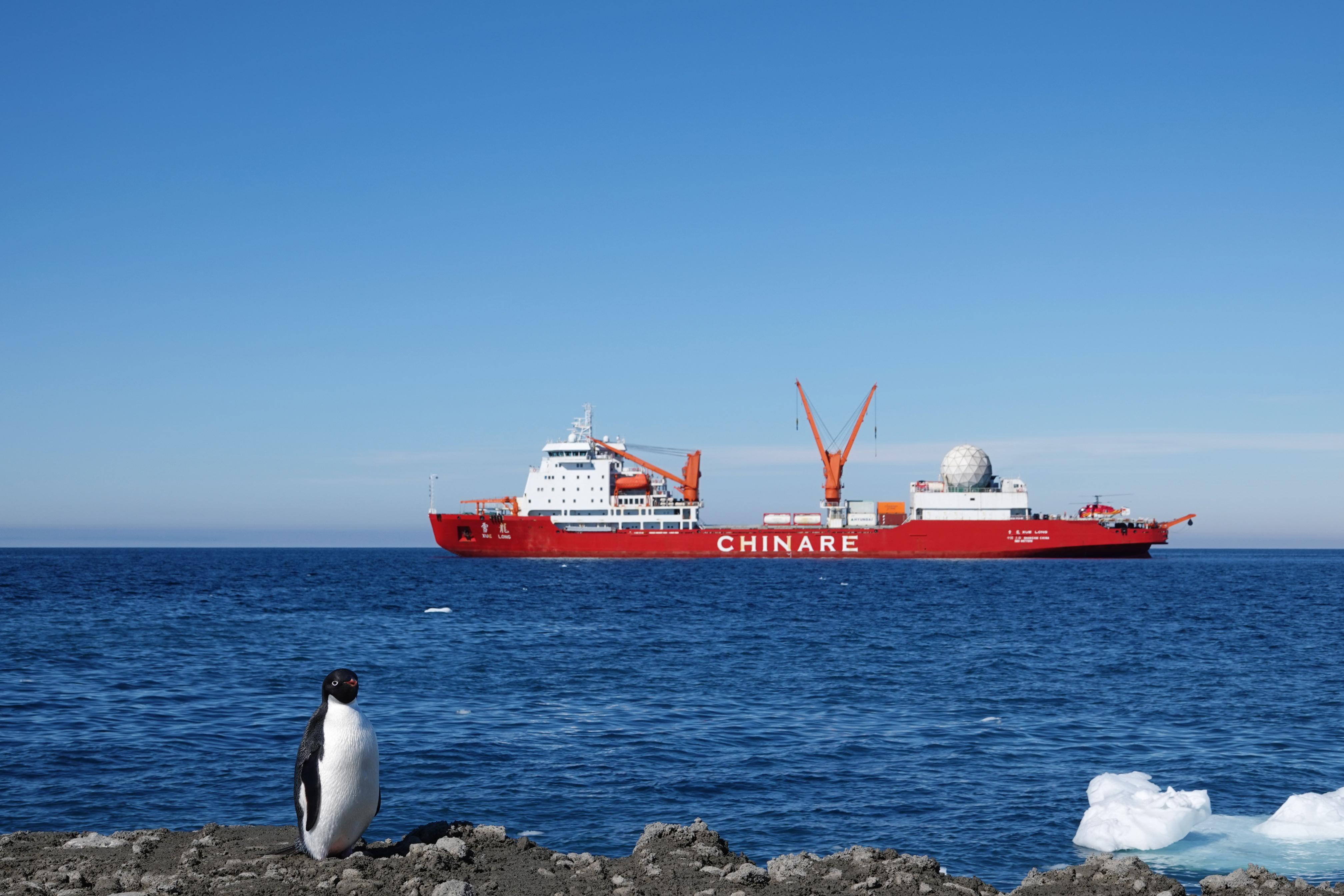
The ocean team of Chinese icebreaker Xuelong, also known as Snow Dragon, finished the ocean survey tasks of China's 42nd Antarctic Expedition on February 19, with the last acoustic release transponder retrieved from the Ross Sea.
Zhang Haifeng, head of the team, said they carried out a comprehensive survey of the hydrological environment, marine organisms, marine chemistry and atmospheric environment in the Amundsen Sea, the Ross Sea and nearby waters.
Survey of penguin habitats was conducted simultaneously.
The work started on January 24, with the team battling unfavorable weather with wind and snow, thick fog, surging waves and severe ice conditions. Focusing on the key elements of the marine ecosystem, they deployed and retrieved subsurface moorings, used new type krill trawls, and made observations using disposable conductivity-temperature-depth instrument, Zhang said.
The team retrieved four sets of ecological buoys and deployed four new sets. Abundant biological samples were also collected, including krill, midwater fish and benthic organisms, which will help understand the nutrition structure of key pelagic species as well as track and understand the changing trend of key populations.
The mission used new technologies and new equipment. The polar ecological buoys were equipped with domestically produced acoustic and optical detection modules, which enable sequential continuous observation for a long time in the ocean under ice.
Antarctic krill are very sensitive to climate and ecological environment changes. For example, the reduction of sea ice could threaten their food sources and habitat, and the rising seawater temperature could trigger their retreat to higher altitude.
The new type of improved krill trawl has a multi-layer design, which increased catch rates and facilitated monitoring krill distribution across different water layers, according to Li Shuai, head of the quarter deck working group.
The team analyzed the regularity of krill distribution, their interannual variations, feeding habits, and trophic relationships within the food chain. The objective is to promote sustainable utilization of biological resources and protection of marine environment in the Southern Ocean, Li said.
As a member of the Convention on the Conservation of Antarctic Marine Living Resources, China is contributing research data and scientific solutions, which not only help evaluate krill resources, but are also crucial to understand how climate change influences polar ecosystems, according to Li.
The ocean team members of Xuelong and summer team members of the Qinling Station will board the vessel to the Port of Hobart in Australia, and then fly back to China.
Xuelong will sail to the Zhongshan Station in east Antarctica for subsequent tasks.