
Sci-tech Central to Consumption Upgrades
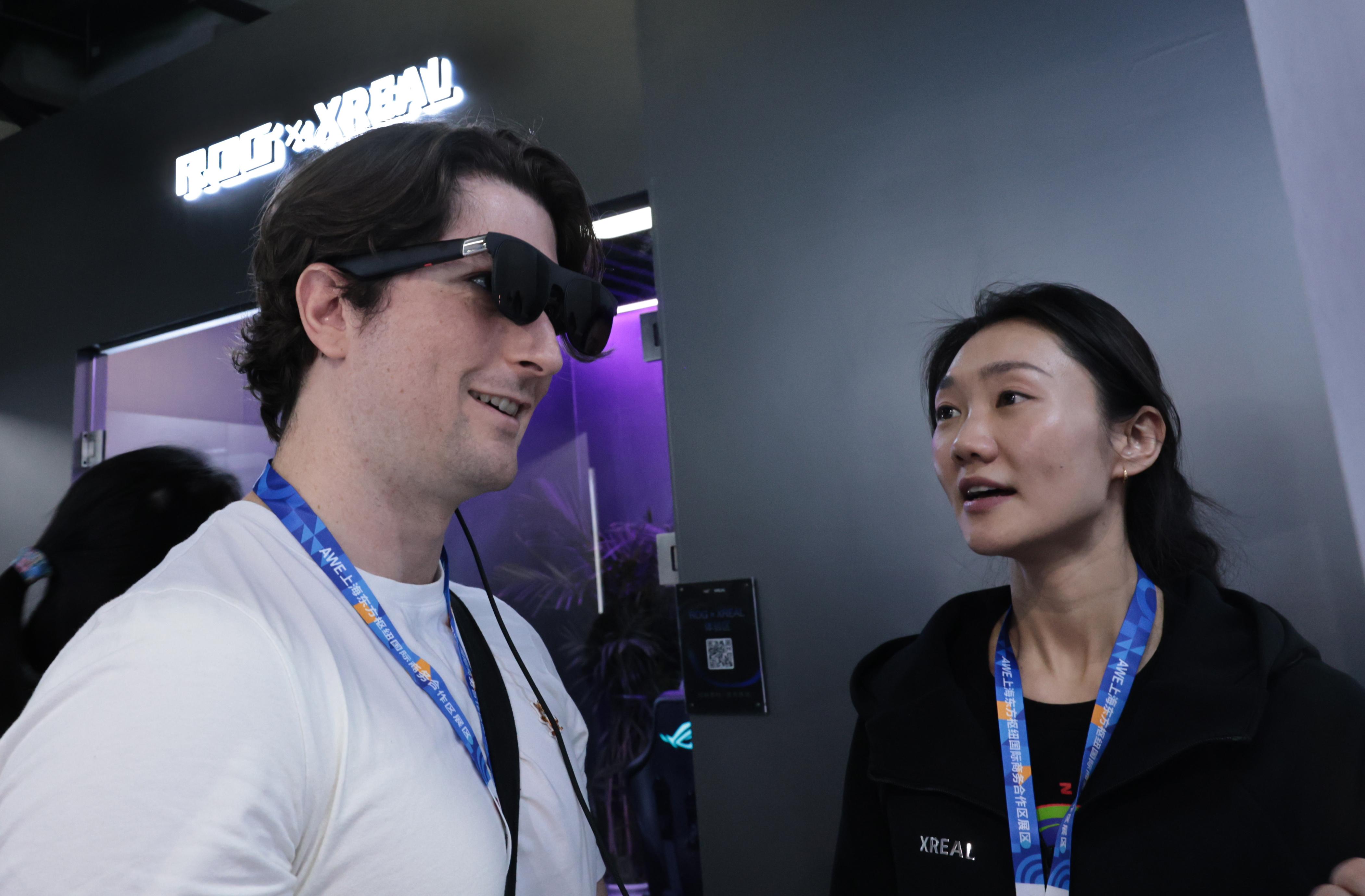
From immersive experiences to intelligent services, frontier science and technology is deeply integrating into the daily life of Chinese consumers. The integration is now widespread in consumer goods, and driving continuous exploration of new consumption scenarios, ultimately upgrading the consumption industry.
During China's recent Spring Festival holiday, intelligent home appliances became popular shopping choices. A recent survey showed a 121 percent month-to-month surge in robotic vacuum cleaner sales in county-level and rural markets, while built-in microwave-convection-oven combos sales grew by 114 percent. Sales of smart appliances such as dishwashers and tea makers also increased by over 70 percent.
Science and technology are reshaping consumption into an intelligent, green and more personalized experience. For example, technological upgrades have become the main development path for the home appliance industry, according to Cao Dianlong, director of the institute of environment and interior design at CABR Technology Co., Ltd.
The rapid development of AI technologies has not only enhanced users' experience, but also triggered demand for immersive, active and interactive intelligent homeware, Cao noted.
Intelligent home appliance systems that sense, analyze and make decisions based on user behavior data are already a reality. Huawei has developed a healthy air solution, which monitors air indexes like temperature, humidity and formaldehyde 24/7, by connecting AI technology with air quality monitoring in the entire home.
Should air quality deteriorate, the system automatically activates the fresh air system and air purifier, ensuring the air at home remains comfortable.
According to a report released by the China Household Electrical Appliances Service Association, whole-home smart systems are predicted to become the core platform for household intelligence, with the market size projected to reach 280 billion RMB by 2026.
Current smart home products are evolving toward autonomous control through "perception + reasoning, decision-making + execution," Cao noted. As big data and AI large model technologies become more widespread, smart home products will transition from "individual smart devices" to "whole-home intelligence."
The technology shift is also influencing the domestic service industry. Large models enabling precise matching of nannies to "maid robots" are already handling basic tasks and providing emotional companionship. Meanwhile, digital intelligence technologies such as AI are quietly reshaping diverse family service scenarios — from childcare to eldercare — unlocking new forms and frontiers in domestic service consumption.
In the transportation sector, technology is providing robust support for services such as self-driving tours. Integrated "photovoltaic-storage-charging" service stations across the country offer tourists more convenient and efficient charging services.
Liu Dong, deputy director general of the Department of Comprehensive Planning of the Ministry of Transport, said that efforts will be made to advance the construction and upgrading of charging facilities at highway service areas, increasing the number of high-power charging stations.
Over 10,000 charging guns are planned to be installed nationwide at highway service areas in 2026, with high-power charging guns accounting for no less than 25 percent of the total. This initiative aims to significantly enhance the reliability and capacity of charging services.