

High-Altitude Sentinel in Global Climate Fight
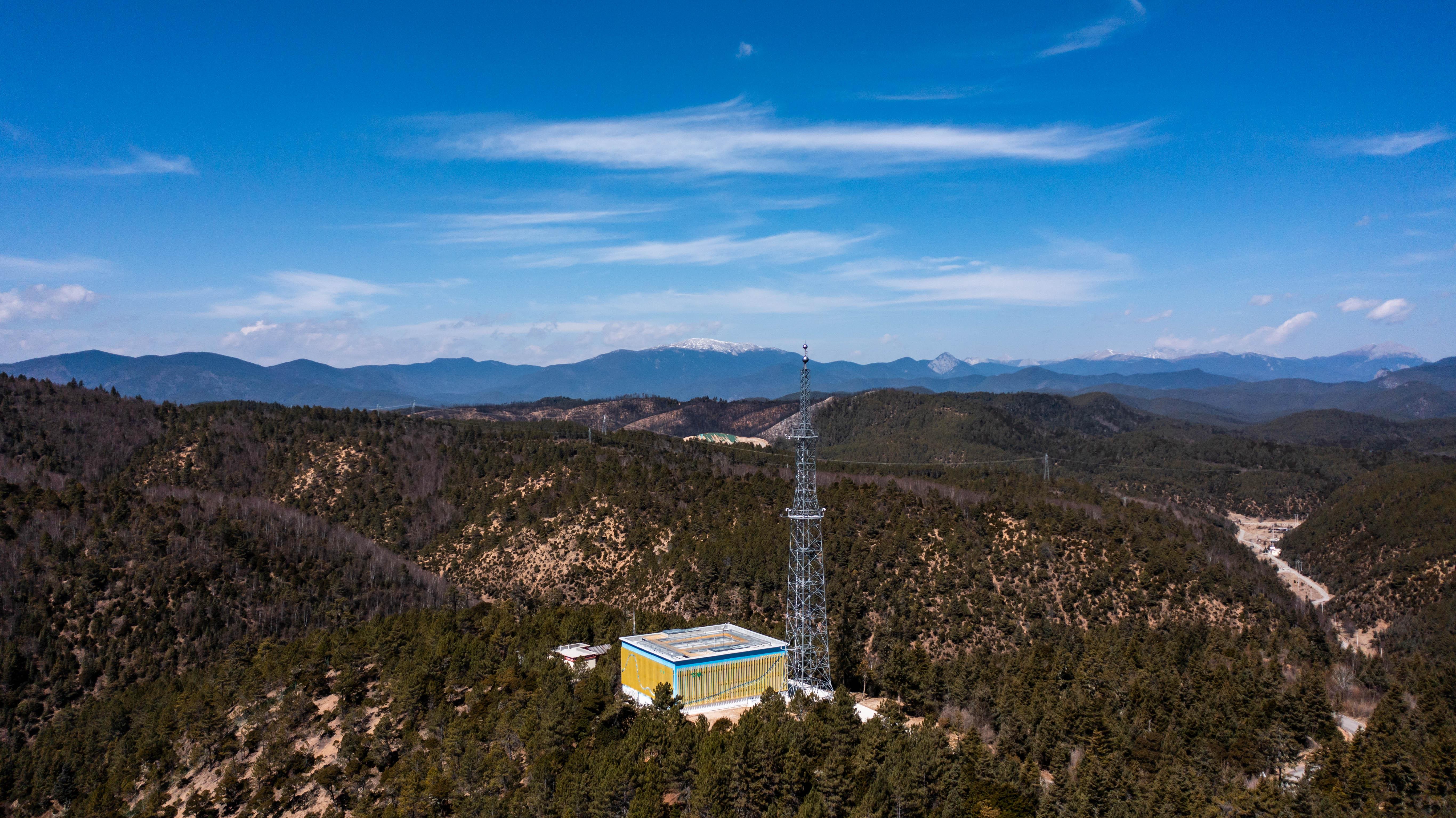
On the peak of Mount Waliguan in northwest China's Qinghai province, at a windswept altitude of 3,816 meters, an unassuming scientific outpost is quietly shaping our understanding of the planet's health. This is the China Global Atmosphere Watch Baseline Observatory that has been monitoring the Earth's temperature for over 30 years.
A great contribution of the observatory is the "Waliguan Curve" — a long-term, consistent record of atmospheric carbon dioxide concentrations.
A station forged in extremes
As the highest baseline observatory in the hinterland of Eurasia, its long-term observational data are incorporated into the World Meteorological Organization's Greenhouse Gas Bulletin and international climate assessments, becoming an important scientific basis for characterizing global climate change trends.
But keeping this vital data stream alive is a story of extraordinary dedication. Building the Waliguan observatory in the 1990s was a logistical challenge, requiring materials to be hauled from 140 kilometers away and water trucked up the mountain.
Today, life for the three generations of scientists who have manned the station remains incredibly tough. Oxygen concentration here is just 67 percent of that at sea level, temperatures regularly plunge to -20°C, and winds can reach hurricane-force levels, equivalent to extreme typhoons or hurricanes. Yet, the dedicated staff must still check sensitive equipment every two hours, ensuring the data remains long-term, continuous and precise.
From a single peak to a green ripple effect
Recognizing that even minor local pollution could have an impact on the observatory data, China is taking extraordinary steps to protect the observatory's surrounding environment.
Starting from February 1, 2026, a new local law will formally safeguard the area around Waliguan, integrating its protection into regional development plans. This legal shield ensures that the "Waliguan Curve" will continue to provide reliable data for scientists worldwide.
The commitment to Waliguan reflects a broader, tangible shift towards sustainability. To the east of the station, the once-barren Talatan Gobi Desert has been transformed into a massive solar farm. The 609 km2 photovoltaic park stretches like a "blue ocean," where an endless expanse of photovoltaic panels now generate clean energy. In 2025 alone, the Hainan Tibetan autonomous prefecture in Qinghai, where the photovoltaic park is located, saved an estimated 17.17 million tons of coal equivalent.
The use of a "herding under panels" model that allows sheep to graze under the shadow, with grass growing even better and local livelihoods improved.
From Waliguan's solitary peak, China has expanded its efforts to a national network of over 120 greenhouse gas monitoring stations. The resulting data shows tangible progress: in 2024, the growth rate of China's carbon emissions slowed significantly, increasing by only 0.6 percent compared to the global average of 0.8 percent.
A curve that connects to the world
The "Waliguan Curve" mirrors data from the Mauna Loa Observatory in Hawaii. Together, these two stations—one continental, one oceanic—provide peer-reviewed proof of rising global greenhouse gases and serve as a key scientific pillar for organizations like the UN's Intergovernmental Panel on Climate Change (IPCC).
At the 2025 UN Climate Change Conference (COP30), China made its meteorological AI models and global climate datasets available to the world, offering practical tools for climate adaptation. At the 62nd Plenary Session of IPCC hosted by China in February 2025, Chinese scientists actively provided scientific support for future climate change projections and contributed to global climate science governance.
Ultimately, the "Waliguan Curve" is more than just a line on a graph. It is a powerful symbol of scientific dedication and international cooperation. It charts our planet's vital signs and fuels the global hope that one day, through continued effort and innovation, the curve will finally begin to bend towards a stable and sustainable future for our shared Earth.