

Horticulture Research: Decoding 'Beauty and Flavor' of Life
In the minds of many, horticulture seems to be the leisure art of tending to flowers and plants or savoring fruits and vegetables. However, under the scientist's microscope, the fragrance of the rose or the sweetness of the strawberry is underpinned by complex genomics and biotechnology. This is the realm Horticulture Research has focused on: decoding the "beauty and flavor" of life through cutting-edge science.
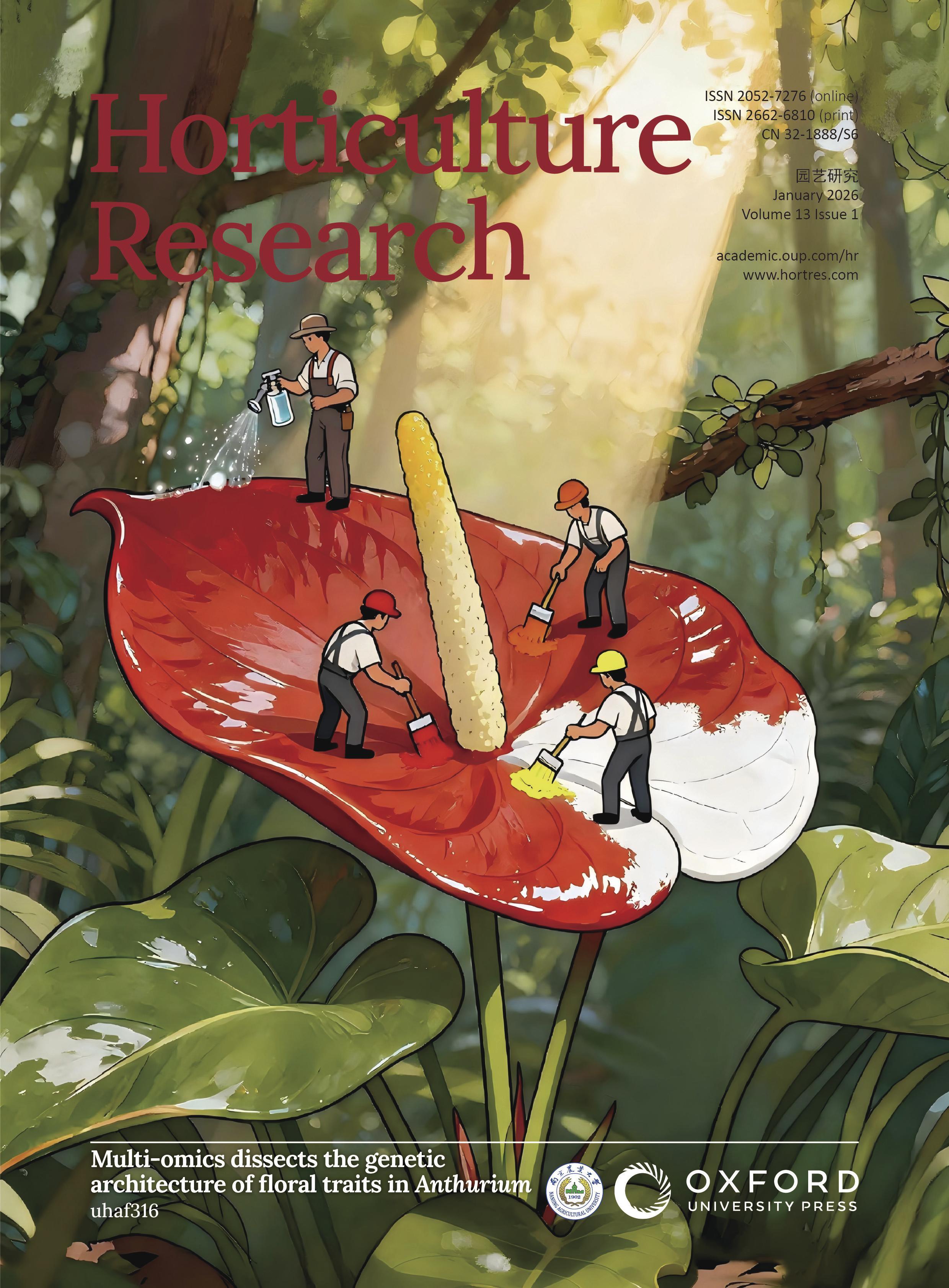
Cultivating a healthy academic ecosystem
Since Horticulture Research's launch in 2014, we have set a clear mission: to publish a high-level journal and, more importantly, to cultivate a vibrant global horticulture ecosystem, offering scholars worldwide a platform to showcase their work and exchange ideas.
In the early days, to ensure this Chinese university-hosted journal integrated into the international mainstream, I traveled frequently among universities and institutions in China, the U.S. and Europe. In 2016 alone, I chaired and attended 15 academic conferences and visited nine universities and research institutions to solicit manuscripts, and promote the journal's philosophy. Through this process, I realized that what scientists crave most is not just publishing papers, but in-depth academic exchange and international collaboration to advance horticultural science.
Therefore, we began to undertake several "extra duties." We started the International Horticulture Research Conference, which has become a premier academic event for fundamental research in global horticulture. It has been held 12 times across China, the U.S., the UK, Italy and beyond.
On this platform, scholars discuss face-to-face topics like how to enhance tomato storage and transport by gene editing, determine apple maturity using non-destructive testing, and extend the blooming period of flowers via molecular breeding. The synergy between the journal and the conference has transformed Horticulture Research from a publication into a multidimensional, warm community of scientists.
We also host regular online academic exchanges for our authors to share insights and discuss their papers, ensuring that young scholars and students can benefit from these exchanges.
An objective academic gatekeeper
As a frontline scholar, I intimately understand the anxiety and anticipation in the submission process. Therefore, we have an "author-centric" service philosophy. We do not look at the authors' "titles" or the prestige of their affiliated institutions; we judge research only by its scientific value.
One event left a deep impression on me. In 2024, a young scholar submitted a manuscript detailing his discovery of a highly significant and novel gene controlling the prickle trait in Solanaceae plants. After peer review, the journal accepted it.
However, after the manuscript was pre-published online, it was questioned by a senior American scholar, who claimed that some of the experimental data was unreliable. We immediately organized a rigorous professional review; through strict evaluation by the editorial board, it was determined that the data were solid, the conclusions were reliable, and the accusations were unfounded. The paper was thus published as scheduled.
A month later, this senior scholar published similar findings on the gene in another journal. This convinced me that the courage to endorse innovation based on professional judgment is the key to earning the respect of international peers. I also realized that fair academic competition requires impartial editors-in-chief and journals, rather than being obsessed with identity and status. This is what constitutes a healthy academic ecosystem.
Forging the link from basic science to the dining table
Today, Horticulture Research has grown into a reputable journal in global horticulture. Its submissions cover China, the U.S., the UK, Italy, Spain and the Netherlands.
Its latest impact factor is 8.5, and its Journal Citation Indicator is 2.34, both ranking first in the field. The number of annual published papers has grown from over 30 in the early days to more than 300 today.
Yet, this is far from the endpoint. By publishing horticultural research findings, we aim to bridge basic science and the horticulture industry so that people enjoy more nutritious fruits and vegetables, better tea and coffee, and more beautiful flowers, ultimately contributing to a better quality of life for all.
The author is Cheng Zongming, the editor-in-chief of Horticulture Research.
Journal Review
As a foundational platform in horticulture, Horticulture Research, through its rapid development, has stimulated academic vitality and expanded the field's global influence.
The journal upholds rigorous publishing standards, and serves and unites the global scientific community. By organizing high-level academic events such as the annual International Horticulture Research Conference, it has forged a dynamic academic hub that fosters idea exchange and collaborative innovation among scholars worldwide.
Concurrently, its exploration of deep integration and development has garnered recognition within the industry. Its recent receipt of the China Publishing Government Award for Journals testifies to its professionalism and leadership.
I expect Horticulture Research to adhere to its ethos of excellence in publishing, and courageously champion disciplinary innovation. May it play a stronger role in agricultural modernization and the revitalization of the seed industry, contributing China's wisdom to human well-being and global ecological security.
—— Yu Jingquan, academician of the Chinese Academy of Engineering, and professor at Zhejiang University