

Blueprint for High-quality Development of Marine Economy
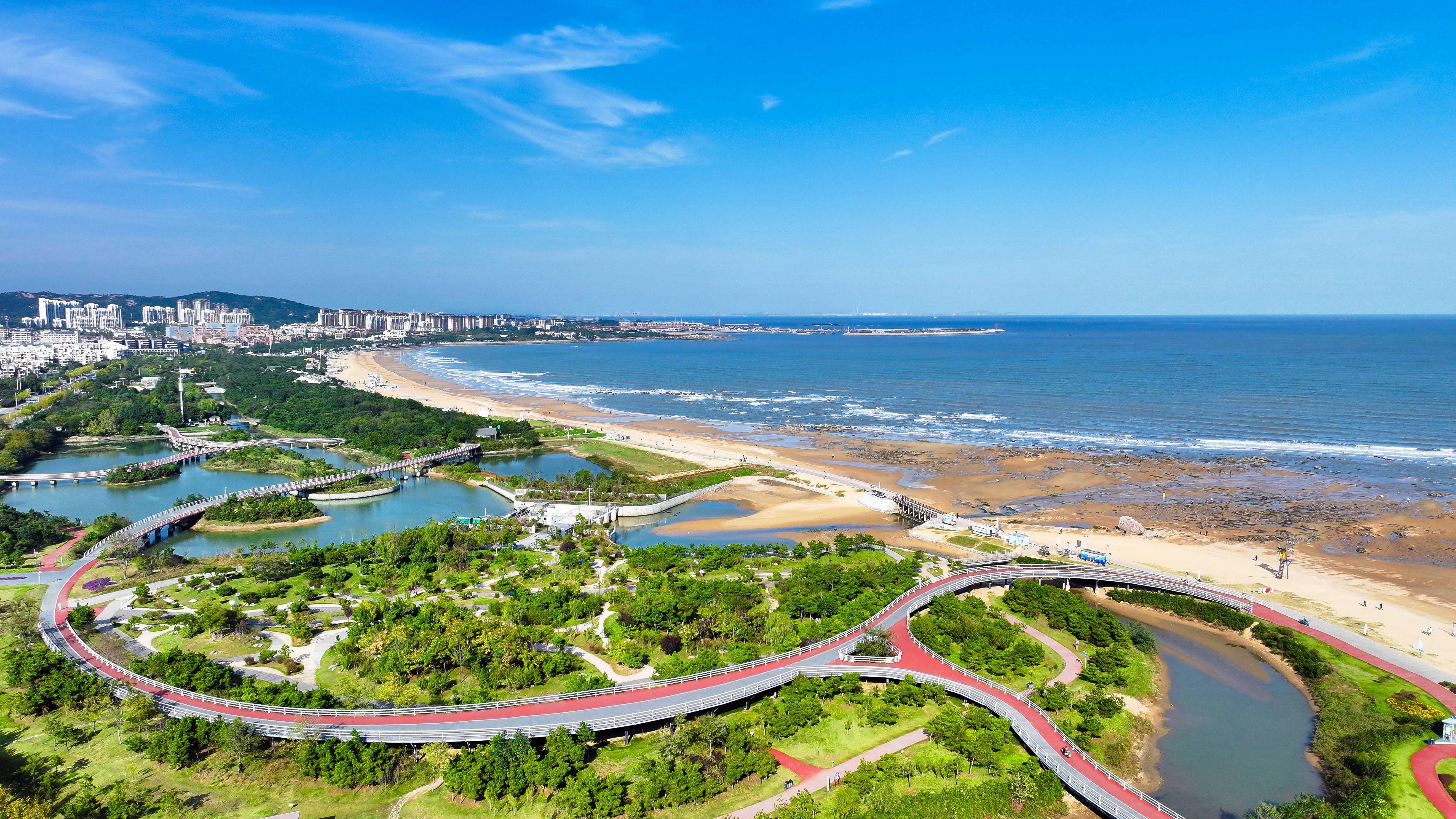
China will promote high-quality development of its marine economy, giving priority to six aspects. They were outlined in a recent article in the Qiushi Journal.
The six aspects are: strengthening top-level design and policy support; enhancing independent innovation capacity in marine science and technology; building stronger, more competitive and scaled-up marine industries; strengthening overall planning for major bays; enhancing marine ecological and environmental protection; and actively participating in global ocean governance.
The government work report delivered in March proposed, for the first time, to "enhance overall planning for major bays and see that China's maritime sector gets stronger, performs better, and grows in size."
Minister of Natural Resources Guan Zhiou said in an interview after the closing meeting of the fourth session of the 14th National People's Congress that greater emphasis will be given to innovation-driven development to comprehensively enhance the capacity for deep-sea exploration and development. With a focus on win-win cooperation, extensive marine cultural exchanges will be carried out to build a maritime community with a shared future.
With the Laoshan Laboratory for Marine Science and Technology in Qingdao, east China, fully operational, Meng Xiang, the world's largest drilling vessel, entering service, and the Deep Sea No.1 offshore oil and gas platform in the South China Sea running, China's "blue economy momentum" maintains robust growth.
China's marine economy experienced steady growth in 2025. The gross ocean product reached nearly 11.02 trillion RMB (about 1.6 trillion USD), a year-on-year increase of 5.5 percent, contributing 0.4 percent to national economic growth, according to data released by the Ministry of Natural Resources.
During the 14th Five-Year Plan period (2021-2025), the added value of emerging marine industries grew by 7.3 percent, driving traditional industries to accelerate their green and intelligent transformation.
China's "blue friends circle" continues to expand. China is among the first parties to the Agreement on Marine Biodiversity of Areas Beyond National Jurisdiction. China has signed marine economy cooperation agreements with over 50 countries and international organizations, and jointly conducted polar and oceanic scientific expeditions with numerous nations.
The 15th Five-Year Plan (2026-2030) has a blueprint for the marine economy, specifically developing marine energy resources and cultivating key industries such as deep-sea and offshore aquaculture, distant-water fisheries, marine equipment manufacturing, and marine biomedicines.
It also includes strengthening strategic marine sci-tech capacity and advancing pollution prevention and control, shoreline remediation, and ecological restoration in key marine areas. The goal is to ensure approximately 86 percent of nearshore waters is of excellent quality.