

Fusing China's Smart Economy into Daily Life
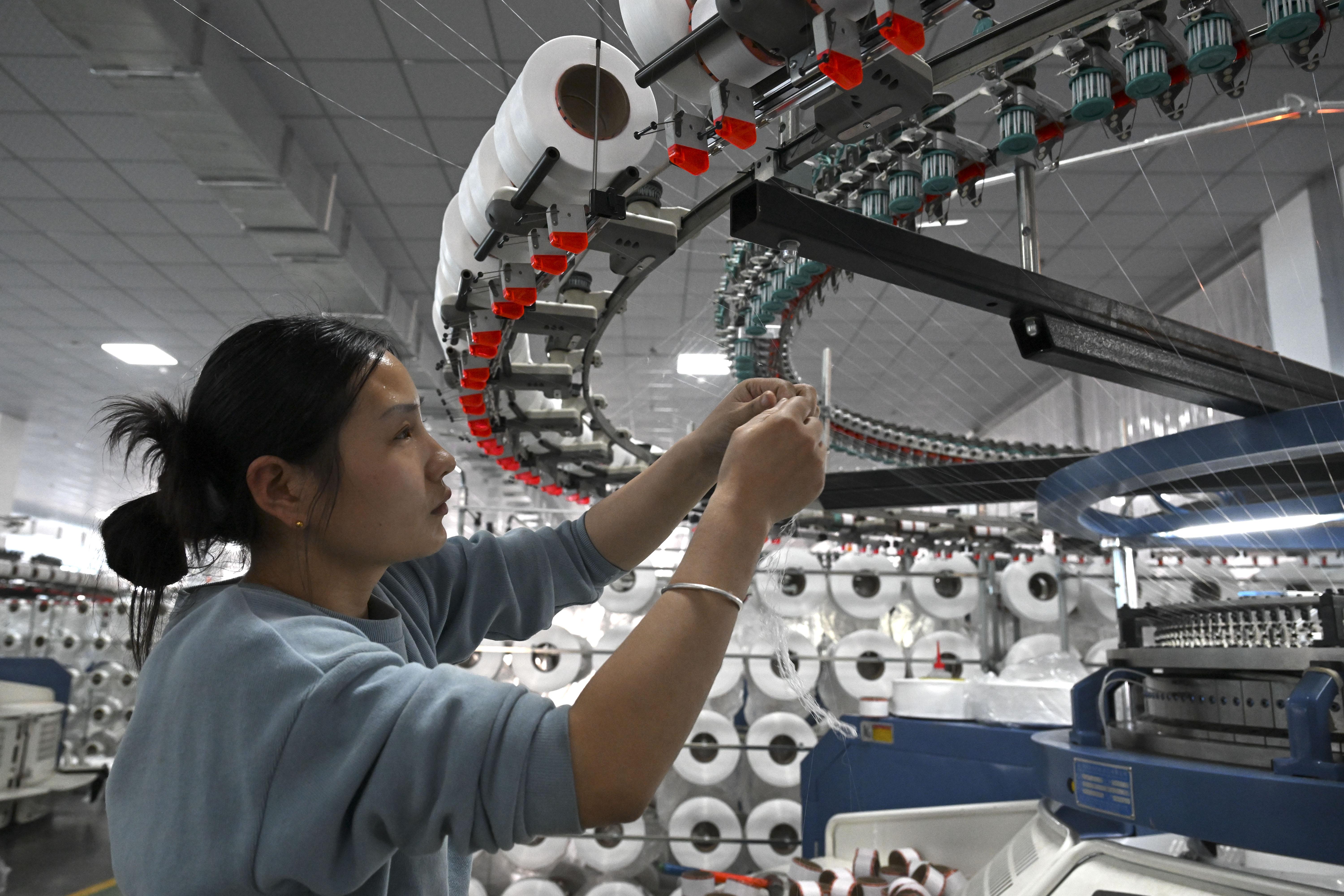
China's 2026 government work report has for the first time proposed the goal of "creating new forms of smart economy," signaling a shift in the country's approach to artificial intelligence. Rather than focusing solely on technology or products, China now regards AI as a strategic priority that encompasses industrial chains, industrial ecosystems and even the wider economy.
During this year's Two Sessions, smart economy was a hot topic. A key question emerged: how to transform the "green apples" of laboratory research into the "golden apples" of real-world market success.
In fact, across China this trend is already taking shape.
In Chongqing's Nan'an district, 5,000 drones have taken to the night sky on multiple evenings, entertaining crowds with precisely coordinated aerial formations that transform into galloping horses. Meanwhile, in Hangzhou's Wushan Square in Zhejiang province, smart mattresses capable of monitoring heart rate and breathing in real time, along with robots that perform lion dances and write auspicious Chinese characters, have become festival favorites.
These scenes, filled with a sense of technological possibility, illustrate how smart economy is gradually moving from concept to reality.
Yet challenges remain. Transitioning from eye-catching demonstrations to practical, widely adopted products remains a challenge. For many emerging technologies, the key obstacle lies in the "last mile" of commercialization — turning promising innovations into everyday consumer applications.
"China's ultra-large market is a unique advantage for technological innovation," said Wang Chengbin, a member of the National Committee of the Chinese People's Political Consultative Conference. According to Wang, the crucial task is to transform that market scale into development momentum by gradually opening more real-world application scenarios, where new technologies can be tested, refined and improved.
Wang suggested expanding application scenarios in fields closely tied to daily life and production, including urban governance, transportation, community services, household life and cultural tourism. Local governments could also lead the way in procuring and adopting locally developed innovative products in conjunction with major projects such as urban renewal, new infrastructure development and smart city pilot programs.
Such an approach would create a virtuous cycle in which market demand stimulates technological supply, while innovation generates new demand, Wang said.
Industry representatives also emphasized the importance of building demonstration scenarios. Zhou Yunjie, chairman of Haier Group, said that AI is evolving from "perception and cognition" to "embodied intelligence." He suggested that policy support should encourage leading companies to create benchmark application scenarios that can accelerate the adoption of AI technologies.
Meanwhile, Tu Hongyan, chairwoman of Wensli Group, called for a framework combining "standards, subsidies and scenarios" to support the application of AI agents in traditional industries such as textiles. Such measures could help address the current challenge of "isolated breakthroughs but broken industrial links," she said.
Despite rapid technological progress, experts acknowledge that structural obstacles remain.
One major challenge is the persistence of "data islands." These fragmented and incompatible data systems limit the ability of AI to operate across various platforms and scenarios. High computing costs also pose barriers, particularly for small and medium-sized enterprises.
In addition, a gap often exists between advanced technologies and consumer markets. Many cutting-edge innovations developed for enterprise use lack the secondary development needed to transform them into accessible consumer products, leaving potential users uncertain about their value or how to use them.
To bridge these gaps, policymakers and industry leaders have proposed a range of solutions.
Wang suggested establishing a "public service platform for the consumerization of frontier technologies." He envisions this platform helping to identify promising technologies developed for enterprise applications that could be adapted for civilian use and provide professional services, such as industrial design, product engineering and user-experience testing. The goal, he said, is to help hard technologies better align with consumer demand.
Lu Qingguo, chairman of Chenguang Biotech Group, proposed increasing investment in pilot-scale testing facilities and building regional shared platforms that allow industrial demand to participate earlier in the research and development process. This would help prevent technologies from being developed in isolation from market needs.