

'Soil Echometer' Sensing Signals When Crops Are Thirsty
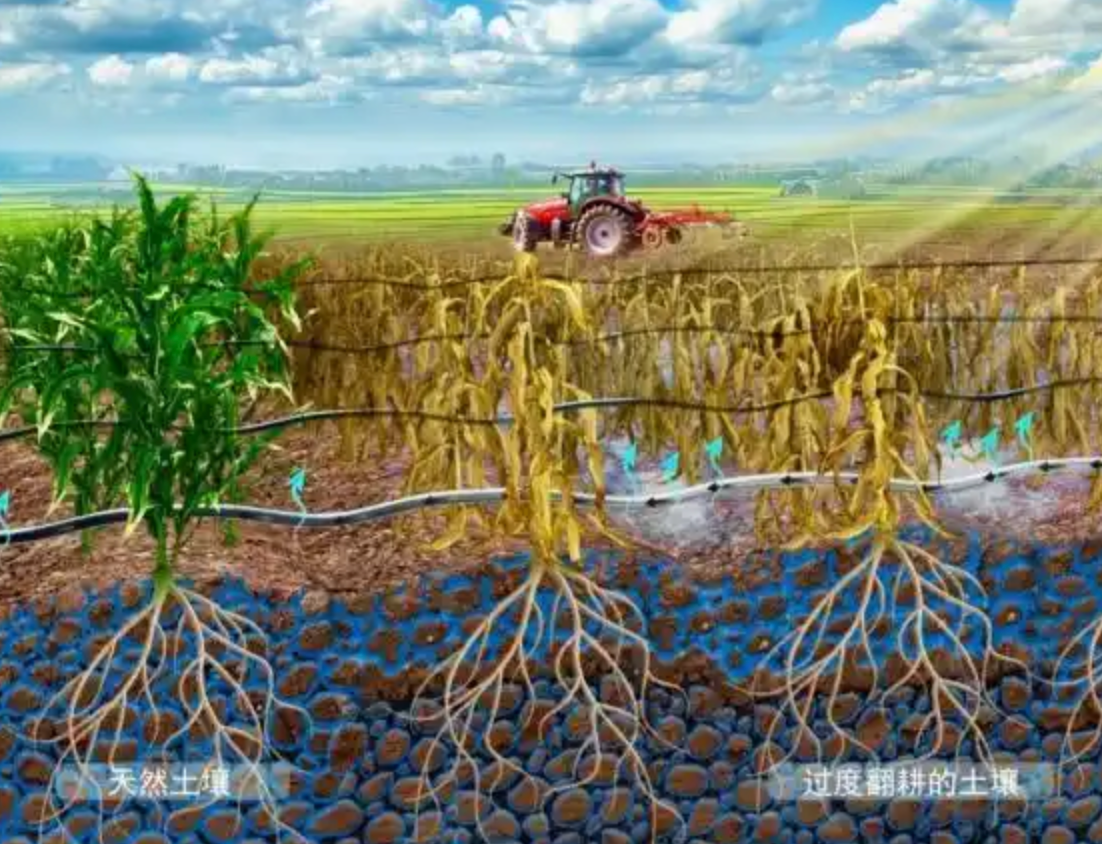
For the first time, a "soil echometer" using distributed optical fiber sensing technology, able to conduct real-time monitoring of farmland water flows every single minute, has been developed by researchers from the Institute of Geology and Geophysics, Chinese Academy of Sciences along with other institutions.
As soil moisture levels are so crucial for agricultural production, directly affecting crop growth and final yield of crops, this breakthrough provides a brand-new perspective for understanding the impact of different farming methods on soil health.
Without causing soil disturbance, the research team laid optical fibers on the surface of farmland soil. By capturing the changes in the propagation speed of seismic waves generated by the background noise of the ground on the soil, they were able to deduce the dynamic structure of soil pores.
This technology can also "diagnose" the changes in the soil caused by different farming methods. In traditional intensive plowing areas, the fiber optic data shows that brief rainfall causes water to accumulate in the surface layer and be difficult to penetrate before evaporating rapidly in sunlight.
Meanwhile, the heavy weight of farm tools has accelerated water loss. In soil that is minimally disturbed by farming or human intervention, water can quickly seep downward and be stored, acting like a sponge to provide a stable water supply for the crop roots.
This research ingeniously applied seismological observation methods to agricultural scientific research, providing a new perspective for understanding the interaction between plants and soil.