Nanjing's Solution-driven Innovation Practice
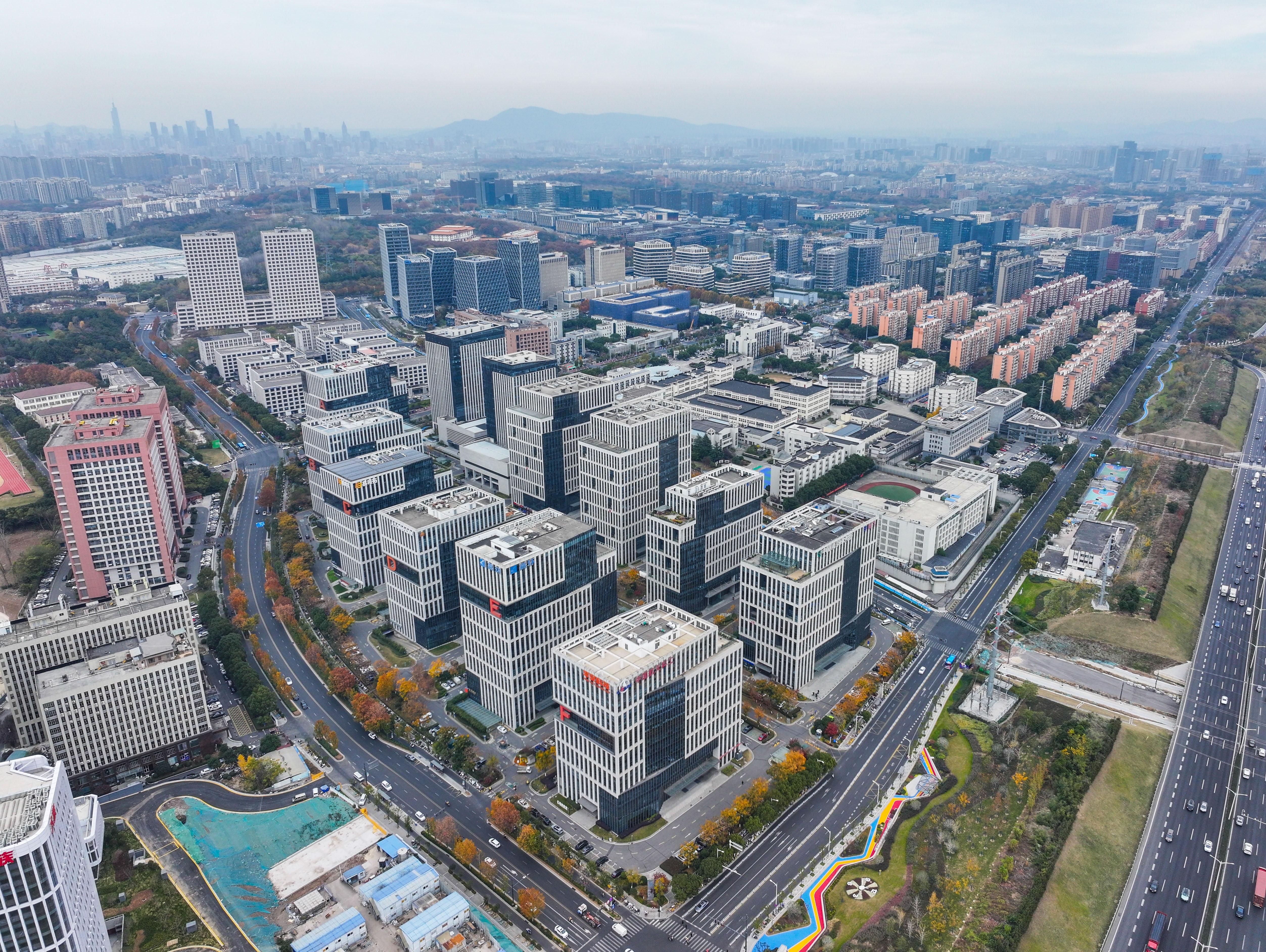
Nanjing achieved two milestones in 2025: its software business revenue topped one trillion RMB for the first time with a 16.7 percent year-on-year growth, and it secured 5th place nationwide in innovation capacity, according to official data from the Ministry of Industry and Information Technology and the Ministry of Science and Technology.
From biomedicine to intelligent manufacturing, and from addressing industrial bottlenecks to meeting people's livelihood needs, innovative achievements in the capital of east China's Jiangsu province are continuously being put into practice to solve practical problems, "weaving" a symbiotic network connecting talent, universities, enterprises, and the government through solution-oriented innovation.
Breaking innovation constraints
Nitric oxide is widely used in the clinical treatment of various cardiopulmonary diseases in newborns, children and adults, serving as a crucial therapeutic tool. However, its storage and transport rely mostly on bulky, risky and highly inconvenient traditional steel cylinders.
A Nanjing-based biotechnology company targeted this urgent clinical demand and set up an R&D program. After years of research, the world's first portable nitric oxide therapeutic device, based on electrochemical catalysis, was developed in Nanjing, opening a convenient facility for patients in need.
Another biotech enterprise, Nanjing Leads Biolabs Co., Ltd., focuses on oncology and autoimmune diseases. Its independently developed Opamtistomig (LBL-024) is the world's first 4-1BB-targeted drug to enter pivotal clinical trials. Opamtistomig is a uniquely engineered bispecific antibody which has the potential to deliver more potent and durable anti-tumor activity particularly in difficult-to-treat and immunotherapy-resistant tumors. On March 6, the company announced that the first patient had been successfully dosed in a Phase Ⅱ clinical study evaluating Opamtistomig.
Targeted policy support has provided a strong impetus for industrial, scientific and technological innovation. Besides establishing an office for promoting such breakthroughs, Nanjing has issued several policies on accelerating the cultivation of new quality productive forces and promoting high-quality development in 2026, rolling out a series of special measures for the biomedical industry.
Currently, Nanjing's biomedical industry has formed a full-cycle ecosystem covering basic research, clinical trials and industrialization. In 2025, the annual operating revenue of the city's biomedical industry exceeded 225 billion RMB.
Supporting intelligent upgrading
In the workshop of an intelligent manufacturing company in Nanjing, a collaborative robot performs welding operations with a repeat positioning accuracy of ±0.02 millimeters. By parameterizing and software-encoding the skills and experience of veteran welders, the collaborative welding robot can effectively replicate skilled labor tasks and iterable digital process packages, solving any shortage of trained workers.
To address industry-wide challenges such as rising labor costs and an aging workforce, intelligent harvesting robots, equipped with vision and large language models, can identify ripe fruit in complex branch and leaf environments, with a single-arm picking cycle of about five to eight seconds, providing intelligent solutions for agricultural production.
In recent years, using the symbiotic network of government, enterprises, universities, research institutes and capital, Nanjing has championed the shift of artificial intelligence from technological concepts to industrial application.
An action plan promoting the innovative development of AI, along with several policies formulated to accelerate the industrial application of large models, aims to develop industrial application large models and build more than 20 application scenarios.
The revenue of the city's intelligent manufacturing equipment industry exceeded 300 billion RMB in 2025, a year-on-year increase of about six percent. This has seen the software and information service industry incorporating more than 3,600 key software-related enterprises, forming a complete industrial chain.
Nanjing's AI products and services now cover all links of the industrial chain, including the basic layer, technology layer and application layer.