
How Water Clocks Flowed with Time
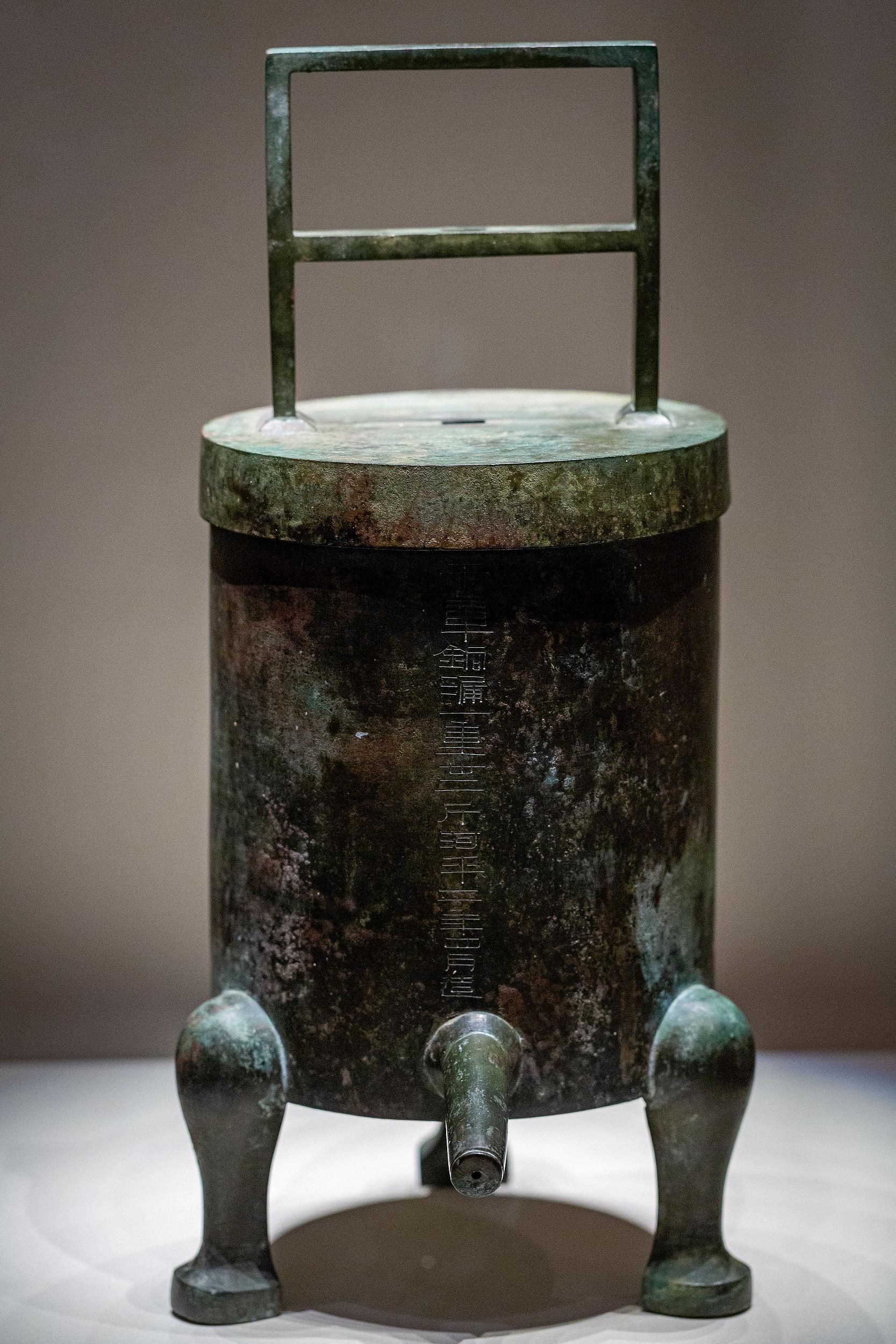
The water clock, also known as clepsydra (water thief in ancient Greek), is a device that measures time based on the controlled flow of liquid into or out of a container, with time indicated by the volume of liquid. It is one of the earliest timekeeping devices, believed to be in use around 1500 BCE.
The basic principle behind these clocks is Torricelli's law, a theorem in fluid dynamics which relates the velocity of fluid exiting a hole to the height of the fluid above that opening.
There are two main types of water clocks: inflow and outflow. In an outflow water clock, a vessel is filled with water and the water is gradually and consistently released from the vessel. This container features lines that measure the passage of time. As the water drains, an observer can use the lines to determine how much time has elapsed.
An inflow water clock operates in a similar way, but instead of draining from the container, it is filled by the water. As the vessel fills, the observer can see where the water level aligns with the lines to determine how much time has elapsed.
In ancient China and across East Asia, water clocks were crucial tools in the fields of astronomy and astrology. The earliest recorded mention of the water clock dates back to the 6th century BC in China. From around 200 BC onwards, the outflow clepsydra was widely replaced throughout China by the inflow clock, featuring a float-supported indicator rod.
Huan Tan (40 BC-AD 30), a Han Dynasty philosopher and politician, noted the necessity of comparing clepsydrae to sundials due to the impact of temperature and humidity on their precision. This indicates that the influence of evaporation and temperature on the rate of water flow was already recognized during this period.
As the water in the clocks was prone to freezing, fire torches were used to keep the water in a liquid state, a problem that was solved in 976 by the Chinese astronomer and engineer Zhang Sixun. His invention utilized mercury instead of water. Mercury remains in a liquid state at room temperature and solidifies at −38.83 °C, which is lower than the typical air temperature found outside polar regions.
Independently, the Chinese developed their own sophisticated water clocks featuring gears, escapement systems and water wheels, passing their innovations on to Korea and Japan.