
Mystery of Qingming's Shifting Dates
As the temperature begins to rise, the fifth of the 24 solar terms — Qingming — is about to begin.
Many people have noticed that the date on the Gregorian calendar of the Qingming Festival, a time when Chinese honor their ancestors, is not fixed. In 2025, Qingming fell on April 4, while in 2026 it falls on April 5. So, why does the date of Qingming vary from year to year, when the precise moment of its onset is calculated down to the minute? Science and Technology Daily spoke to Yan Weiguo, president of the Tianjin Astronomical Society, to find out the reason.
"The timing of the Qingming solar term is based on rigorous astronomical logic and a scientific system of calculation," Yan explained. He noted that the 24 solar terms used today are not tied to fixed calendar dates, but constitute a scientific scale based on the Sun's trajectory across the celestial sphere, known as the ecliptic.
In ancient times, people divided the Sun's annual path (spanning 360 degrees) into 24 equal segments, designating a specific solar term for every 15 degrees of movement. The moment the Sun reaches a particular position marks the precise onset of that solar term. The criterion for determining Qingming is the exact instant the Sun reaches an ecliptic longitude of 15 degrees. This set of rules, known as the Dingqi Fa, has been in continuous use since the Shixian Calendar of the Qing Dynasty (1645), ensuring a precise correspondence between the solar terms and the Sun's actual position.
So, why does the date of Qingming on the Gregorian calendar fluctuate between April 4, 5 and 6? Yan explained that this phenomenon primarily stems from the discrepancy in length between the tropical year — the time it takes for the Earth to complete one full orbit around the Sun — and the standard Gregorian calendar year.
A tropical year actually lasts around 365 days, five hours and 49 minutes, whereas a standard Gregorian year has only 365 days. This results in an annual residual difference of almost six hours; over four years, these accumulated hours amount to around one full day. This is precisely why the Gregorian calendar incorporates leap years, adding an extra day (February 29) to compensate for this discrepancy.
However, because the Earth's orbit is elliptical rather than perfectly circular, its orbital speed varies (it moves faster at perihelion and slower at aphelion). This causes the precise timing of the solar terms to fluctuate in a complex manner — variations that the leap-year system cannot fully offset.
Consequently, the Qingming solar term begins approximately five to six hours later each year; however, in a leap year (such as 2028), it falls a day earlier. This causes the date of Qingming to fluctuate between April 4 and 6. For example, in 2025, Qingming fell on April 4 at 20:49, whereas in 2027, it falls on April 5 at 08:17.
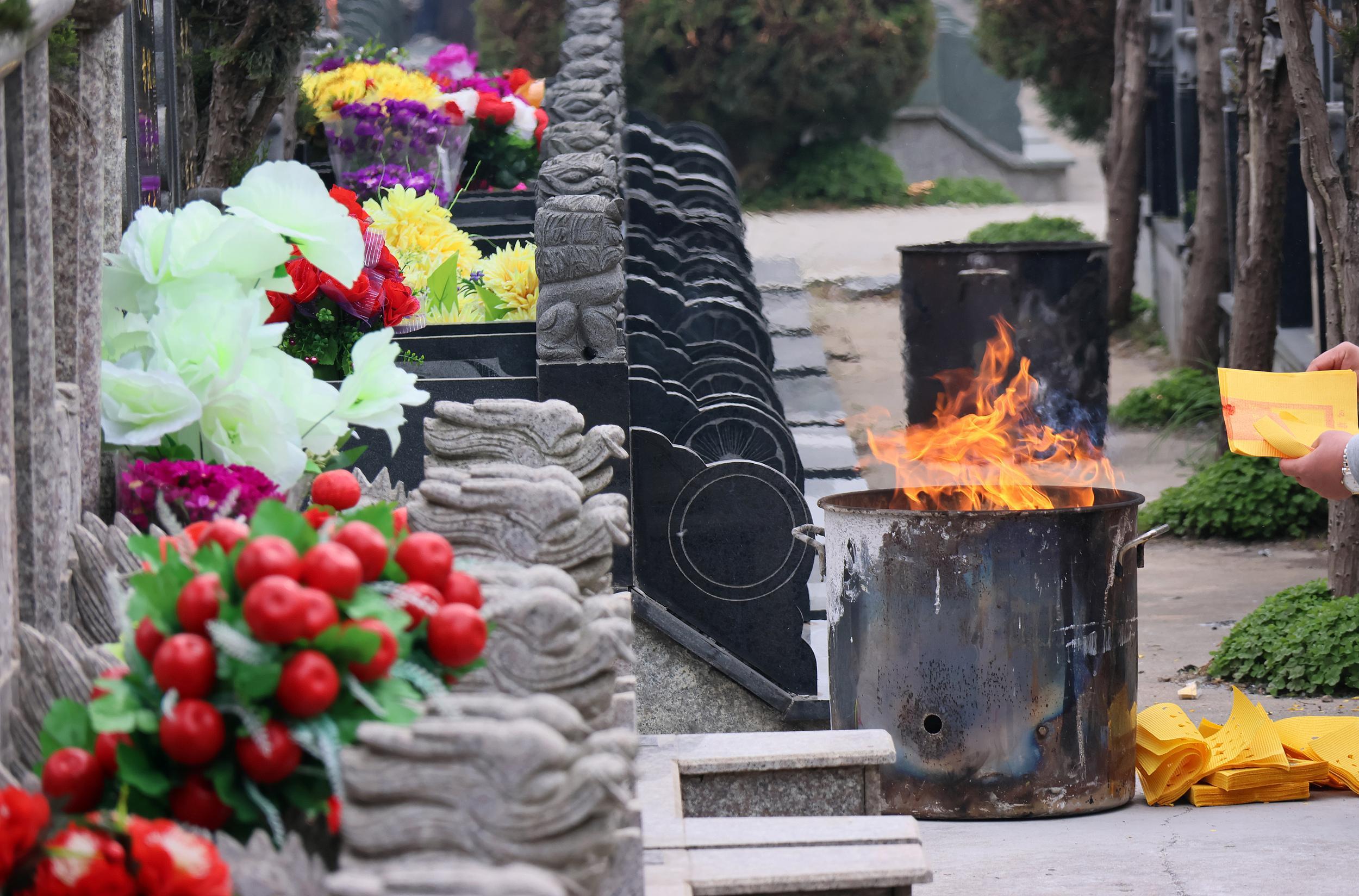
"Fundamentally, the precise moment Qingming begins is an astronomical event, not a fixed date in the folkloric sense, and its fluctuation is a normal astronomical phenomenon," Yan said. Regardless of whether the Qingming solar term falls on April 4, 5 or 6, the traditional customs of honoring ancestors and communing with nature remain unchanged.