
AOE: An Open Space Orbital Data Ecosystem
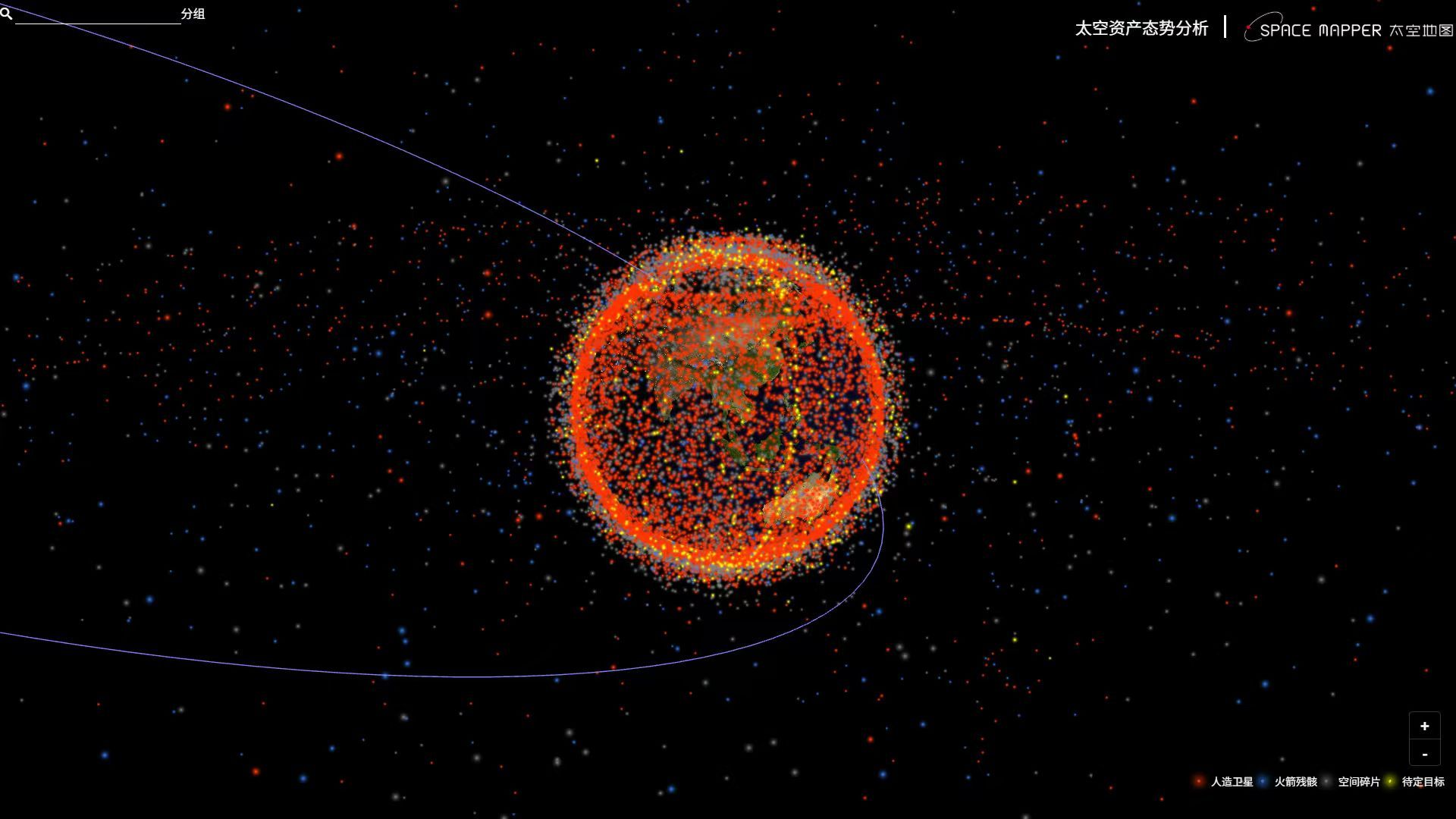
With the accelerated deployment of Low Earth Orbit (LEO) satellite constellations and the rise in space debris, space traffic management has become a pressing reality.
"Without independent orbital data, it's like driving with someone else's map — you could face a 'network blackout' at any moment," said Kang Ruiqing, chairman of CreatUnion, highlighting the industry's predicament.
Drawing on its 22 years of expertise, CreatUnion is engaged in research and development of the AOE (ADS Orbital Elements) ecosystem. AOE leverages an observation network comprising 30 ground stations and 108 space-based satellites. By integrating international orbital data, it effectively fills the gap in China's commercial space object data.
"AOE is an all-process independent orbital dataset covering core functions such as orbital visualization and monitoring," Kang said.
By building a full-link technical framework, AOE ensures total orbital coverage during data acquisition. Its optimized algorithms improve accuracy in tracking space debris. Furthermore, it provides exclusive photometric data.
To consolidate its market position, CreatUnion has developed a dedicated AOE chip and applied for more than 130 patents to protect its core IP.
In the commercial sector, AOE offers multiple download options. Users can access data simply by logging onto the SpaceMapper. The system has secured several data service contracts for two consecutive years.
Leveraging AOE, the company has recently launched the Global University Satellite Alliance Constellation initiative. The initiative aims to launch 300 satellites over the next six years, making them accessible to 100 universities. Several universities have already signed agreements to co-build joint laboratories.
"We will advance three key initiatives in the future," Kang stated. "We will optimize the precision and update efficiency of AOE, drive the integration of AOE with cutting-edge technologies such as AI and laser communication, and expand industry-academia-research collaboration to build an ecosystem of talent, technology, and data."
"Our goal is to make space safer and flight more reliable," Kang said. With AOE at its core, the company will build a comprehensive orbit data ecosystem, cultivate the commercial space field, and offer the world an alternative choice for space data.