

Tech Guards Green Future in Qinghai
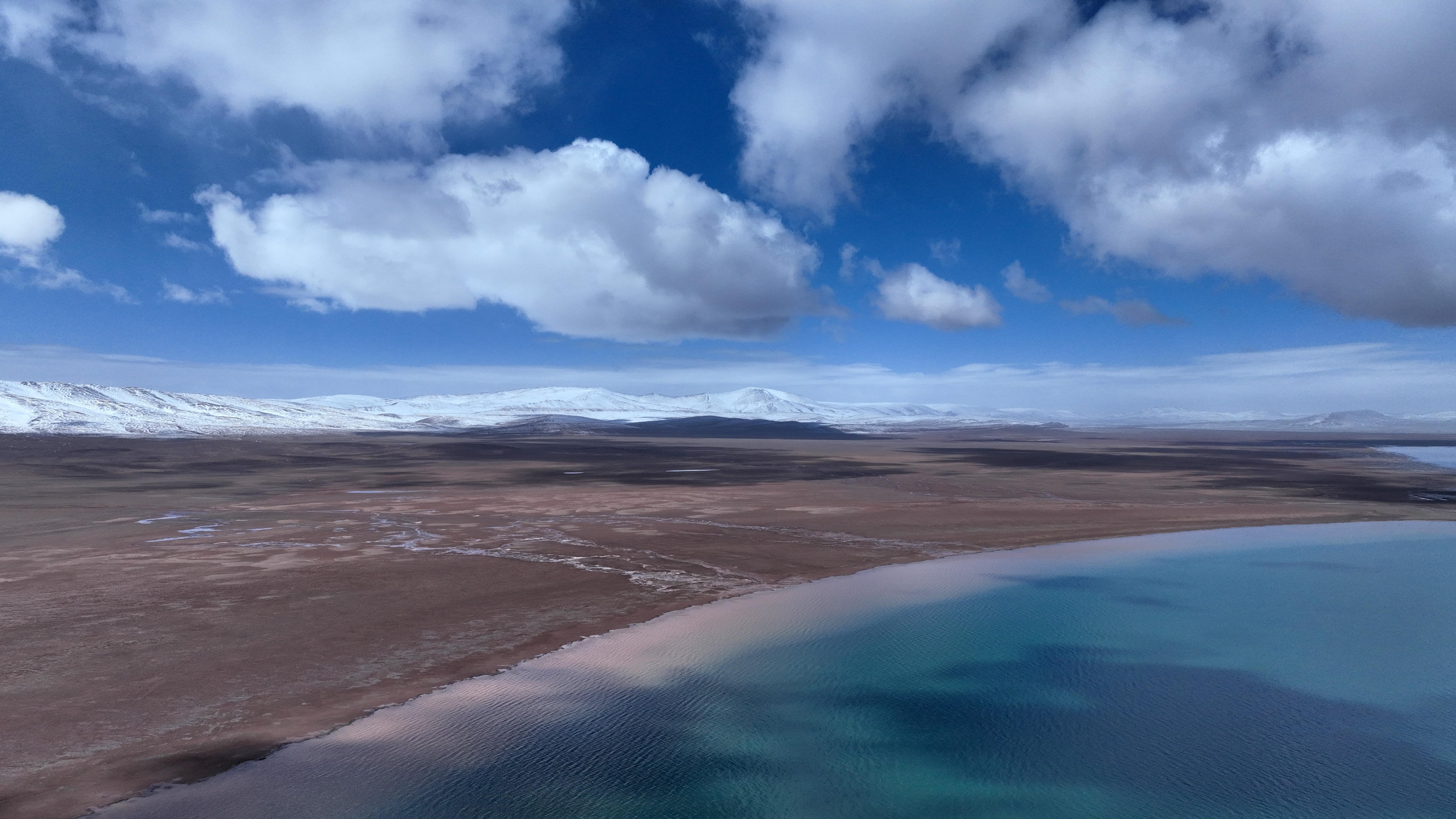
Located in the core area of the "Third Pole of the Earth," the Qinghai-Xizang Plateau, Qinghai province is known as "China's Water Tower." It serves as a crucial ecological security barrier for both China and Asia. Now, through technological innovation, Qinghai has evolved to become a model of biodiversity conservation, especially for the reclusive snow leopard.
Protecting flagship species
Through the Qinghai Ecological Window, a real-time monitoring system with 116 video stations across five major ecological zones, researchers can now observe snow leopards and other wildlife in high definition from thousands of kilometers away.
"To protect the environment, we must first understand the baseline and track changes," said Liu Yanlin, associate professor at Qinghai Normal University. Scientists previously deployed infrared cameras across large habitats to estimate snow leopard populations. Since 2017, they have been developing standardized protocols and a global snow leopard assessment program.
Today, the Sanjiangyuan and Qilian Mountain National Parks serve as major wildlife sanctuaries. In Qinghai, the snow leopard population has reached over 1,200. The Tibetan antelope, once endangered with fewer than 20,000 individuals, has rebounded to more than 70,000. Przewalski's gazelle, in the past rarer than the giant panda, now numbers over 3,700 — 12 times its original population. A major tech-driven ecological monitoring network lies behind these encouraging figures.
Locking drifting sand around Qinghai Lake
Close to Qinghai Lake, China's largest inland saltwater lake, degraded sandy pastoral land is now greening.
Researcher Zhang Dengshan leads a desertification control team under a provincial-academy collaboration. Working with local government, his team developed "living barriers" — planting wheat, barley, or oats instead of using only traditional straw or stone barriers.
Between these barriers, they introduced Qinghai spruce, Qilian juniper, and other species, along with Jerusalem artichoke and Hedysarum scoparium, which provided both ground cover and economic returns.
From lake-focused to landscape-wide governance, this approach reflects Qinghai's tech-driven sand control. Moving from manpower reliant methods to satellite monitoring and drone precision seeding using integrated systems, Qinghai has made measurable progress. Since 2023, the province has completed afforestation on 17.72 million mu (about 1.18 million hectares) and treated 5.23 million mu (about 349,000 hectares) of sandy land. On the plateau, technology is helping to build a solid green barrier.
Preserving the plateau's genetic heritage
At the Northwest Institute of Plateau Biology under the Chinese Academy of Sciences, researcher Chi Xiaofeng places a dried specimen of spikenard, an aromatic herb from the Himalayas, onto a high-precision scanner. The plant is little-known but listed as critically endangered by the International Union for Conservation of Nature — the only plant species in Qinghai with that rating among nationally protected wild plants.
Spikenard is used in incense and medicine and its international trade is strictly regulated. Yet for years, studies on its wild distribution were almost absent. Chi's team analyzed its population ecology, genetics, and reproductive patterns to understand what drives its endangerment. This year, he plans to begin field reintroduction trials in Sanjiangyuan, and other areas with heavy harvesting or degraded black-soil land.
This integrated "conservation-plus-utilization" approach relies on the National Germplasm Bank of the Qinghai-Xizang Plateau, one of Qinghai's top 10 national-level scientific platforms. Around 100,000 biological germplasm samples are now preserved there. From one plant to seed bank, and from research to field reintroduction — this is technology-powered biodiversity conservation in action.